

Gastric Bypass (RYGB)

Overview
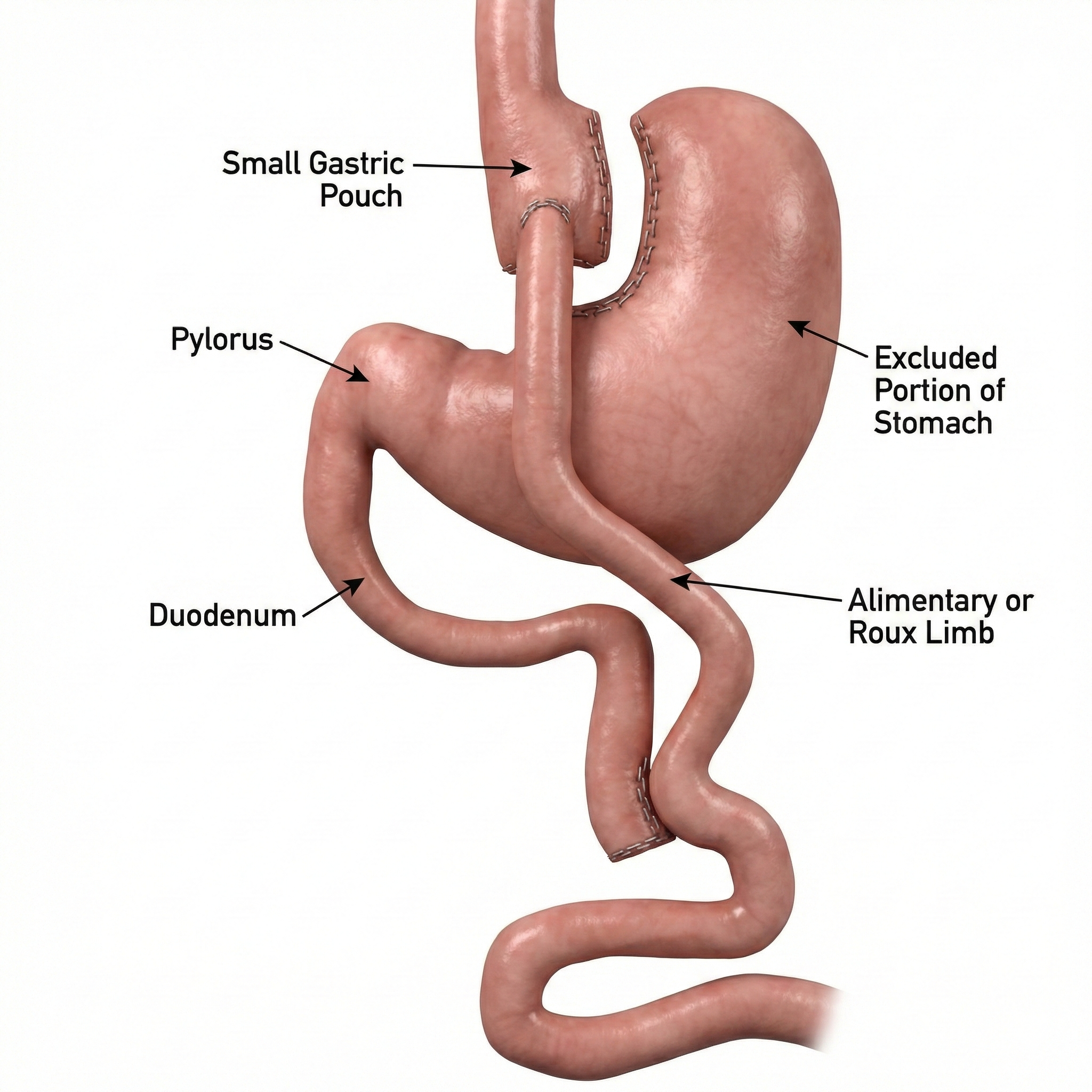
Roux‑en‑Y Gastric Bypass (RYGB) is one of the most effective and longest‑studied bariatric and metabolic procedures. It creates a small stomach pouch and reroutes the small intestine to form a “Y” configuration. This operation produces powerful metabolic effects, improves or resolves diabetes, reduces reflux, and supports durable long‑term fat loss. It is considered the gold‑standard procedure for patients with severe reflux, diabetes, or prior sleeve complications.
How the Procedure Works
Gastric bypass works through multiple mechanisms: reduced stomach capacity leading to early satiety; rapid delivery of nutrients to the small intestine stimulating GLP‑1 and other incretin hormones; improved insulin sensitivity; reduced acid exposure; and rerouting of bile flow. These combined effects create powerful metabolic improvements and long‑term weight regulation.
Benefits
Benefits include significant long‑term fat loss, high rates of diabetes remission, improvement in hypertension and sleep apnea, strong anti‑reflux effects, reduced hunger, improved satiety, and long‑term metabolic stability. Gastric bypass also offers excellent outcomes for patients with severe GERD or complications after sleeve gastrectomy.
Who Is a Candidate
You may be a candidate for gastric bypass if you have: BMI ≥ 35; BMI 30–34.9 with metabolic disease; type 2 diabetes requiring metabolic intervention; severe reflux; complications after sleeve gastrectomy; or if you desire a powerful metabolic procedure with long‑term durability.
How the Procedure Is Performed
Gastric bypass is performed laparoscopically using small incisions. A small stomach pouch is created, the small intestine is divided, and a Roux limb is connected to the pouch. A jejunojejunostomy reconnects the intestinal flow. The procedure typically takes 60–75 minutes, and most patients go home the next day.
Risks and Considerations
Potential risks include bleeding, leak, stricture, marginal ulcer, internal hernia, nutritional deficiencies, and weight regain if long‑term habits are not supported. Dr. de la Cruz‑Muñoz’s high‑volume experience and meticulous technique significantly reduce complication rates.
Potential long‑term issues include marginal ulcer, internal hernia, stricture, and nutritional deficiencies. Prevention strategies include smoking cessation, acid suppression, meticulous surgical technique, and long‑term vitamin supplementation.
Recovery Timeline
Days 1–3: hydration, gentle movement, pain control. Week 1: clear to full liquids. Week 2: soft foods. Weeks 3–4: gradual return to normal routines. By 30 days: improved energy, reduced hunger, early metabolic improvements.
Long-Term Expectations
Patients typically experience durable long‑term fat loss, improved metabolic health, reduced hunger, and remission or improvement of diabetes and reflux. Fat loss continues steadily over 12–18 months with long‑term follow‑up.
Why Choose Dr. de la Cruz-Muñoz
Dr. Nestor de la Cruz‑Muñoz is a nationally recognized bariatric and metabolic surgeon with outcomes that exceed national benchmarks. His expertise in gastric bypass, advanced minimally invasive techniques, and long‑term metabolic care model ensure safe, effective, and compassionate treatment.
Total Body Weight Loss (TBWL) Expectations
Most patients lose 30–33% of total body weight (TBWL) at 1 year. Long‑term success depends on metabolic follow‑up, nutrition, and activity.
Expected Metabolic Improvements
Gastric bypass triggers powerful hormonal changes: increased GLP‑1 and PYY, improved insulin sensitivity, reduced hepatic glucose production, enhanced bile acid signaling, and improved gut‑brain communication. These mechanisms drive diabetes remission and long‑term metabolic stability.
Gastric bypass produces rapid and profound improvements in blood sugar control through incretin stimulation, reduced insulin resistance, improved beta‑cell function, and changes in gut hormone signaling. Many patients experience diabetes remission within days to weeks.
Gastric Bypass commonly improves or resolves type 2 diabetes, hypertension, dyslipidemia, sleep apnea, fatty liver disease, and PCOS. Early hormonal changes improve insulin sensitivity within days of surgery.
Weight Regain Prevention Strategy
Long-term success depends on protein-forward nutrition, resistance training, avoiding slider foods, maintaining muscle mass, and consistent metabolic follow-up. Body composition monitoring is essential to prevent metabolic slowdown.
GERD / Reflux Considerations
The procedure reduces acid exposure, diverts bile, lowers gastric pressure, and eliminates the anatomical contributors to reflux. It is the gold‑standard treatment for patients with severe GERD, Barrett’s esophagus, or reflux after sleeve gastrectomy.
By diverting bile and acid away from the esophagus and reducing gastric pressure, gastric bypass provides the strongest anti‑reflux effect of any bariatric procedure. It is the preferred operation for patients with severe GERD or reflux after sleeve gastrectomy.
Revision Options
Gastric bypass is an excellent revisional option for: sleeve gastrectomy with reflux or weight regain; band complications; OAGB bile reflux; and inadequate metabolic response after prior procedures.
Body Composition & Muscle Preservation
Sleeve success depends on preserving lean mass. Patients are guided to prioritize protein intake, resistance training, and adequate hydration. Maintaining muscle protects metabolism and reduces long-term weight regain risk.
Insurance & Qualification Requirements
Most insurers require documentation of BMI criteria, comorbidities, supervised weight‑loss attempts, and medical clearance. Our team handles verification and authorization.
Preparing for Surgery (Pre-Op Requirements)
Pre-op requirements may include a liver-shrinking diet, bloodwork, cardiac clearance, sleep apnea evaluation, and medication adjustments. High-risk patients may require additional testing.
Post-Op Nutrition Overview
Nutrition progresses from clear liquids to full liquids, purees, soft foods, and then regular textures. Protein goals are emphasized from day one. Hydration and vitamin supplementation are esse
Post-Op Activity & Exercise Guidance
Early walking begins immediately after surgery. Light activity continues through week 2. Resistance training typically begins at week 4–6 to support muscle preservation and metabolic health.
Special Considerations for International Patients
Miami is a major hub for patients from Latin America and the Caribbean. Our team supports travel coordination, virtual follow-up, and streamlined pre-op evaluation for international patients.
Quick Procedure Details
Most major insurers cover gastric bypass when medical criteria are met. Our team verifies benefits, obtains authorizations, and guides patients through the insurance process.
Featured Procedures



Conditions


FAQ
Most patients experience significant improvement.
Blogs

.webp)

.webp)
Before & After Cases
What Patients Are Saying

Dr. DeLaCruz Munoz help changed my life for the better after having gastric sleeve surgery in 2012. He is intuitive, well-versed, caring, passionate, and an overall outstanding medical doctor. I love his work ethics