

What to Expect in the First 30 Days After Bariatric Surgery

Quick Answer
Watch Related Video
Article
INTRODUCTION
The first 30 days after bariatric surgery are a period of rapid healing, rapid change, and rapid learning.
Patients often tell me:
- “I didn’t know what was normal.”
- “I wish someone had explained the phases clearly.”
- “I felt better once I understood what to expect.”
This article is designed to give you exactly that — a clear, honest, sciencebased roadmap of the first month after surgery.
You’ll learn:
- What’s normal
- What’s expected
- What’s temporary
- What improves quickly
- What improves slowly
- What to watch for
- How to set yourself up for longterm success
Let’s walk through the first 30 days, step by step.
DAY 0–1: THE IMMEDIATE POSTOP PERIOD
Your goals:
- Wake up safely
- Control nausea
- Begin walking
- Begin sipping fluids
- Protect your lungs
- Rest and recover
What you’ll feel
Most patients describe:
- Soreness (especially around the largest incision)
- Gas pressure in the abdomen or shoulder
- Dry mouth
- Sleepiness
- Mild nausea
- Tightness in the upper abdomen
These sensations are normal and improve quickly.
Why walking matters
Walking:
- Reduces gas pain
- Prevents blood clots
- Improves lung function
- Helps wake up the bowels
Even short, slow walks make a difference.
Why sipping matters
Your stomach is swollen and healing.
You cannot gulp.
You cannot chug.
Small sips every few minutes
This is the single most important habit in the first 48 hours.
DAYS 2–7: THE FIRST WEEK — HYDRATION IS EVERYTHING
This is the week where patients often say:
- “I didn’t realize how important hydration was.”
- “I thought I was drinking enough — I wasn’t.”
Most ER visits after bariatric surgery are due to dehydration, not complications.
Your priorities this week
- Sip constantly
- Aim for 48–64 oz/day
- Focus on clear liquids
- Walk several times per day
- Rest when needed
- Take medications as directed
What’s normal this week
- Low appetite
- Fatigue
- Mild nausea
- Burping
- Gas pressure
- Loose stools or no stools
- Soreness when moving
Your body is healing and adjusting — this is expected.
What improves quickly
- Nausea
- Gas pain
- Incision soreness
- Energy levels
Most patients feel significantly better by day 5–7.
WEEK 2: TRANSITION TO FULL LIQUIDS & PROTEIN
This is when patients begin to feel more like themselves.
Your goals this week
- Continue hydration
- Add protein shakes
- Reach 60–80g of protein/day
- Begin vitamins (if instructed)
- Increase walking
- Listen to your body
What you’ll notice
- Hunger is still low
- Fullness happens quickly
- Energy begins to return
- Weight loss begins to accelerate
- Clothes may feel looser
This is the beginning of the metabolic shift.
WEEKS 3–4: PURÉED → SOFT FOODS
This is when you begin learning your new stomach.
Your goals
- Introduce puréed foods
- Transition to soft foods
- Eat slowly
- Chew thoroughly
- Stop at the first sign of fullness
- Continue protein first
What you’ll feel
- Early fullness
- Occasional “tightness” after eating
- Sensitivity to certain textures
- A learning curve with portion sizes
This is normal — your stomach is healing and adapting.
Foods that usually work well
- Scrambled eggs
- Greek yogurt
- Cottage cheese
- Soft fish
- Puréed chicken or turkey
- Mashed beans
- Soft vegetables
Foods to avoid early
- Bread
- Rice
- Pasta
- Tough meats
- Raw vegetables
- Nuts
- Seeds
- Carbonation
These can cause discomfort or get “stuck.”
WHAT’S NORMAL IN THE FIRST 30 DAYS
1. Rapid weight loss
Most patients lose 10–20 lbs in the first month.
2. Low appetite
Hormonal changes reduce hunger dramatically.
3. Taste changes
Sweet foods may taste too sweet.
Protein shakes may taste different.
4. Fatigue
Your body is healing and adjusting to lower intake.
5. Emotional shifts
Hormones fluctuate.
It’s normal to feel emotional, reflective, or sensitive.
6. Temperature sensitivity
Many patients feel colder than usual.
7. Bowel changes
Irregularity is common early on.
WHAT’S NOT NORMAL (AND SHOULD BE REPORTED)
- Persistent vomiting
- Inability to keep fluids down
- Severe abdominal pain
- Fever
- Shortness of breath
- Chest pain
- Signs of dehydration (dizziness, dark urine, rapid heart rate)
These symptoms require evaluation.
THE FIRST 30 DAYS SET THE FOUNDATION FOR LONGTERM SUCCESS
This first month teaches you:
- How to hydrate
- How to sip
- How to eat slowly
- How to recognize fullness
- How to prioritize protein
- How to build new habits
- How to listen to your body
These skills matter far more than the number on the scale.
CONCLUSION
The first 30 days after bariatric surgery are a period of healing, learning, and transformation.
You will:
- Feel better each week
- Learn your new stomach
- Build new habits
- Experience rapid metabolic improvement
- Begin a journey that continues long after the first month
Recovery is not about perfection — it’s about progress.
And with the right guidance, the first 30 days become the foundation for a lifetime of success.
Obesity By The Numbers
Medical Topics Covered
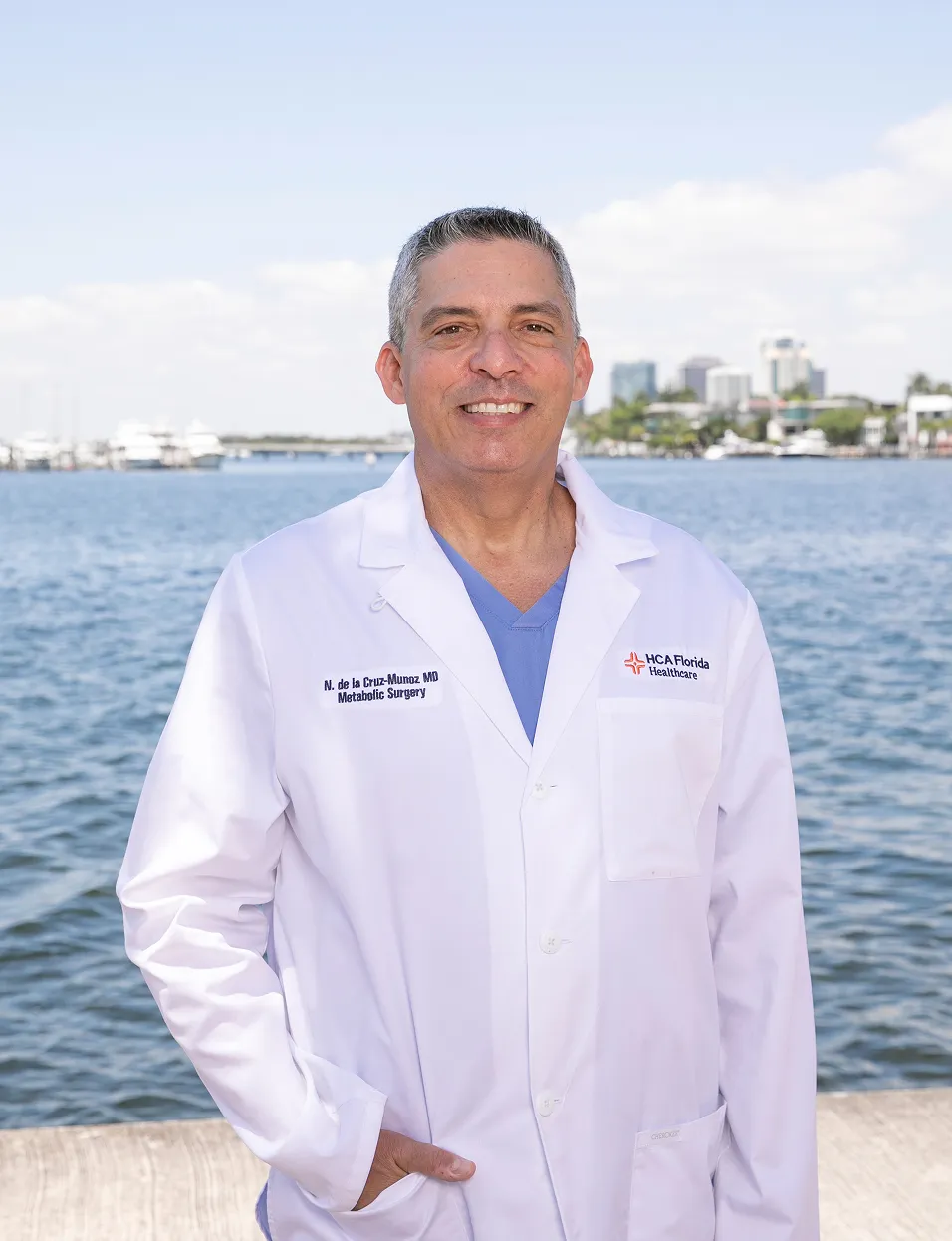

Dr. de la Cruz‑Muñoz specializes in advanced minimally invasive and robotic surgery, metabolic disease management, and comprehensive long‑term patient care. His work integrates clinical expertise, academic leadership, and a commitment to evidence‑based medicine. He has trained surgeons across the country, contributed to national guidelines, and is widely regarded for his outcomes, innovation, and patient‑centered approach.
Patients choose Dr. de la Cruz‑Muñoz for his combination of surgical excellence, metabolic expertise, and lifelong dedication to improving patient health through compassionate, high‑quality care.
Procedures We Offer
Conditions

FAQ
People Also Ask
Obesity is recognized as a chronic metabolic disease influenced by genetics, hormones, environment, and biological factors — not simply lifestyle choices.
The body has built-in mechanisms that defend weight, including hunger hormones and metabolic adaptations that make long-term weight loss challenging.
Yes. Genetics can significantly influence body weight regulation, appetite, metabolism, and an individual's susceptibility to obesity.
GLP-1 medications help regulate appetite, slow stomach emptying, improve satiety, and support sustainable weight management.
Yes. Obesity is associated with conditions such as Type 2 diabetes, hypertension, sleep apnea, fatty liver disease, and cardiovascular disease.
Dieting alone often cannot overcome the biological adaptations that increase hunger and decrease energy expenditure after weight loss.
Medical evaluation may be appropriate when excess weight affects health, quality of life, or contributes to obesity-related medical conditions.
Yes. Bariatric surgery addresses biological and metabolic factors involved in obesity and can lead to significant long-term health improvements.