Protein After Bariatric Surgery: Why It Is the Foundation of Long-Term Success

Quick Answer
Watch Related Video
Article
Of everything on your plate after bariatric surgery, protein is the single most important nutrient you eat. Not because it is trendy, but because protein protects the two things that make your surgery work over the long term: your muscle and your metabolism.
This is not an article about eating "clean" or eating "healthy." It is about physiology. It is about what happens inside your body when you lose a large amount of weight quickly, and about the one factor that helps determine whether you come out the other side stronger or weaker.
Protein does three essential jobs after surgery. It preserves your muscle. It controls your hunger. And it helps protect you from regaining the weight. Muscle. Satiety. Durability. That is the whole game.
Below, we cover why your body is uniquely vulnerable to protein deficiency after surgery, exactly how much protein you need and why that number is a range, the three jobs protein performs, the honest pros and cons of each protein source, and a practical playbook for reaching your target when your stomach holds only a few ounces.
Why Your Body Is Uniquely Protein-Starved After Surgery
Before we talk about how much protein you need, it helps to understand why getting enough is so much harder for you than it is for someone who has not had surgery. Three things change after a sleeve or a bypass.
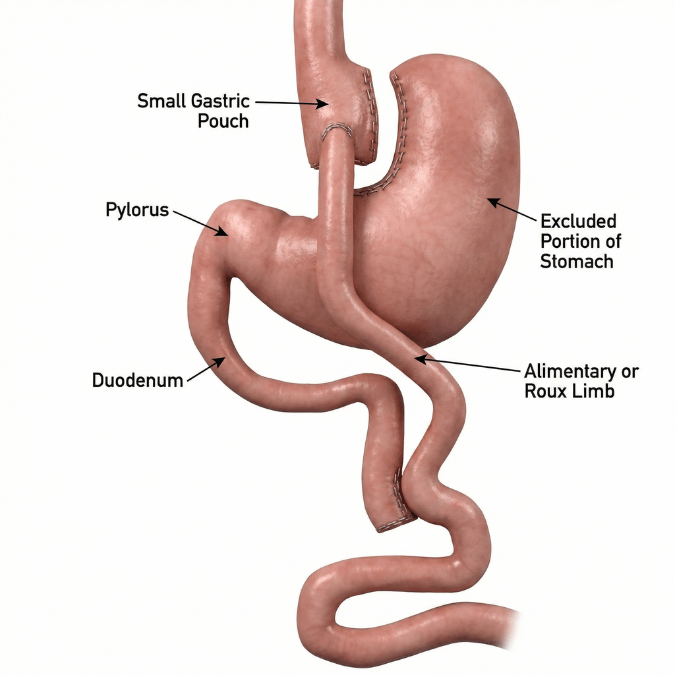
First, your stomach is dramatically smaller. After a sleeve, roughly 80 percent of the stomach is removed. After a bypass, the pouch that holds your food is about the size of an egg. You physically cannot eat the volume of food you used to. A single chicken breast that once felt like a light lunch may now represent three or four meals.
Second, your digestion itself changes. Bariatric surgery reduces the amount of hydrochloric acid and digestive enzymes your stomach produces. Protein is one of the hardest nutrients to break down, and it depends on that acid and those enzymes for proper digestion and absorption (Tabesh et al., Obesity Surgery, 2019). So you are not only eating less protein. Your body may also be less efficient at using the protein you do eat.
Third, your taste and smell can change. Many patients find that meat, especially red meat, suddenly tastes different or becomes unappealing after surgery. This is a known effect, and it can push you away from the very foods that are richest in protein.
The consequence is sobering. During the first three months after surgery, average protein intake is often below 40 to 45 grams per day (Acosta et al., PLoS One, 2025; Tabesh et al., Obesity Surgery, 2023). That is below the minimum for a healthy adult who has not had surgery, and far below what your body needs while it is losing weight rapidly. Protein deficiency is, in fact, the most significant macronutrient complication seen after these procedures (Aguas-Ayesa et al., Reviews in Endocrine and Metabolic Disorders, 2023).
So this is the setup. Your body needs more protein than usual because you are losing weight quickly, but everything about your new anatomy makes it harder to get that protein in. That tension is why bariatric teams obsess about protein. It does not happen by accident. It happens on purpose.
How Much Protein You Need, and Why It Is a Range
The baseline recommendation from the combined guidelines of the American Association of Clinical Endocrinology, the Obesity Society, and the American Society for Metabolic and Bariatric Surgery is a minimum of 60 grams of protein per day, and up to 1.5 grams per kilogram of ideal body weight per day. In selected patients, that can go as high as 2.1 grams per kilogram of ideal body weight (Mechanick et al., Obesity, 2020).
Notice that this is ideal body weight, not current weight. That distinction matters, and it is why you should have a registered dietitian individualize this target for you rather than trying to guess.
The number also depends on your procedure (Tabesh et al., Obesity Surgery, 2019):
- Sleeve gastrectomy: generally 60 to 80 grams per day, or about 1.1 grams per kilogram of ideal weight.
- Gastric bypass: 60 up to 160 grams per day, depending on the patient.
- Duodenal switch (biliopancreatic diversion): at least 90 grams per day, often 1.5 to 2.0 grams per kilogram, because you absorb less of everything.
Why is the range so wide? Because protein requirements after surgery are still being worked out. Studies that actually measure protein balance using nitrogen balance suggest the true requirement is often higher than people expect, both at three months and at a full year after surgery (Simonson et al., Reviews in Endocrine and Metabolic Disorders, 2020). That is why many surgeons advise aiming toward the higher end early on, when the risk of losing muscle is greatest, rather than treating 60 grams as a finish line.
There is one important safety caveat. If you have chronic kidney disease or diabetic kidney disease, your protein intake needs to be managed and may sometimes need to be restricted (Tabesh et al., Obesity Surgery, 2019). Very high protein intake over the long term also has to be balanced against bone, calcium, and liver health. So this is not "more is always better, without limit." This is "hit your individualized target, guided by your medical team."
The honest summary: the minimum is 60 grams a day for almost everyone. Most patients should aim higher, toward 80 to 100 grams, especially during the first year. And the exact number should be set for you, not copied from a stranger on the internet.
Protein Job Number One: Preserving Muscle and Metabolism
When you lose weight, you do not lose only fat. You lose a combination of fat and what is called fat-free mass, which includes your muscle. Skeletal muscle makes up somewhere between 30 and 50 percent of your fat-free mass (Chen et al., Obesity Surgery, 2026).
After a sleeve, if a patient does nothing to protect it, fat-free mass can drop significantly during the very first month and continue declining for as long as two years (Chen et al., Obesity Surgery, 2026). That matters enormously, because your muscle is the engine of your metabolism. Muscle is metabolically active tissue. It burns calories at rest. When you lose muscle, your resting metabolic rate falls, your ability to exercise declines, and your risk of regaining the weight later goes up.
A foundational one-year study followed 50 patients after sleeve and bypass and measured body composition with DEXA scans. It found an inverse relationship between protein intake and lean-tissue loss. Specifically, patients who consumed more than 60 grams of protein per day lost less of their weight as fat-free mass (Bettini et al., Reviews in Endocrine and Metabolic Disorders, 2020). In plain English, the patients who ate more protein preserved more muscle and lost more fat.
But protein alone is necessary, not sufficient. A well-designed randomized trial by Oppert and colleagues divided patients after surgery into three groups: usual care, usual care plus a whey-protein supplement, and usual care plus protein and supervised strength training three times a week. The key finding: the protein supplement by itself did not significantly reduce lean-body-mass loss. The group that actually improved muscle strength was the group that combined protein with resistance training (Oppert et al., Obesity, 2018).
So the real prescription is not "drink a protein shake and you are covered." It is protein plus lifting. Protein provides the building blocks. Resistance training provides the signal that tells your body to keep the muscle. You need both. Later research confirms that resistance training combined with whey protein increases fat-free mass and skeletal muscle mass even in patients two to seven years after bypass (Lamarca et al., Obesity Surgery, 2021).
This is not just about appearance. Sarcopenia, the medical term for dangerous muscle loss, can appear within the first year or two after surgery, and older patients are at the highest risk (Stumpf et al., Reviews in Endocrine and Metabolic Disorders, 2025). Protecting your muscle means protecting your independence and your health for decades to come.
Protein Job Number Two: Satiety and Appetite Control
Of all the macronutrients, protein is the most filling. It triggers satiety signals that tell your brain you have had enough. After surgery, this works in your favor in a very practical way. When you eat protein first, you fill up on the food that keeps you satisfied the longest, instead of filling your small stomach with foods that leave you hungry an hour later.
The data backs this up in terms of actual weight outcomes. Higher protein intake has been associated with greater total weight loss at both three months and 18 months after surgery. Lower protein intake, on the other hand, has been linked to lower post-meal satiety and a higher risk of weight regain, particularly in women two years after gastric bypass (Simonson et al., Reviews in Endocrine and Metabolic Disorders, 2020).
The patient who skimps on protein is not just risking muscle loss. That patient may also be hungrier, less satisfied after meals, and statistically more likely to regain weight. Protein works on both ends of the equation. It keeps you full now, and it helps protect your results later.
That is why "protein first" is a rule, not a suggestion. When your stomach holds only about a cup of food, order matters. If you start with the bread or rice, you may feel full before you ever reach the protein. The recommended sequence is protein first, then vegetables, then fruit, then starches last (Guth and Murali, JAMA, 2017). Protein first. Every meal. Every time.
Protein Job Number Three: Protecting Long-Term Results and Function
Higher protein intake after surgery has been associated with greater excess weight loss, along with lower fat mass and lower visceral fat, the dangerous fat surrounding your organs. Patients who ate more protein and less fat also lost more weight over a full 10 years of follow-up (Tabesh et al., Obesity Surgery, 2019). A systematic review of nearly 2,400 patients found that a 1 percent increase in protein intake raised the probability of obesity remission by 6 percent, and that higher-protein diets increased weight-loss success (de Souza Vilela et al., Obesity Reviews, 2023).
This is not a short-term trick. It is a long-term pattern, the kind that separates patients who maintain their weight loss from those who slowly drift back.
There is also a functional marker worth knowing about, because it is measurable and meaningful: handgrip strength. Grip strength is a validated marker of overall muscle strength, and it tracks with protein intake after surgery (Simonson et al., Reviews in Endocrine and Metabolic Disorders, 2020). Patients who get enough protein maintain their strength. Patients who do not may lose it. And strength is what allows you to stay active, which protects your muscle, which protects your metabolism. It is a virtuous cycle when you support it, and a vicious one when you do not.
So, to recap the three jobs: protein preserves your muscle and metabolic rate, protein keeps you full and helps you eat less without feeling deprived, and protein protects your weight loss and strength for years. Muscle. Satiety. Durability.
Protein Sources: The Honest Pros and Cons of Each
Not all protein is created equal, and after surgery both your tolerance and your absorption can change. Tolerance rankings below come largely from a detailed study of 44 specific foods over the first year after sleeve gastrectomy (Diaz-Lara et al., Obesity Surgery, 2020).
White meat (chicken and turkey). A top recommendation. Lean, high-quality, complete proteins with all the essential amino acids, and food-tolerance data for chicken is excellent. Turkey, minced meat, and even rabbit are also well tolerated. The main issue is texture: dry, overcooked chicken breast is one of the most common foods to get stuck. The fix is to keep it moist. Poach it, use thigh meat, add broth or a sauce, and chew thoroughly.
Fish and seafood. One of the very best protein sources after surgery, and the tolerance data supports it. Nearly all types of fish were considered recommendable after sleeve gastrectomy, with one exception: canned tuna, which tends to be drier and less well tolerated. Fish is a complete protein, soft, naturally moist, and easy to digest. Fatty fish such as salmon also provide omega-3 fatty acids. If you are struggling to tolerate meat early on, fish is often the best place to start.
Red meat (beef, pork, lamb). A complete, protein-dense, iron-rich food, and iron matters because iron deficiency is common after surgery. But in practice, red meat is consistently one of the least well-tolerated foods during the first postoperative year. It can feel like it is sitting like a rock, get stuck, or trigger nausea. Go easy during the first year, choose lean, tender cuts, keep portions very small, cook it moist, and chew it extensively. It should not be your early go-to protein.
Processed and cured meats (bacon, sausage, deli meats, hot dogs). Convenient and they do contain protein, but a poor choice as a primary source. They are often high in sodium and saturated fat, both of which work against the metabolic goals of your surgery, and they are associated with worse long-term health outcomes. Use them sparingly, if at all, and do not rely on them to reach your protein target.
Eggs and dairy. Eggs are inexpensive, complete proteins, soft, generally very well tolerated, and a staple of the early soft-food phase. Reduced-fat dairy such as Greek yogurt, cottage cheese, and cheese provides high-quality protein. Yogurt, skimmed milk, and cottage cheese are especially well tolerated after sleeve gastrectomy. The caveat is that some patients, especially after bypass, develop lactose intolerance. If dairy suddenly causes gas, bloating, or diarrhea, lactose may be the reason, and lactose-free options can solve the problem.
Protein shakes and liquid supplements. During the first weeks and months after surgery, protein shakes are not optional. They are essential. It is simply not possible to reach your protein target from food alone when your stomach holds only a few ounces and meat is hard to tolerate. Liquid protein, on the order of about 30 grams per day early on, is the bridge that helps prevent deficiency (Bettini et al., Reviews in Endocrine and Metabolic Disorders, 2020). Among powders, whey protein, especially whey isolate, is the most recommended because of its high bioavailability and abundant branched-chain amino acids, which are especially important for protecting muscle. Egg white, casein, milk, and soy proteins are also complete and good options. For lactose intolerance, whey isolate, hydrolyzed whey, and dedicated lactose-free products contain less lactose (Tabesh et al., Obesity Surgery, 2023). A good shake should have less than 200 calories, under 6 grams of sugar, less than 4 grams of fat, and 20 to 30 grams of protein, with whey first on the ingredient list and no collagen in the first three ingredients (Guth and Murali, JAMA, 2017). But shakes are a temporary tool, not a permanent diet. Use them as a bridge during the early months, then transition to whole-food protein as your tolerance improves.
Protein bars. The most misunderstood item on this list. A genuinely high-protein, low-sugar bar can be a reasonable occasional option when traveling or stuck without food. But most protein bars are candy bars with a health halo. Many are loaded with sugar or sugar alcohols, which after bypass can trigger dumping, gas, and cramping, and they can be high in calories relative to the protein they provide. If you use one, read the label like a surgeon: high protein, low added sugar, reasonable calories. Do not let a bar become your default protein source.
Plant-based and vegan whole foods. Beans, lentils, and soy foods such as tofu and tempeh provide fiber and micronutrients along with protein. But it is genuinely harder to reach your target with plant foods alone after surgery, for two reasons. First, plant foods generally contain less protein per bite than animal foods, and when your total food volume is tiny, that difference matters even more. Second, many plant proteins are individually incomplete, meaning they lack one or more essential amino acids, so they may need thoughtful combining and can be harder to digest. Among legumes, lentils tend to be tolerated earliest. A plant-based diet is not impossible after surgery, but it requires careful planning with a dietitian and often relies more heavily on supplementation.
Vegan protein powders (soy, pea, blends). For vegetarian and vegan patients, or anyone who does not tolerate dairy, these can be very useful. Soy protein is complete and well studied. Pea protein is another good option, often blended with other plant proteins to create a more complete amino-acid profile. There is also emerging research into specialized plant-peptide supplements, including low-branched-chain-amino-acid soy peptides being studied specifically for their potential to protect lean mass after sleeve gastrectomy (Chen et al., Obesity Surgery, 2026). A well-chosen vegan powder can help cover your protein gap, but plant-based patients need to pay extra attention to micronutrients already at risk after surgery, specifically iron, vitamin B12, zinc, calcium, and vitamin D.
Does your procedure change protein absorption? Research in animal models suggests gastric bypass may slightly improve protein digestibility compared with sleeve gastrectomy, but the bypass anatomy may paradoxically deliver less of that protein to the muscle and liver because the remodeled intestine takes up more of it (Simonson et al., Reviews in Endocrine and Metabolic Disorders, 2020). The practical takeaway is not to overthink the biochemistry. Both procedures make protein handling less efficient, which is exactly why your target is higher than a normal person's and why source quality matters.
A practical ranking for the first year:
- Lean, moist white meat, fish, eggs, Greek yogurt, and cottage cheese as your foundation.
- Whey or a high-quality plant protein powder as your early bridge.
- Legumes and soy foods as valuable additions.
- Red meat in small, careful amounts.
- Processed meats and sugary protein bars kept to a minimum.
The goal is not one perfect protein source. It is a reliable rotation of sources you tolerate well, that deliver high-quality nutrition, and that help you hit your individualized target consistently.
The Practical Playbook: How to Actually Hit Your Target
Knowing you need 80 grams of protein is one thing. Getting it into a stomach that holds only a few ounces is another. Here is the playbook.
Rule one: Protein first, at every meal. Before the vegetables, before the starch, before anything else. Eat the protein while you have the most room. This single habit does more than almost anything else to protect your intake (Guth and Murali, JAMA, 2017).
Rule two: Eat more often, not more at once. You cannot eat three large meals anymore, so spread your protein across three small meals plus one or two protein-containing snacks. Three to five protein feedings a day can help close the gap, and the same strategy helps you get in adequate fiber.
Rule three: Use supplements as a deliberate bridge. During the early months, plan one or two protein shakes into your day to reach your minimum. Choose whey isolate or a high-quality plant-based powder. Then, as whole-food tolerance improves, intentionally step down the shakes and step up the real food. That transition should be deliberate, not accidental.
Rule four: Keep your protein moist, and chew it thoroughly. So much of tolerance comes down to preparation and pace. Keep meats moist, cut food into small bites, chew 20 to 30 times, put your fork down between bites, and take at least 30 minutes per meal. Dry, rushed protein is much more likely to come back up.
Rule five: Vomiting is not normal, and it is not the goal. Regular vomiting is a signal that something needs to change, either the way you are eating or something about your anatomy that needs evaluation. Do not accept it as part of the process. Call your medical team.
Rule six: Separate fluids from meals. Stop drinking about 30 minutes before you eat, and wait about 30 minutes after eating before you drink again. Drinking with meals fills your limited space with liquid, may move food through too quickly, and reduces both satiety and protein intake (Mechanick et al., Obesity, 2020).
Rule seven: Pair protein with resistance training. Remember the Oppert trial: protein plus lifting is what preserved muscle strength. You do not need to become a bodybuilder. You need consistent, full-body resistance training a couple of times a week, in addition to walking and cardio (Oppert et al., Obesity, 2018). Protein feeds the muscle. Lifting tells it to stay.
Rule eight: Work with a registered dietitian, and keep your follow-up appointments. Your protein target should be individualized, your laboratory values checked regularly, and your plan should evolve as you move from the early postoperative phase into long-term maintenance (Mechanick et al., Obesity, 2020).
Further Information
For additional context and a deeper professionalperspective, you can read the companion LinkedIn article linked below.
(1) Protein After Bariatric Surgery | LinkedIn
After bariatric surgery, the stomach holds much less food, and changes to digestion may affect how protein is broken down and absorbed. At the same time, rapid weight loss can involve loss of both fat and fat-free mass, including muscle.
Protein supplies amino acids the body uses to maintain and repair tissues. Eating enough protein may help support muscle, but it is not the only factor: resistance training also gives the body a reason to retain and strengthen muscle. Protein can also promote fullness, which may be useful when meal portions are small. Individual protein needs vary, so targets should be set with a bariatric care team, particularly for people with kidney disease or other conditions that affect diet.
Medical Topics Covered
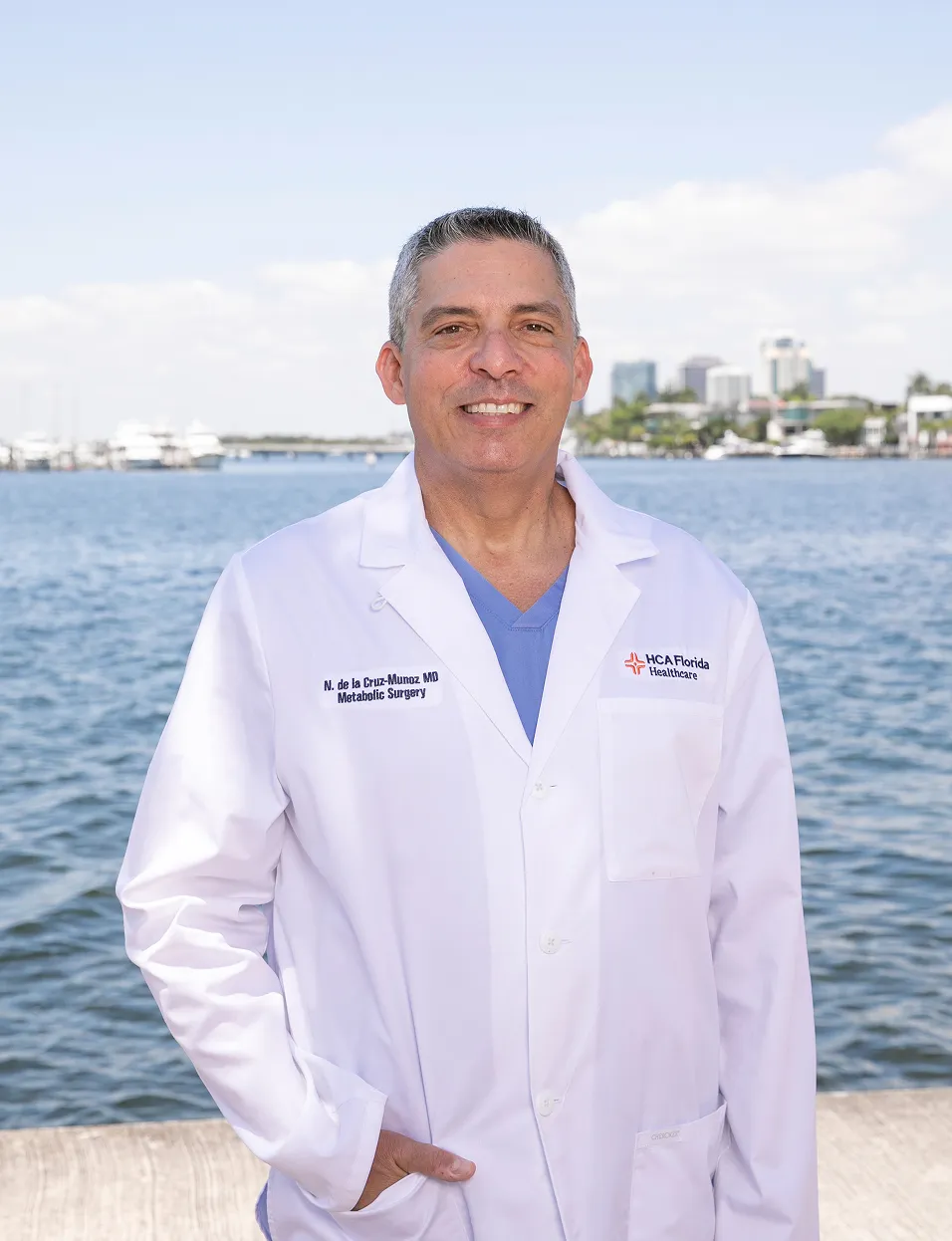

Dr. de la Cruz‑Muñoz specializes in advanced minimally invasive and robotic surgery, metabolic disease management, and comprehensive long‑term patient care. His work integrates clinical expertise, academic leadership, and a commitment to evidence‑based medicine. He has trained surgeons across the country, contributed to national guidelines, and is widely regarded for his outcomes, innovation, and patient‑centered approach.
Patients choose Dr. de la Cruz‑Muñoz for his combination of surgical excellence, metabolic expertise, and lifelong dedication to improving patient health through compassionate, high‑quality care.
Procedures We Offer





Conditions


FAQ
In the first weeks and months, shakes are essential, not optional, because youcannot physically eat enough protein-rich food when your stomach holds only afew ounces. Whey isolate is the most recommended option for its highbioavailability and branched-chain amino acids. As your tolerance for wholefoods improves, you should deliberately transition off shakes and rely on realfood, which provides more nutrients, fiber, and satiety.
Thebaseline guideline is a minimum of 60 grams per day, up to 1.5 grams perkilogram of ideal body weight, and up to 2.1 grams per kilogram in selectedcases. Targets vary by procedure, roughly 60 to 80 grams after a sleeve, 60 to160 grams after a bypass, and at least 90 grams after a duodenal switch. Mostpatients should aim toward the higher end during the first year, and aregistered dietitian should individualize your number.
Because protein alone does not preserve muscle. In a randomized trial, a whey In the first weeks and months, shakes are essential, not optional, because you cannot physically eat enough protein-rich food when your stomach holds only a few ounces. Whey isolate is the most recommended option for its high bioavailability and branched-chain amino acids. As your tolerance for wholefoods improves, you should deliberately transition off shakes and rely on real food, which provides more nutrients, fiber, and satiety. protein supplement by itself did not significantly reduce lean-body-mass loss, but protein combined with supervised strength training improved muscle strength. Protein suppliesthe building blocks, and resistance training sends the signal that tells yourbody to keep the muscle. You need both.
Fish is usually the best place to start because it is soft, moist, and very well tolerated (except canned tuna, which is drier). Eggs, Greek yogurt, and cottage cheese are also excellent, well-tolerated, complete proteins. Red meat is one of the least tolerated foods in the first year, so keep portions small, choose lean and tender cuts, cook it moist, and chew thoroughly. Persistent vomiting is not normal and should prompt a call to your medical team.
Yes,but it takes more planning. Plant foods generally contain less protein per biteand are often individually incomplete, which is harder when your total foodvolume is small. Soy and pea protein powders (often blended) can help cover thegap, and lentils, tofu, and tempeh are useful whole-food sources. Plant-basedpatients should pay especially close attention to iron, vitamin B12, zinc,calcium, and vitamin D, and work with a dietitian experienced in bariatricnutrition.
People Also Ask
Obesity is recognized as a chronic metabolic disease influenced by genetics, hormones, environment, and biological factors — not simply lifestyle choices.
The body has built-in mechanisms that defend weight, including hunger hormones and metabolic adaptations that make long-term weight loss challenging.
Yes. Genetics can significantly influence body weight regulation, appetite, metabolism, and an individual's susceptibility to obesity.
GLP-1 medications help regulate appetite, slow stomach emptying, improve satiety, and support sustainable weight management.
Yes. Obesity is associated with conditions such as Type 2 diabetes, hypertension, sleep apnea, fatty liver disease, and cardiovascular disease.
Dieting alone often cannot overcome the biological adaptations that increase hunger and decrease energy expenditure after weight loss.
Medical evaluation may be appropriate when excess weight affects health, quality of life, or contributes to obesity-related medical conditions.
Yes. Bariatric surgery addresses biological and metabolic factors involved in obesity and can lead to significant long-term health improvements.