Duodenal Switch (DS)

Overview
At a Glance
- What it is: A sleeve gastrectomy with a two-connection intestinal bypass that begins just past the pylorus
- Who it is for: Recommended by the 2022 ASMBS/IFSO guidelines for adults with a BMI of 35 or higher, and considered at a BMI of 30–34.9 with metabolic disease (27.5 or higher for people of Asian descent) (Eisenberg et al., Surgery for Obesity and Related Diseases, 2022). Usually reserved for a very high BMI or severe metabolic disease
- Results: The greatest weight loss of any standard bariatric operation (see Landmark Evidence below)
- Main trade-off: The highest nutritional demands of any bariatric operation; lifelong supplements and labs are mandatory
- Hospital stay and recovery: Usually two nights; desk work in two to three weeks
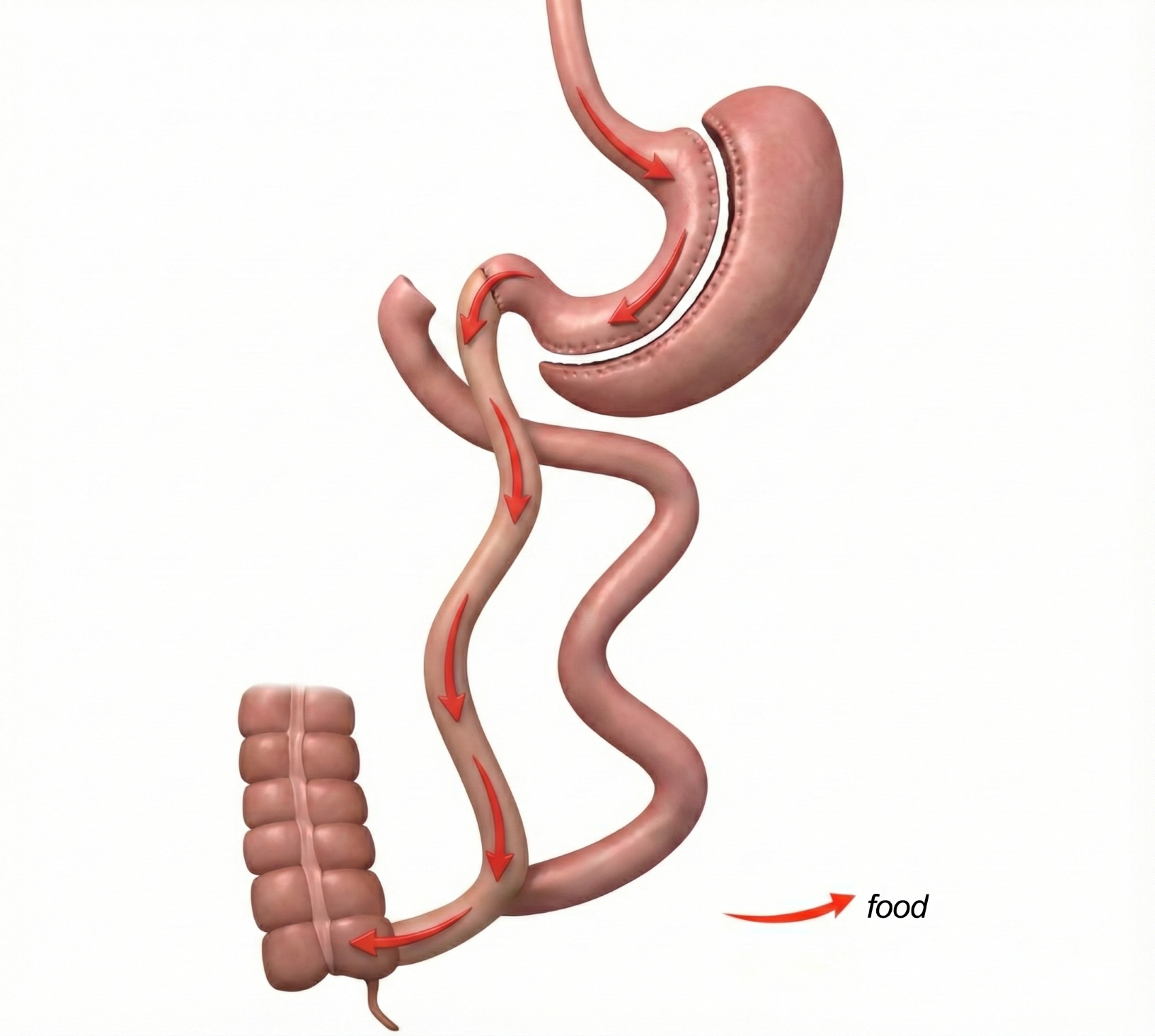
The duodenal switch (BPD/DS) is a two-part weight-loss operation. First, a sleeve gastrectomy removes most of the stomach, leaving a narrow, banana-shaped tube that limits how much you can eat. Second, a large portion of the small intestine is rerouted (bypassed) so that food and digestive juices mix only in a short final segment, which substantially reduces how many calories and how much fat your body absorbs (Journal of Internal Medicine, 2024; Cochrane Database of Systematic Reviews, 2014).
Because it combines both a restrictive component (the smaller stomach) and a strong malabsorptive component (the intestinal bypass), BPD/DS produces greater and longer-lasting weight loss than sleeve gastrectomy or gastric bypass — along with the highest rates of type 2 diabetes remission of any standard procedure. These advantages come with a higher risk of nutritional deficiencies and a lifelong requirement for vitamin supplementation and medical follow-up, which is why this operation is reserved for carefully selected patients (Obesity Surgery, 2019; Surgery for Obesity and Related Diseases, 2023).
For details on having a duodenal switch in Miami, including evaluation and travel planning, visit Duodenal Switch (DS) Surgery in Miami, FL.
How the Procedure Works
BPD/DS drives weight loss through three mechanisms working together:
- Restriction: The sleeve-shaped stomach holds far less food, so you feel full sooner and eat smaller portions (Journal of Internal Medicine, 2024).
- Malabsorption: By rerouting the intestine so that bile and pancreatic juices meet food only in a short "common channel" near the end of the small bowel, the body absorbs fewer calories and much less dietary fat (Journal of Internal Medicine, 2024; Cochrane Database of Systematic Reviews, 2014).
- Hormonal and metabolic change: Rerouting nutrients to the lower intestine and altering bile-acid flow boosts gut hormones such as GLP-1 that improve blood sugar control, which helps explain why diabetes often improves rapidly — even before major weight loss occurs (Surgical Endoscopy, 2026).
Benefits
- Greatest long-term weight loss of any standard bariatric procedure, with results that remain durable for 10–20 years (Journal of Laparoendoscopic & Advanced Surgical Techniques, 2026; Obesity Surgery, 2015).
- Highest rates of type 2 diabetes remission, including in patients with advanced, insulin-treated diabetes (Surgery for Obesity and Related Diseases, 2020; Surgery for Obesity and Related Diseases, 2022).
- Strong, durable improvement in high blood pressure, high cholesterol, and obstructive sleep apnea (Surgery for Obesity and Related Diseases, 2026; Surgical Endoscopy, 2022).
- Low weight-regain rate compared with other procedures, because the malabsorptive component helps sustain weight loss over decades (Obesity Surgery, 2015).
Who Is a Candidate
BPD/DS is generally best suited for:
- Adults with a BMI greater than 50 kg/m² (sometimes called "super-obesity") (Journal of Internal Medicine, 2024; Cochrane Database of Systematic Reviews, 2014).
- Patients with severe or difficult-to-control type 2 diabetes or other serious obesity-related conditions (Journal of Internal Medicine, 2024).
- Patients who did not achieve enough weight loss after a prior restrictive procedure (such as a sleeve or gastric band) and need a more powerful operation (Surgery for Obesity and Related Diseases, 2023).
- People able and willing to commit to lifelong vitamin supplementation and regular follow-up blood tests (Journal of Internal Medicine, 2024).
It is usually not recommended for patients with inflammatory bowel disease, chronic diarrhea, borderline nutrition, or those unlikely to keep up with close long-term follow-up (Journal of Internal Medicine, 2024; International Journal of Obesity, 2021).
How the Procedure Is Performed
BPD/DS is performed under general anesthesia, almost always using minimally invasive (laparoscopic or robotic) techniques with several small incisions. The operation has two stages that are usually done together:
- Sleeve gastrectomy: About 70–80% of the stomach is removed, leaving a narrow tube. Unlike gastric bypass, the pylorus (the valve at the stomach outlet) is preserved, which lowers the risk of dumping syndrome and ulcers.
- Duodenal switch (intestinal bypass): The small intestine is divided just past the stomach and reconnected so that food travels through a shortened path, while digestive juices join the food only in a short common channel near the end of the small bowel (Journal of Internal Medicine, 2024; Cochrane Database of Systematic Reviews, 2014).
Risks and Considerations
BPD/DS is the most effective procedure, but it also carries the highest complication rate among standard operations, which is why patient selection and experienced surgical teams matter (Cochrane Database of Systematic Reviews, 2026; Surgical Endoscopy, 2022).
- Early complications can include anastomotic leak, bleeding, infection, and blood clots; serious complication rates are higher than for sleeve or bypass (Cochrane Database of Systematic Reviews, 2026; Surgical Endoscopy, 2022).
- Nutritional deficiencies are the most important long-term risk — up to 90% of patients develop a vitamin or mineral deficiency within a few years without careful supplementation, especially fat-soluble vitamins (A, D, E, K), iron, calcium, zinc, copper, and protein (Obesity Surgery, 2018; Obesity Surgery, 2017).
- Protein malnutrition and, rarely, severe malnutrition requiring surgical revision (Surgery for Obesity and Related Diseases, 2023).
- Bowel-related issues, including more frequent and foul-smelling stools, diarrhea, and excess gas because of fat malabsorption (Journal of Internal Medicine, 2024; Cochrane Database of Systematic Reviews, 2014).
- Late complications such as bowel obstruction, internal hernia, and the need for revisional surgery (Surgery for Obesity and Related Diseases, 2023).
Recovery Timeline
Most patients stay in the hospital 1–3 days and return to normal activity within a few weeks. Diet advances in stages — clear liquids, then full liquids, then pureed foods, then solid foods — over several weeks under the guidance of your surgical and nutrition team. Lifelong daily vitamin and mineral supplements begin right away, along with a high-protein diet of at least 60–90 grams of protein per day (Obesity Surgery, 2016).
Long-Term Expectations
Weight loss after BPD/DS is both substantial and durable. Long-term studies show the weight loss reaches its lowest point in the first 1–2 years and is then maintained for 10–20 years with little regain, provided patients stay engaged with supplementation and follow-up (Obesity Surgery, 2015; Surgery for Obesity and Related Diseases, 2026). Lifelong annual blood tests to check nutrition are not optional — they are essential to safe long-term success (Surgery for Obesity and Related Diseases, 2023; Obesity Surgery, 2016).
Landmark Evidence
- Randomized trial in BMI 50–60 (Norway and Sweden): at five years, BMI fell by 22.1 points after duodenal switch versus 13.6 after gastric bypass. Cholesterol, triglycerides and fasting glucose improved more after DS, and diabetes remission was similar. DS had more nutritional complications, gastrointestinal side effects, reoperations and admissions, and the authors advise careful patient selection (Risstad et al., JAMA Surgery, 2015).
- Limb lengths and malnutrition: shorter absorptive lengths predict severe protein-energy malnutrition after malabsorptive operations (systematic review and meta-analysis, Annals of Surgery, 2021). In one long-term study, the authors recommend a common channel of at least 150 cm (Shah et al., Obesity Surgery, 2023).
- Survival: Across 17 studies and more than 174,000 people, metabolic and bariatric surgery was associated with a 49% lower risk of death and a median of 6.1 additional years of life compared with non-surgical care. The benefit was greatest in people with type 2 diabetes (Syn et al., The Lancet, 2021).
How It Compares
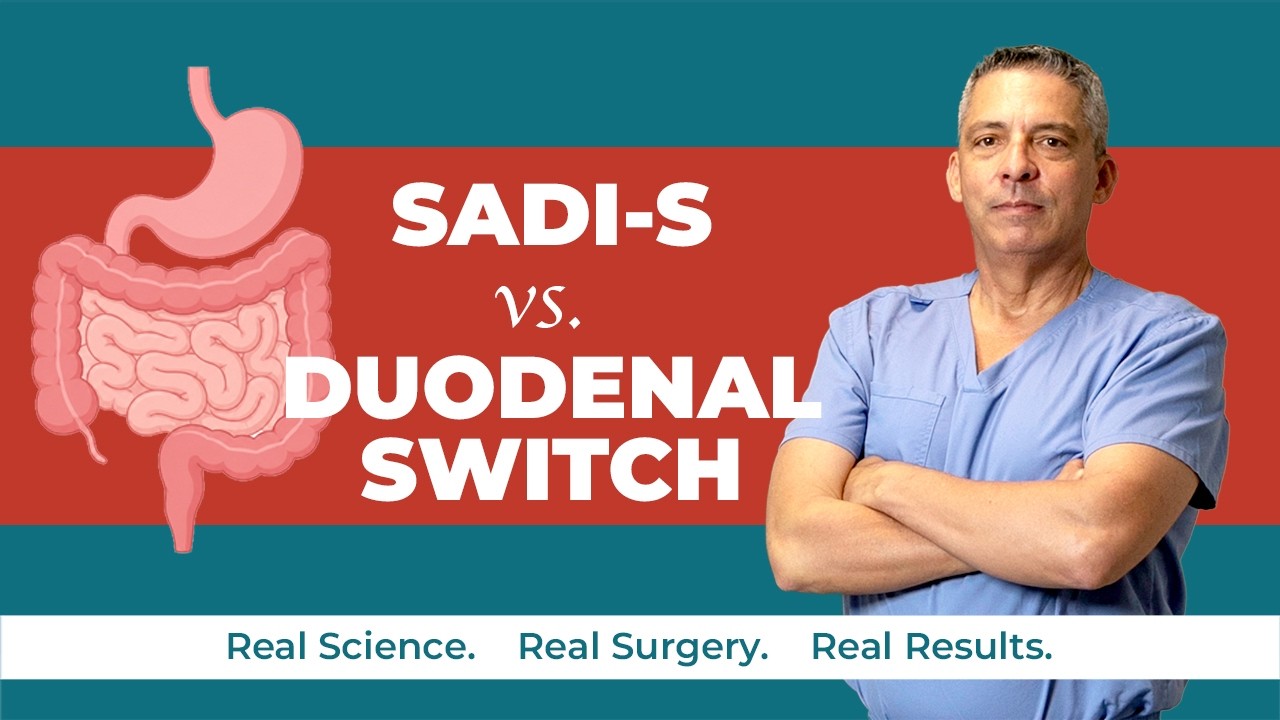
- Versus SADI-S: DS gives the maximum effect, while SADI-S uses one connection and is gentler on nutrition.
- Versus gastric bypass: substantially more weight loss at very high BMI, with more nutritional risk.
- Versus sleeve: DS can be performed in two stages, starting with a sleeve.
More in Bariatric Surgery Procedures
Related procedures: Magnetic Duodeno-Ileal Bypass with Sleeve, Adjustable Gastric Band Surgery, Medical Weight Loss Program, Robotic Surgery, Sleeve Gastrectomy, Gastric Bypass. For an overview of all options, see Bariatric Surgery.
Conditions treated: Obesity, Type 2 Diabetes, Sleep Apnea, Metabolic Dysfunction–Associated Steatohepatitis, Metabolic Syndrome, High Blood Pressure.
Why Choose Dr. de la Cruz-Muñoz
Dr. Nestor de la Cruz-Muñoz, MD, FACS, DABOM, is one of the nation’s most experienced metabolic and bariatric surgeons, specializing in complex procedures such as the Duodenal Switch and revisional surgery. His program emphasizes metabolic outcomes, long‑term follow‑up, nutritional safety, and individualized care. Patients benefit from his expertise in advanced anatomy, complication prevention, and body‑composition‑focused postoperative management.
Dr. de la Cruz-Muñoz has been performing bariatric surgery for over 25 years and has completed more than 9,000 bariatric operations — a volume few surgeons reach.
For local and out-of-town patients weighing this operation, our duodenal switch surgery in Miami page covers the consultation process, hospital stay and long-term follow-up with our team.
Authored by Nestor de la Cruz-Muñoz, MD, FACS, DABOM. Last updated November 2026.
Total Body Weight Loss (TBWL) Expectations
BPD/DS produces the greatest and most durable total weight loss of any standard procedure. In a 10-year comparative study of patients with BMI ≥ 50, BPD/DS achieved roughly 41% total weight loss at 5 years, versus about 25% for gastric bypass and 21% for sleeve (Surgical Endoscopy, 2022). Long-term series report total weight loss of about 35–39% sustained at 10–15 years and beyond, and excess BMI loss consistently above 75% out to 14–20 years (Surgery for Obesity and Related Diseases, 2026; Journal of Internal Medicine, 2024; Surgery for Obesity and Related Diseases, 2023). Individual results vary with starting weight, common-channel length, diet, and follow-up.
Expected Metabolic Improvements
- Type 2 diabetes: Remission in roughly 68–93% of patients, the highest of any standard procedure, and durable even in advanced, insulin-treated diabetes — with about 97% of insulin-treated patients able to stop insulin in one 10-year study (Surgery for Obesity and Related Diseases, 2020; Surgery for Obesity and Related Diseases, 2026; Obesity Surgery, 2019).
- High cholesterol: Improvement or resolution in roughly 60–65% of patients, often the greatest cholesterol benefit among procedures (Surgery for Obesity and Related Diseases, 2026; Surgical Endoscopy, 2022).
- High blood pressure: Remission in roughly 60% of patients (Surgery for Obesity and Related Diseases, 2026).
- Obstructive sleep apnea: Improvement or resolution in roughly 60% of patients (Surgery for Obesity and Related Diseases, 2026).
Weight Regain Prevention Strategy
BPD/DS has one of the lowest weight-regain rates of any procedure because of its strong malabsorptive component (Obesity Surgery, 2015). Maintaining results still depends on a high-protein diet, consistent daily supplementation, regular physical activity, and keeping all follow-up appointments so that nutrition and weight trends are caught early (Obesity Surgery, 2016; Surgery for Obesity and Related Diseases, 2023).
GERD / Reflux Considerations
Because BPD/DS preserves the pylorus (the natural stomach-outlet valve), it tends to cause less acid reflux than sleeve gastrectomy, and it is sometimes chosen for patients who have reflux. However, patients with severe, medication-resistant GERD require individualized evaluation, since gastric bypass is often preferred when reflux is the dominant problem (Obesity Surgery, 2025; Journal of Laparoendoscopic & Advanced Surgical Techniques, 2026).
Revision Options
BPD/DS can be performed as a second-stage operation for patients who have already had a sleeve gastrectomy but need more weight loss. If a patient develops severe malnutrition or intractable diarrhea after BPD/DS, the intestinal bypass can sometimes be revised (for example, by lengthening the common channel) (Surgery for Obesity and Related Diseases, 2023). A related, simpler single-anastomosis variant — SADI-S — offers comparable metabolic results with potentially fewer nutritional complications and is an option in selected patients (Surgical Endoscopy, 2026; Journal of Laparoendoscopic & Advanced Surgical Techniques, 2026).
Body Composition & Muscle Preservation
Rapid, large weight loss carries a risk of losing muscle along with fat, and the malabsorptive nature of BPD/DS makes adequate protein intake especially important. A protein target of at least 60–90 grams per day (up to about 1.5 g/kg of ideal body weight), combined with resistance exercise, helps preserve lean muscle mass. Protein malnutrition is a recognized long-term risk and is monitored at every follow-up visit (Obesity Surgery, 2016; Obesity Surgery, 2017).
Insurance & Qualification Requirements
Most insurers require documentation of a qualifying BMI (typically ≥ 40, or ≥ 35 with obesity-related conditions; BPD/DS is often reserved for BMI > 50), a medically supervised weight-management program, nutritional and psychological evaluation, and clearance from relevant specialists (Journal of Internal Medicine, 2024; International Journal of Obesity, 2021). Requirements vary by plan; our team verifies your specific coverage before scheduling.
Preparing for Surgery (Pre-Op Requirements)
Complete nutritional, psychological, and medical evaluations (International Journal of Obesity, 2021).
Baseline laboratory testing, including a full nutritional panel, and often an upper endoscopy (International Journal of Obesity, 2021).
Begin dietary changes and any recommended pre-operative weight loss.
Stop smoking and arrange for long-term supplement supplies and follow-up support (International Journal of Obesity, 2021).
Post-Op Nutrition Overview
Lifelong supplementation is mandatory after BPD/DS and is more intensive than after other procedures. Typical regimens include multiple daily multivitamins, high-dose fat-soluble vitamins (A, D, E, K), calcium citrate (often 1,800–2,400 mg/day), iron, zinc, copper, and vitamin B12, with doses adjusted based on regular blood tests (Obesity Surgery, 2018; American Family Physician, 2026; Obesity Surgery, 2016). A high-protein diet of at least 60–90 grams per day is essential. Even with careful supplementation, deficiencies are common and require ongoing monitoring and dose adjustments (Obesity Surgery, 2017).
Post-Op Activity & Exercise Guidance
Walking begins the day of surgery to reduce the risk of blood clots. Light activity resumes within the first week or two, with a gradual return to full exercise over 4–6 weeks. Once cleared, a combination of regular aerobic activity and resistance training supports muscle preservation and long-term weight maintenance.
Special Considerations for International Patients
International patients benefit from coordinated scheduling, consolidated pre-operative testing, and structured postoperative follow-up via telemedicine. Plan to stay in Miami for approximately one week. Detailed instructions, vitamin protocols, and emergency contact pathways are provided to support a safe recovery at home.
Quick Procedure Details
Coverage for BPD/DS typically requires the same documentation as other bariatric procedures but may face additional scrutiny given its complexity; pre-authorization and center-of-excellence requirements are common. Our team manages pre-authorization and documentation.
Featured Procedures








Conditions











FAQ
Yes. The duodenal switch requires strict lifelong supplementation, especially of the fat-soluble vitamins A, D, E and K, because fat absorption is reduced. Patients also take a bariatric multivitamin, calcium citrate, iron and B12 as needed, and have zinc, copper and protein levels monitored. Labs are typically checked every three to six months in the first year and at least annually afterward.
The duodenal switch is often recommended for patients with a very high BMI (typically 50 or more), those with severe or long-standing type 2 diabetes, and patients who have regained weight after a sleeve gastrectomy. Good candidates are committed to lifelong vitamin supplements, adequate protein and regular lab follow-up. It is generally not the best choice for patients with significant reflux or chronic diarrhea. SADI-S, a simplified version, may be considered for similar goals.
There is no single best operation. The choice depends on your BMI, whether you have reflux or a hiatal hernia, how severe your diabetes is, your eating patterns, prior surgeries and long-term goals. Sleeve gastrectomy and gastric bypass are the most common procedures. Gastric bypass is preferred for significant reflux. SADI-S and duodenal switch offer the greatest weight loss and diabetes control for higher BMIs, with a greater need for vitamin monitoring. Your surgeon will recommend the best fit after a full evaluation.
Yes. You can complete your duodenal switch consultation by video, including a review of your medical history, discussion of whether DS or SADI-S is right for you, surgical planning and insurance verification. Because DS requires careful lifelong nutritional follow-up, the visit also covers vitamin needs and lab monitoring. Much of the pre-operative process can be completed remotely before you travel to Miami for surgery.
Many Florida insurance plans cover duodenal switch when you meet their bariatric criteria, though some require additional documentation because of its complexity and nutritional requirements. Coverage depends on your specific policy, and some employers exclude bariatric surgery altogether. Our office verifies your benefits, explains requirements such as nutrition visits and medical clearance, and handles prior authorization.
DS offers the greatest long term fat loss of any bariatric procedure.
The duodenal switch is one of the most technically demanding bariatric operations, and fewer surgeons perform it. Choosing an experienced, high-volume program matters for both the operation and the lifelong nutritional follow-up it requires. The Miami program offers minimally invasive DS and SADI-S, revisions to DS from a sleeve or band, and structured nutrition monitoring, with virtual visits that make care practical for out-of-town patients. Dr. de la Cruz-Muñoz has performed more than 9,000 bariatric operations over more than 25 years — a volume few surgeons reach.
The duodenal switch combines a sleeve gastrectomy with a rerouting of the small intestine. The stomach is reduced to a sleeve, the duodenum is divided just past the stomach, and it is connected to a lower section of intestine, so food bypasses much of the small bowel and mixes with digestive juices only in a short common channel. This produces the greatest weight loss and diabetes remission of any bariatric procedure, along with the highest need for vitamin and protein monitoring.
Most patients lose more of their excess weight after a duodenal switch than after any other bariatric procedure, with excellent long-term durability. It is especially effective for patients with a BMI of 50 or higher. Lifelong vitamins, adequate protein and regular labs are essential.
Most patients stay in the hospital one to two nights and return to normal daily activities within two to three weeks. Desk work typically resumes in two to three weeks, physical jobs in about six weeks, and full exercise in four to six weeks. The diet advances from liquids to soft foods over several weeks. Starting vitamins, protein supplements and hydration habits early helps recovery go smoothly.
Yes, in experienced hands. The duodenal switch is the most powerful bariatric operation, producing the most weight loss and the highest rates of diabetes remission.
It has a somewhat higher risk of nutritional deficiencies than other procedures, so lifelong vitamin and mineral supplements and regular lab monitoring are essential. It is best suited to patients with very high BMIs or severe metabolic disease who are committed to long-term follow-up.