Who Is a Bariatric Surgery Candidate? Why 1991 Criteria Still Control Access — And Why Modern Evidence Says They Shouldn’t

Quick Answer
Watch Related Video
Where the Rules Came From: The 1991 NIH Consensus Conference
In March 1991, the National Institutes of Health convened a Consensus Development Conference to bring order to a field that, frankly, needed it. Earlier operations like the jejunoileal bypass had caused serious harm, and there were no agreed-upon standards for who should have surgery or how it should be done.
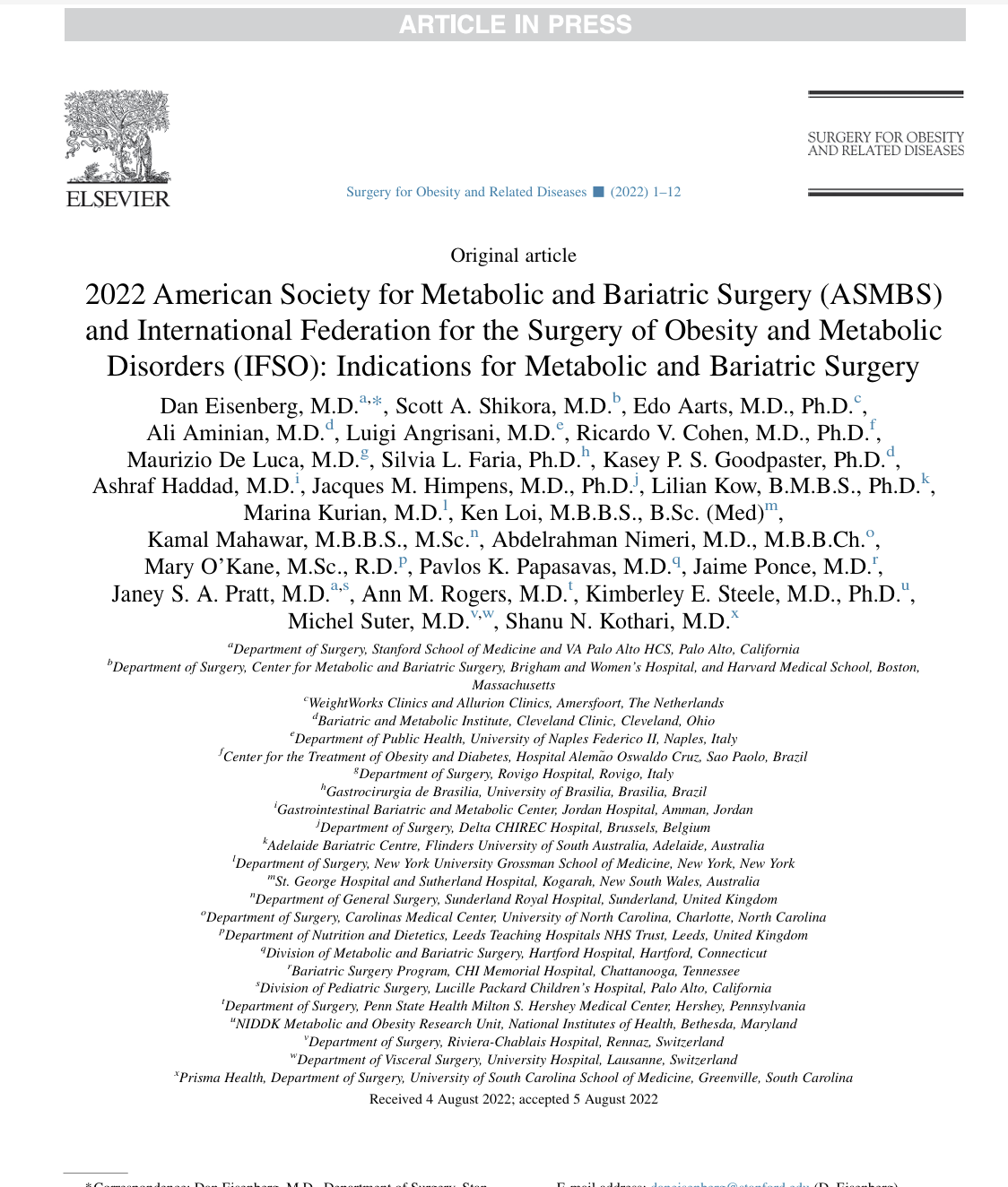
The resulting statement did something important: it legitimized bariatric surgery as a discipline and gave everyone — surgeons, hospitals, and insurers — a common framework (Eisenberg et al., Obesity Surgery, 2022). It recommended surgery for:
- BMI ≥40, or
- BMI ≥35 with a serious obesity-related condition (such as diabetes, sleep apnea, or hypertension),
- after a trial of nonsurgical treatment, performed by experienced surgeons, with lifelong follow-up.
Only two operations were endorsed: Roux-en-Y gastric bypass (RYGB) and vertical banded gastroplasty (VBG). Here's the catch — VBG has since been completely abandoned, and sleeve gastrectomy, now the most common bariatric procedure in the world, did not yet exist (Eisenberg et al., Obesity Surgery, 2022). The criteria still used today endorsed a procedure no one performs and omitted the one almost everyone does.
The evidence base was also thin by modern standards: there were no large randomized trials comparing surgery with medical therapy, and the available studies were mostly small series from the 1970s and 1980s. The NIH itself posts a disclaimer on consensus statements older than five years, noting they are "provided solely for historical purposes" and that some material "is likely to be out of date, and at worst simply wrong" (National Institutes of Health).
How Much Changed — and Why It Took 31 Years
While the criteria sat frozen, the field transformed. Open surgery gave way to laparoscopic and robotic approaches, and perioperative mortality fell severalfold to roughly 0.03%–0.2% (Eisenberg et al., 2022; Nguyen & Varela, Nat Rev Gastroenterol Hepatol, 2017). Sleeve gastrectomy and RYGB came to account for about 90% of all procedures, and randomized trials finally showed surgery was superior to medical therapy for type 2 diabetes and weight loss (Eisenberg et al., 2022).
In 2022, the American Society for Metabolic and Bariatric Surgery (ASMBS) and the International Federation for the Surgery of Obesity and Metabolic Disorders (IFSO) jointly issued updated, evidence-based indications using systematic (PRISMA) methodology across a far larger, modern literature (Eisenberg et al., Obesity Surgery, 2022).
Expected results are substantial: roughly 25% total weight loss at 12 months after sleeve gastrectomy and ~30% after gastric bypass, with sustained loss at five years (Elmaleh-Sachs et al., JAMA, 2023).
Safer by Design: The Rise of Accredited Centers
Part of why surgery became so safe is accreditation. As laparoscopic volume exploded in the early 2000s, complication rates at some low-volume centers were alarmingly high. In response, national accreditation programs were created and, in 2012, merged into the Metabolic and Bariatric Surgery Accreditation and Quality Improvement Program (MBSAQIP). Today there are more than 900 accredited centers in the US and Canada, capturing over 200,000 cases annually (American College of Surgeons, Optimal Resources, 2019).
The evidence supports accreditation: a systematic review of 13 studies covering more than 1.5 million patients found in-hospital mortality more than three times lower at accredited centers (0.06% vs. 0.22%), with reduced morbidity in most studies (Azagury & Morton, JACS, 2016). Complication rates also fell across the MBSAQIP era (Al-Mazrou et al., Am J Surg, 2023). Notably, CMS dropped its Center-of-Excellence requirement in 2013 after an analysis questioned the benefit among Medicare patients (Mehta & Allison, JAMA, 2018) — though emerging data suggest surgeon and hospital volume may matter as much as accreditation itself (Kapellas et al., Obesity Surgery, 2026). Most private insurers still prefer or require accredited centers.
Bariatric Surgery for Teens: From "No Data" to a Formal Recommendation
The 1991 statement explicitly said there was "no data available" for adolescents. That has changed dramatically. In 2023, the American Academy of Pediatrics recommended that pediatricians offer referral for adolescents 13 and older with severe obesity (BMI ≥120% of the 95th percentile) to comprehensive multidisciplinary surgical centers for evaluation (Hampl et al., Pediatrics, 2023).
Specific criteria include (Hampl et al., 2023; Lister et al., Nat Rev Dis Primers, 2023):
- Class 2 obesity (BMI ≥35, or ≥120% of the 95th percentile, whichever is lower) with a significant comorbidity such as type 2 diabetes, fatty liver disease, sleep apnea, or hypertension.
- Class 3 obesity (BMI ≥40, or ≥140% of the 95th percentile) — comorbidities not required.
Importantly, this is a Grade C, moderate-strength recommendation, reflecting that the evidence comes from strong observational studies rather than randomized trials (Hampl et al., 2023). Age alone is not the determinant — physical and psychosocial maturity matter, and a referral means evaluation, not automatic surgery. Data from Teen-LABS show durable weight loss and, in some cases, higher remission rates of diabetes and hypertension in adolescents than adults, supporting earlier intervention (Eisenberg et al., 2022; Kelly et al., JAMA, 2024).
How Insurance Companies Bend the Criteria
Here is where evidence and policy diverge most sharply. A survey of the highest-market-share US insurers found (Gebran et al., Obesity Surgery, 2020):
- 92% still require BMI ≥40, or ≥35 with a comorbidity — the 1991 standard.
- 87% require a supervised medical weight-management program before approval.
- 75% require a psychosocial evaluation.
- Only 67% would cover a second (revision) procedure for inadequate weight loss, despite obesity being a chronic, relapsing disease.
- 43% of policies covering adolescents impose a higher BMI threshold for teens than any guideline recommends.
On top of this, requirements vary wildly — anywhere from 1 to 8 preoperative requirements per plan, with Medicaid patients required to complete the most (averaging 6.6 months of supervised weight loss vs. 3.8 for commercial and 1.7 for Medicare/TriCare plans) (Gomez-Rexrode et al., Surgical Endoscopy, 2022).
The Supervised-Diet Requirement Isn't Evidence-Based
The most common hurdle — the mandatory supervised diet — does not do what insurers claim. A systematic review and meta-analysis found that insurance-mandated preoperative weight-loss programs do not reduce mortality or improve long-term weight loss (Kushner & Eagon, Obesity Surgery, 2021). A large single-center study of over 1,000 patients reached the same conclusion, adding that the requirement significantly delayed access to surgery — and concluded the practice "must be abandoned" (Hutcheon et al., Surg Obes Relat Dis, 2023). The ASMBS has stated that insurance-mandated preoperative weight loss is not supported by medical evidence (Bettini et al., Rev Endocr Metab Disord, 2020). What these programs reliably produce is patient attrition.
The Future: Moving Beyond BMI
Even the 2022 criteria lean heavily on BMI — and BMI has a fundamental flaw: it is just weight divided by height. It cannot distinguish muscle from fat, and it cannot tell you where fat is stored, which is what actually drives disease.
Visceral adipose tissue (VAT) — the fat around the organs — is the primary metabolic troublemaker, strongly linked to insulin resistance, type 2 diabetes, cardiovascular disease, and chronic inflammation. Subcutaneous fat is far less dangerous, and fat in the hips and thighs may even be protective (Valenzuela et al., Nat Rev Cardiol, 2023; Agrawal et al., Nat Commun, 2023). This is why two people with the same BMI can have completely different risk — and why 23.5% of "normal weight" adults are metabolically unhealthy while 31.7% of people with obesity are metabolically healthy (Sakers et al., Cell, 2022).
The data are compelling:
- A 2025 NHANES analysis of over 8,000 adults found VAT (measured by DEXA) strongly predicted metabolic syndrome, diabetes, and insulin resistance, proposing a sex-independent threshold near 100 cm² (Potter & Friedl, AJCN, 2025).
- UK Biobank MRI studies show VAT and ectopic fat predict diabetes and coronary disease even after adjusting for BMI, while BMI loses predictive power once these are included (Rask-Andersen et al., Int J Obes, 2026; Jung et al., Annals of Internal Medicine, 2025).
- A simple clinic tool — the hypertriglyceridemic waist (elevated waist circumference plus elevated triglycerides) — identifies excess visceral fat without any imaging (Tripathi et al., PLoS One, 2024).
The direction is clear. The future of candidacy lies in adiposity-based chronic disease framing — assessing the amount, distribution, and function of fat, not just the number on a scale. The tools (DEXA, AI-enabled CT body composition, metabolic markers) exist and are being validated. We're not there yet for insurance criteria, but BMI alone is an inadequate gatekeeper for a surgery that treats metabolic disease.
For readers in South Florida wondering whether they qualify, our bariatric surgery in Miami page outlines how consultation and evaluation work at our practice.
The Takeaway for Patients
If you've been told you don't qualify for bariatric surgery, ask the question that matters: by whose criteria? The thresholds your plan uses may be 35 years out of date — and may include requirements that every major medical society has questioned. Talk to a bariatric surgeon, understand the current ASMBS/IFSO and AAP guidelines, and get a second opinion. Obesity is a chronic disease, and surgery is one of the most effective, durable treatments medicine has for it.
Further Information
For additional context and a deeper professional perspective, you can read the companion LinkedIn article linked below.
Read on LinkedIn: The Bariatric Surgery Criteria Are 35 Years Old
Frequently Asked Questions (FAQ)
Do I qualify for bariatric surgery if my BMI is under 35?
Possibly — if you have metabolic disease (especially type 2 diabetes), modern guidelines say surgery should be considered at a BMI of 30–34.9.
Why does my insurance still use the old criteria?
Because insurers anchor to the 1991 NIH statement, despite the NIH acknowledging it is outdated.
Can adolescents get bariatric surgery?
Yes. Modern guidelines include adolescents with severe obesity, and the American Academy of Pediatrics recommends referral to a comprehensive multidisciplinary center for evaluation.
Is BMI still required?
BMI is still used for insurance approval, but modern clinical practice increasingly incorporates body composition and metabolic risk.
What if my insurance denies me?
Ask your surgeon to appeal using the 2022 ASMBS/IFSO guidelines and request a second opinion.
Obesity is a chronic disease involving excess or dysfunctional adipose tissue and its effects on health. Body mass index (BMI) is calculated from height and weight, but it does not directly measure body fat, distinguish fat from muscle, or show where fat is stored. Fat around internal organs—visceral fat—can be associated with metabolic complications, while people with the same BMI may have different body compositions and health risks.
This is why current discussions of obesity care increasingly consider complications and metabolic health alongside BMI. Body composition scans and other measures may provide additional information, but their use in surgical eligibility and insurance coverage is still evolving.
Medical Topics Covered


Dr. de la Cruz‑Muñoz specializes in advanced minimally invasive and robotic surgery, metabolic disease management, and comprehensive long‑term patient care. His work integrates clinical expertise, academic leadership, and a commitment to evidence‑based medicine. He has trained surgeons across the country, contributed to national guidelines, and is widely regarded for his outcomes, innovation, and patient‑centered approach.
Patients choose Dr. de la Cruz‑Muñoz for his combination of surgical excellence, metabolic expertise, and lifelong dedication to improving patient health through compassionate, high‑quality care.
Procedures We Offer





Conditions








FAQ
Current ASMBS and IFSO guidelines recommend considering metabolic and bariatric surgery for adults with a BMI of 35 or higher regardless of other conditions, and for those with a BMI of 30–34.9 who have metabolic disease such as type 2 diabetes (Eisenberg et al., Surgery for Obesity and Related Diseases, 2022). Lower thresholds apply to people of Asian ancestry. Many insurers still use older criteria — a BMI of 40, or 35 with a related condition. A consultation reviews your health, prior weight-loss attempts and goals to recommend the right option.
The 2022 ASMBS/IFSO guidelines recommend metabolic and bariatric surgery for people with a BMI of 35 or higher, regardless of whether they have obesity-related conditions. They also recommend considering surgery for people with a BMI of 30–34.9 who have metabolic disease, particularly when nonsurgical treatment has not led to adequate improvement. Individual evaluation is essential, and guidelines do not guarantee insurance coverage.
Insurance plans set their own coverage policies, which may rely on older criteria or add plan-specific requirements. These can include documentation of supervised weight-management programs or other conditions. Coverage varies by policy, so check your plan’s current requirements and ask your bariatric team about documentation and appeal options.
No. BMI is a measure based on height and weight, but it does not distinguish muscle from fat or show where fat is distributed. Clinicians may consider other health information, such as obesity-related conditions, metabolic markers, and body composition, as part of an evaluation. How those measures affect eligibility and coverage varies.
People Also Ask
Obesity is recognized as a chronic disease by major medical organizations, including the American Medical Association. It is influenced by genetics, hormones, brain signaling, environment, sleep, stress and medications — not simply willpower. Like other chronic diseases, it often requires long-term treatment, which may include nutrition, activity, behavioral support, medications and surgery. Lifestyle matters, but biology largely determines how the body responds.
The body has powerful systems that defend its weight. When you lose weight, hunger hormones rise, fullness hormones drop, the brain becomes more focused on food and metabolism slows — a process called metabolic adaptation. Genetics, sleep, stress, medications and the modern food environment add to the challenge. These are biological forces, not character flaws, which is why medical treatment is often needed.
Genetics play a major role. Studies of twins and adopted children suggest that roughly 40–70% of the variation in body weight is inherited, influencing appetite, fullness, metabolism and where fat is stored. Many genes each contribute a small effect, and a few rare single-gene forms cause severe early obesity. Genes interact with environment, sleep, stress and medications, so a family history raises risk but does not determine destiny.
GLP-1 medications mimic a natural gut hormone released after eating. They act on the brain to reduce hunger and increase fullness, slow stomach emptying so meals last longer, quiet "food noise," and improve insulin release and blood sugar. Tirzepatide also acts on a second hormone, GIP. In clinical trials, these medications produced average weight loss of about 15–20% (Wilding et al., New England Journal of Medicine, 2021; Jastreboff et al., New England Journal of Medicine, 2022).
Yes. Obesity is associated with more than 200 health conditions, including type 2 diabetes, high blood pressure, high cholesterol, heart disease, stroke, sleep apnea, fatty liver disease, reflux, osteoarthritis, infertility and PCOS, depression and at least 13 types of cancer. Losing weight — through medical treatment or bariatric surgery — improves or resolves many of these conditions.
Dieting alone usually cannot overcome the body's biological defenses against weight loss. As weight falls, hunger hormones rise, fullness hormones fall and metabolism slows — changes that can last for years. Most people regain the majority of diet-related weight loss within several years. That is not a failure of willpower, and it is why treatments that address appetite biology, such as GLP-1 medications and bariatric surgery, are more effective for many people with obesity.
Consider medical evaluation when excess weight affects your health, mobility or quality of life, or when you have related conditions such as prediabetes, diabetes, high blood pressure, sleep apnea, fatty liver or joint pain. Guidelines support medications for adults with a BMI of 30 or higher, or 27 or higher with a weight-related condition, and surgery for a BMI of 35 or higher, or 30 or higher with metabolic disease. Early treatment can help prevent complications.
Yes. Bariatric surgery treats the biological drivers of obesity, changing hunger and fullness hormones, insulin sensitivity and the weight the body defends. It is the most effective and durable treatment for severe obesity, producing large, sustained weight loss and improving or resolving diabetes, high blood pressure, sleep apnea and fatty liver. Long-term studies show it also reduces the risk of heart disease, cancer and early death.