

Why You May Feel Weaker After Bariatric Surgery — And How to Protect Your Muscle

Quick Answer
Watch Related Video
Article
Why You May Feel Weaker After Bariatric Surgery — And How to Protect Your Muscle
Most people expect to feel lighter after bariatric surgery. What they don’t expect is to feel weaker.
If you’ve ever wondered why your strength drops faster than the number on the scale, you’re not alone — and there’s a real, biological reason behind it.
In the first weeks after surgery, your body is undergoing one of the most dramatic metabolic shifts of your life. You’re eating less, absorbing fewer calories, and losing weight quickly. But here’s the part most patients never hear:
Early weight loss is not the same as fat loss.
A significant portion of that early drop can come from muscle, not fat — and that matters more than you think.
This week’s theme is all about understanding why muscle loss happens, how it affects your metabolism, and what you can do to protect your strength, stability, and long‑term results.
Muscle Is the Engine of Your Metabolism
Muscle isn’t just for strength. It’s the most metabolically active tissue in your body.
It determines:
How many calories you burn at rest
How stable and balanced you feel
How strong your metabolism stays long‑term
How well you maintain your weight loss
When you lose muscle, your metabolism slows down — sometimes dramatically.
That’s why two people can weigh the same but have completely different metabolic rates. Muscle is the difference.
After bariatric surgery, protecting your muscle is one of the most important things you can do for your health.
Why Muscle Loss Happens After Bariatric Surgery
Most patients assume muscle loss is “just part of losing weight.”
It’s not.
It happens for three specific reasons, all of which are predictable — and preventable.
1. Your protein intake drops sharply
In the first weeks after surgery, your stomach capacity is tiny.
You get full quickly.
You can only take in small amounts at a time.
That means your protein intake drops, often below what your body needs to maintain muscle.
When your body can’t get enough amino acids from food, it pulls them from the only place available:
Your muscle.
2. You lose muscle up to 3× faster than fat early on
This surprises almost everyone.
In the early postoperative period, your body is in a rapid weight‑loss state.
Because protein intake is low and calorie intake is restricted, your body uses muscle as an energy source.
This is why some patients feel:
Weaker
Less stable
More fatigued
“Skinny‑fat” instead of lean
It’s not because the surgery “slows your metabolism.”
It’s because muscle is being lost faster than fat.
3. Certain foods accelerate muscle loss
Two categories of foods are the biggest culprits:
Slider foods
These include:
Crackers
Chips
Cookies
They dissolve quickly, don’t trigger restriction, and take the place of protein.
They fill your stomach without feeding your muscle.
Sugary drinks
They add calories without adding nutrients.
Your body gets energy, but your muscle gets nothing.
Every time these replace protein, your muscle pays the price.
Walking Is Great — But It Doesn’t Protect Muscle
Walking is one of the best things you can do after surgery.
It improves:
Heart health
Circulation
Mood
Recovery
But walking does not send the signal your body needs to preserve muscle.
Your body needs a very specific message:
“This muscle is being used. Keep it.”
Walking doesn’t deliver that message.
Resistance training does.
This doesn’t mean heavy weights or a gym membership.
Even light resistance — bands, bodyweight, small dumbbells — is enough to tell your body:
Hold onto the muscle. Burn the fat.
How to Protect Your Muscle After Bariatric Surgery
The good news?
Muscle loss is not inevitable.
You can protect your strength and metabolism with a few simple strategies.
1. Prioritize protein at every meal
Protein is the single most important nutrient after surgery.
Aim to make it the first thing you eat, every time.
Protein:
Preserves muscle
Supports healing
Keeps you full
Stabilizes blood sugar
Protects your metabolism
Even small amounts add up.
2. Start light resistance training as soon as you’re cleared
You don’t need to lift heavy.
You just need to activate your muscle.
Great early options include:
Resistance bands
Light dumbbells
Bodyweight exercises
Chair‑based movements
Wall push‑ups
Mini‑squats
The goal is not intensity — it’s consistency.
3. Avoid slider foods and sugary drinks
These foods digest quickly and replace protein.
They’re the fastest way to lose muscle and slow your metabolism.
If you’re going to snack, choose:
Greek yogurt
Cottage cheese
String cheese
Jerky
Protein shakes
Hard‑boiled eggs
Protein‑forward snacks protect your muscle.
4. Track your body composition — not just your weight
The scale only tells part of the story.
Body composition tells you:
How much fat you’re losing
How much muscle you’re keeping
How your metabolism is responding
Whether your plan needs adjusting
This is why I give patients body fat percentage goals, not weight goals.
Why Protecting Muscle Changes Your Long‑Term Results
Patients who protect their muscle:
Lose more fat
Keep their metabolism higher
Maintain their weight loss longer
Feel stronger and more stable
Avoid the “skinny‑fat” look
Have better energy and mobility
Patients who lose muscle:
Regain weight more easily
Feel weaker
Burn fewer calories
Lose strength and stability
Struggle with fatigue
The difference is dramatic — and completely preventable.
The Bottom Line
Bariatric surgery is one of the most powerful tools in medicine.
But the surgery alone doesn’t determine your long‑term success.
Your muscle does.
Protecting your muscle is the difference between:
Losing weight
and
Transforming your health
Between:
A smaller body
and
A stronger metabolism
Between:
Short‑term results
and
A lifetime of metabolic health
This week’s content — and next week’s long‑form YouTube video — will walk you through exactly how to protect your muscle, preserve your metabolism, and build the strongest version of yourself.
Obesity By The Numbers
condition Muscle loss occurs due to low protein intake, rapid postoperative weight loss, and slider foods replacing protein. Resistance training and protein preserve muscle.
Medical Topics Covered
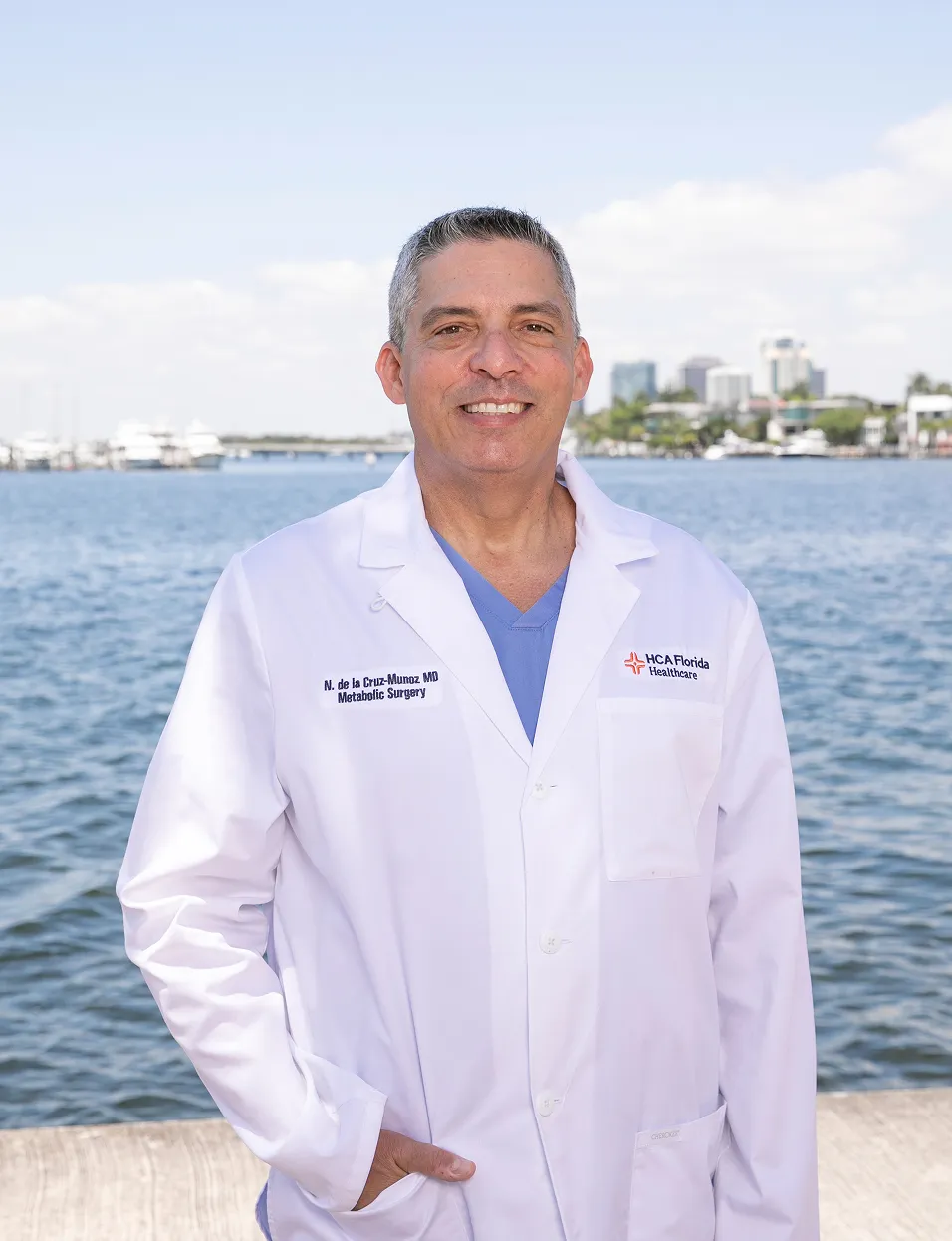

Dr. de la Cruz‑Muñoz specializes in advanced minimally invasive and robotic surgery, metabolic disease management, and comprehensive long‑term patient care. His work integrates clinical expertise, academic leadership, and a commitment to evidence‑based medicine. He has trained surgeons across the country, contributed to national guidelines, and is widely regarded for his outcomes, innovation, and patient‑centered approach.
Patients choose Dr. de la Cruz‑Muñoz for his combination of surgical excellence, metabolic expertise, and lifelong dedication to improving patient health through compassionate, high‑quality care.
Procedures We Offer





FAQ
People Also Ask
Obesity is recognized as a chronic metabolic disease influenced by genetics, hormones, environment, and biological factors — not simply lifestyle choices.
The body has built-in mechanisms that defend weight, including hunger hormones and metabolic adaptations that make long-term weight loss challenging.
Yes. Genetics can significantly influence body weight regulation, appetite, metabolism, and an individual's susceptibility to obesity.
GLP-1 medications help regulate appetite, slow stomach emptying, improve satiety, and support sustainable weight management.
Yes. Obesity is associated with conditions such as Type 2 diabetes, hypertension, sleep apnea, fatty liver disease, and cardiovascular disease.
Dieting alone often cannot overcome the biological adaptations that increase hunger and decrease energy expenditure after weight loss.
Medical evaluation may be appropriate when excess weight affects health, quality of life, or contributes to obesity-related medical conditions.
Yes. Bariatric surgery addresses biological and metabolic factors involved in obesity and can lead to significant long-term health improvements.