Post‑Bariatric Nausea & Vomiting: What’s Normal, What’s Dangerous, and When to Call Your Surgeon

Quick Answer
Watch Related Video
Article
Vomiting is not the price you pay for bariatric surgery. It is not proof the surgery is working. It is a symptom.
Mild nausea can happen during the first day or two after weight loss surgery. But vomiting that continues, gets worse, or comes back after it stopped may signal a complication. Persistent vomiting can lead to dehydration, kidney problems, dangerous vitamin deficiencies, and even permanent nerve damage.
So when should you call your surgeon? What can you safely try at home? And when is vomiting a true emergency? This guide walks through the most important rule first, then explains why nausea happens, how your surgical team prevents it, what you can control at home, and the warning signs you should never ignore.
The most important rule: persistent or recurrent vomiting after bariatric surgery is not normal and needs to be evaluated.
What Is Normal After Bariatric Surgery?
Some nausea is common during the first day or two. Your body has just been through a major operation. Anesthesia can upset your stomach, pain medication can contribute, and dehydration, anxiety, and the physical stress of surgery can all make you feel sick.
But nausea is not a required part of recovery. You do not have to vomit for your surgery to be successful, and you should not assume ongoing vomiting is something you simply have to tolerate.
The most important question is not "Did I feel sick?" It is "Am I getting better or worse?"
A reassuring recovery usually follows a gradual upward trend:
- Your nausea is becoming less intense.
- You can slowly tolerate small amounts of fluid.
- You are progressing through the diet stages as instructed.
- Your pain is manageable.
- You are not developing new symptoms.
Recovery does not have to improve perfectly every hour. You may have good periods and difficult periods. What matters is the overall direction.
A concerning pattern looks different:
- Vomiting continues beyond the early recovery period.
- Vomiting improves, then suddenly returns.
- You cannot keep down even small sips of fluid.
- Your abdominal pain is worsening.
- You develop a fever.
- Your heart is beating unusually fast.
- You feel faint, confused, or severely weak.
- You are urinating very little or not at all.
These symptoms can have different causes. Some are minor, but others may signal dehydration, medication problems, or a surgical complication. You cannot reliably determine the cause at home. If your recovery is moving backward, contact your surgical team. If your symptoms are severe, sudden, or rapidly worsening, seek urgent medical care.
Do not wait until you feel like the "perfect" patient. Your job is to notice the pattern, follow your instructions, and report problems early.
Why Are Bariatric Patients So Prone to Nausea?
Once you understand the reasons, the prevention strategy makes sense. There are two separate sources of risk that stack on top of one another.
Patient and anesthesia factors. The well-established predictors of nausea and vomiting after any surgery are being female, being a nonsmoker, being younger, and having a history of postoperative nausea or motion sickness. These four factors form the Apfel score, commonly used in general surgery to estimate risk. In one study of more than 400 surgical patients, being female was associated with roughly three times the odds of early nausea and vomiting, and a history of motion sickness roughly doubled the risk. A body mass index above the overweight range was itself an independent risk factor that more than doubled the odds, so the very characteristic that brings you to a bariatric program can start your nausea risk higher than average.
Anesthesia and surgical factors matter just as much, and many can be changed: volatile inhaled anesthetic gases, nitrous oxide, a longer operation, opioid pain medication, and low blood pressure during the immediate recovery period. A large part of your risk falls in this modifiable category, which is why prevention is taken seriously.
Anatomy. This is the part specific to bariatric surgery. The operation you had affects how likely you are to feel sick, what may be causing it, and which complications must be considered if symptoms continue.
The Operation Matters: Sleeve Versus Bypass
The sleeve gastrectomy, currently the most commonly performed bariatric procedure, removes about 80 percent of the stomach, leaving a narrow vertical tube. That tube has less ability to stretch, so when food enters, pressure can rise quickly and directly trigger nausea and reflux. Early nausea after a sleeve is often a predictable consequence of the new anatomy rather than bad luck. The sleeve carries the highest rate of postoperative vomiting among standard bariatric procedures, roughly twice that of gastric bypass (Hou et al., International Journal of Obesity, 2025).
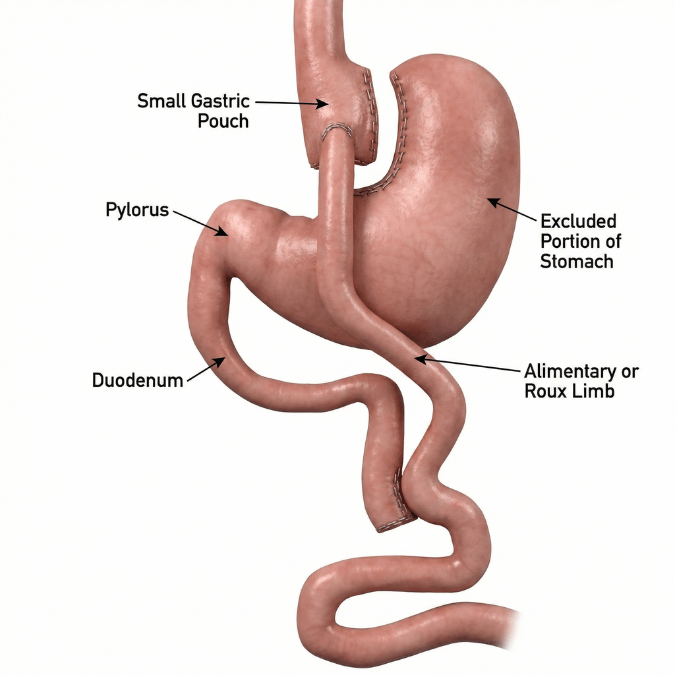
A Roux-en-Y gastric bypass has a different risk pattern. In the very early recovery period, bypass patients may have somewhat less immediate nausea. Over the longer term, however, bypass carries a greater burden of certain serious complications, including internal hernias, marginal ulcers, and nutritional deficiencies. Sleeve patients, by contrast, have higher rates of later reflux, gallstones, and revisional surgery.
Anyone who gives you one universal answer about nausea, or bariatric risk in general, is leaving out one of the most important variables: which operation you had.
GLP-1 Medications, Nausea, and Anesthesia Safety
GLP-1 medications, known as Ozempic, Wegovy, Mounjaro, or Zepbound, directly affect your nausea and your safety under anesthesia. Nausea and vomiting are the most common side effects of this entire class of medication because these drugs slow how fast your stomach empties.
That delayed emptying creates a serious anesthesia concern. General anesthesia requires an empty stomach, because sedation switches off the reflexes that protect your lungs. Patients on these drugs are about four times more likely to have retained food in the stomach even after normal fasting, with roughly 14 percent of GLP-1 users showing retained contents compared with just over 2 percent of non-users (Jalleh et al., Journal of Clinical Endocrinology and Metabolism, 2024). Whether that retained food translates into more aspiration during surgery remains unsettled, so teams manage the risk they can measure without overstating the one they cannot.
Current multi-society perioperative guidance individualizes management rather than mandating that everyone stop the drug (Kindel et al., Surgical Endoscopy, 2025). A common approach holds weekly injections such as semaglutide or tirzepatide for one week before the procedure and daily pills on the day of the procedure, and treats any patient with day-of nausea, bloating, or a sense of retained food as a full stomach regardless of fasting time.
The single most important thing you can do is tell your surgical and anesthesia team explicitly that you take one of these medications and exactly when you took your last dose. Do not assume it is in your chart, and do not assume a weight-loss shot does not count as a medication. It absolutely counts.
How Your Team Prevents Nausea in the Operating Room
A large part of whether you feel sick is influenced by decisions made while you are asleep. Many programs use an Enhanced Recovery After Surgery (ERAS) approach, in which preventing nausea is a central goal. When researchers pool bariatric studies, ERAS protocols reduce postoperative nausea and vomiting by more than half compared with older approaches (Parisi et al., Obesity Surgery, 2020).
The first principle is to treat every bariatric patient as high-risk, rather than using a score to decide who deserves prevention. The Apfel score has not been well validated in bariatric patients, and even when prevention is based on it, studies have reported nausea and vomiting in the recovery room in as many as 82 percent of patients.
Prevention typically includes:
- Choosing the anesthetic carefully. Inhaled gases are strong, well-established triggers of nausea. Total intravenous anesthesia (TIVA) with propofol can actively reduce nausea. The evidence is strongest in general surgery and more mixed in bariatric patients, so propofol is one part of a larger plan rather than a stand-alone solution.
- Limiting opioids. Opioids are a major, modifiable nausea trigger. Non-opioid options include acetaminophen, lidocaine, ketamine, dexmedetomidine, and regional techniques. Pooled bariatric data show opioid-free anesthesia reduces nausea and vomiting, with a tradeoff of possible slow heart rate that the team monitors.
- Using more than one anti-nausea medication. In high-risk patients, two or more antiemetics from different drug classes work better than one, because nausea is triggered through multiple pathways. A typical regimen may include dexamethasone near the start of surgery, ondansetron near the end, a scopolamine patch for selected patients, and, in higher-risk cases, aprepitant (Emend). The FDA-approved dose of aprepitant for preventing postoperative nausea and vomiting is 40 mg by mouth, though some bariatric studies used the higher 80 mg chemotherapy dose.
- Maintaining fluids and blood pressure. Low blood pressure and dehydration both worsen nausea, so IV fluids and stable blood pressure are part of the prevention strategy, not just routine care.
What You Can Control at Home: Eating Technique
For many patients, the most common reason vomiting starts at home is not a complication. It is technique: how you eat, how quickly you eat, and whether your diet has advanced faster than your new anatomy can handle. This is not a moral failing. Your anatomy has changed and now follows different rules.
The habits that matter most:
- Keep bites small. A large forkful arriving at a narrow sleeve or a one-to-two-ounce pouch may not pass easily. Food backs up, pressure builds, and vomiting can follow.
- Chew thoroughly. Your new stomach has less room and less ability to churn food, so your teeth must do more of the mechanical work. Chew each bite to a paste-like consistency before swallowing.
- Slow down. There is a delay between when your small stomach fills and when your brain receives the message. Eat slowly and put your fork down between bites so the fullness signal arrives while you can still stop.
- Separate liquids from food. Washing solids down with liquid can overfill the space and push food through too quickly, and after a bypass it can contribute to dumping. A common recommendation is to stop fluids about 30 minutes before eating and wait about 30 minutes after.
- Advance textures gradually. Early swelling and inflammation mean your stomach may not be ready for solids. A typical progression is clear liquids for the first day or two, full liquids for roughly two weeks, purees at about two weeks, then soft foods, then regular solids around four to six weeks. The schedule reflects the healing timeline, not punishment.
- Prioritize hydration. Aim for at least 60 ounces (about 1,800 mL) of fluid daily unless told otherwise, using small frequent sips. Hydration is one of the first things to fall apart when nausea begins.
If nausea clearly begins after a specific behavior, adjust your technique first: smaller bites, more chewing, slower eating, separating fluids, or returning to the previous diet stage. Very often that is enough. But if you correct your technique and are still vomiting, that is an alarm bell that requires evaluation.
When It Is a Complication
When your recovery stops following the expected pattern, a structural or functional problem must be considered. In one study of patients with persistent nausea and vomiting after gastric bypass, endoscopy found a significant abnormality about 62 percent of the time, including marginal ulcers, strictures, and staple-line problems (Evans et al., Gastrointestinal Endoscopy, 2015). That figure applies to patients whose symptoms persisted and were severe enough to require evaluation, not to everyone who feels queasy on day two.
After a sleeve, the classic mechanical problem is a stricture (stenosis). It is uncommon, reported in roughly 0.5 to 3.5 percent of sleeve procedures, and most often occurs near the incisura angularis (about 70 percent of cases). A twisted or helical sleeve can behave like an obstruction without a fixed narrowing. Sleeve stenosis most often appears between two and six months after surgery, so worsening food intolerance months later should not be dismissed as poor eating technique. Endoscopic balloon dilation resolves approximately 78 percent of cases, and only about one in six patients ultimately needs surgical revision (Eguchi et al., Surgical Endoscopy, 2025).
Leaks are the complication patients fear most. A leak may not appear immediately and can develop over days to weeks, sometimes downstream from a narrowing where pressure stresses the healing staple line. After a sleeve, leaks most often occur high on the stomach near the angle of His; after a bypass, near the gastrojejunal connection. The combination of vomiting, abdominal pain, fever, and a fast heart rate is a surgical emergency. Contact your surgical team urgently.
After a bypass, watch for gastrojejunal stricture and marginal ulcers. A stricture at the pouch-intestine connection often responds to endoscopic balloon dilation. Marginal ulcers develop near that connection and may affect up to 16 percent of bypass patients, with smoking and NSAIDs (ibuprofen, naproxen) as major risk factors (Fry and Finks, JAMA Surgery, 2023; Beran et al., Journal of Gastrointestinal Surgery, 2023). The typical symptom is persistent gnawing upper abdominal pain, often worse after eating. Treatment usually includes high-dose acid suppression, stopping smoking, and avoiding NSAIDs.
Internal hernia is a bypass-specific emergency. A loop of bowel can slip through a surgically created space (classically Petersen's space or near the jejunojejunostomy) and twist. Reported rates range from roughly 3 to 14 percent. The dangerous part is that the exam, blood tests, and even a CT scan may look normal. CT is about 82 percent sensitive and 85 percent specific, so a normal scan does not rule it out, and surgeons may have a low threshold for diagnostic laparoscopy when suspicion is high. Vague, persistent, or meal-related abdominal pain after a bypass should always be taken seriously.
Functional causes exist too, including post-surgical gastroparesis, reflux (especially after sleeve), and new IBS-like symptoms reported in about one-third of patients a year after surgery. These are real diagnoses, but they should come only after mechanical causes such as stricture, ulcer, obstruction, and internal hernia have been excluded.
Dumping syndrome can also cause nausea, especially after bypass, when sugary or rapidly emptying foods enter the intestine too quickly, causing cramping, nausea, diarrhea, sweating, and a racing heartbeat. Dumping is usually tied to what and how you ate, whereas mechanical problems tend to progress even when you eat carefully.
Why Vomiting Itself Is Dangerous
Vomiting is more than a warning sign. When it continues for days, it does damage regardless of the cause.
Dehydration develops quickly because your new anatomy already makes it hard to drink enough. It causes dizziness, a racing heart, dark or scant urine, electrolyte disturbances, and kidney injury. It is a common reason for hospital readmission, and when caught early the fix is often simple IV fluids.
Thiamine (vitamin B1) deficiency is quieter but more dangerous because it can cause permanent harm. Your body stores only about two to three weeks of thiamine, and prolonged vomiting burns through it fast. Severe deficiency causes Wernicke encephalopathy, a serious brain condition that most often appears within the first months after surgery. In a literature review, the great majority of post-bariatric Wernicke cases occurred within six months, and vomiting preceded it in most patients (Yu et al., Obesity Surgery, 2023). Early symptoms (nausea, vomiting, weakness, fatigue) mimic ordinary recovery, making it easy to miss. The classic warning signs are eye movement or vision changes, unsteadiness and difficulty walking, and confusion, but you do not need all three to be in danger. Any one of them in a patient who has been vomiting is a red flag requiring immediate action, because untreated disease can progress to permanent brain injury.
A critical safety rule: if you are vomiting and need IV fluids, you must receive thiamine, given before or along with any sugar-containing fluids, never after. Giving glucose to a thiamine-depleted patient can trigger Wernicke encephalopathy. Many programs give thiamine to any patient who presents with vomiting because the cost of giving it is essentially nothing while the cost of missing a deficiency can be catastrophic.
Your Home-Monitoring Plan
Once you are home, your recovery is partly in your hands. Track these daily and write them down, because memory blurs when you are unwell:
- Fluids: Aim for at least 60 ounces (1,800 mL) per day. If you slide under this, treat it as an early warning.
- Vomiting: Track frequency and whether it is linked to eating. Ask each evening whether today is better than yesterday. Flat, worsening, or returning trends are concerning.
- Urine: Less frequent or dark, concentrated urine is an early dehydration signal.
- Protein and vitamins, including thiamine: Easy to let slide when you feel sick, but missing them consistently is how complications start.
Call your team today, without waiting for your next appointment, if you:
- Cannot keep fluids down for about a day.
- Have vomiting that persists or returns after stopping.
- Have vomiting with belly pain, fever, or a racing heart (the danger cluster suggesting a leak, obstruction, or hernia). Call right now or go to the emergency department.
- Show signs of dehydration such as dizziness, racing heart, reduced urination, or mental fogginess.
- Notice any neurological change such as confusion, vision changes, or unsteadiness. These are warning signs of thiamine deficiency and require urgent care.
When in doubt, call. You will never annoy your team by checking. Patients who get hurt are almost always the ones who waited and toughed it out.
Further Information
For additional context and a deeper professional perspective, you can read the companion LinkedIn article linked below
Understanding the Biology Behind Post‑Bariatric Nausea & Vomiting
Nausea after bariatric surgery is not random — it is biological. Several overlapping systems influence how your stomach empties, how pressure builds inside your new anatomy, and how your brain interprets signals from the gut. When these systems are stressed, nausea and vomiting can occur.
1. The Gut–Brain Axis Is Hyper‑Sensitive After Surgery
Your stomach and intestines communicate with your brain through hormones and nerve pathways. Surgery temporarily disrupts this communication. Anesthesia, pain medications, dehydration, and stress amplify these signals, making the gut more reactive than usual.
2. Stomach Emptying Slows Dramatically
Both sleeve gastrectomy and gastric bypass alter gastric motility. The stomach empties more slowly, especially in the early postoperative period. This delay increases pressure, triggers stretch receptors, and sends nausea signals to the brain. GLP‑1 medications (Ozempic, Wegovy, Mounjaro, Zepbound) slow emptying even further, which is why they increase nausea risk.
3. Pressure Rises Quickly in the New Anatomy
A sleeve is a narrow, high‑pressure tube. A bypass pouch holds only an ounce or two. Large bites, poorly chewed food, or drinking with meals can overwhelm this limited capacity. Pressure builds, the stomach cannot accommodate, and food comes back up. This is physiology — not patient failure.
4. Hormonal Shifts Influence Nausea
Ghrelin, GLP‑1, CCK, and other gut hormones change immediately after surgery. These hormones regulate hunger, fullness, and gastric motility. Their sudden shift can temporarily increase nausea sensitivity until the body adapts.
5. Anesthesia and Opioids Disrupt Normal Gut Function
Volatile anesthetic gases, nitrous oxide, and opioid pain medications slow the gut and activate nausea pathways in the brainstem. Bariatric patients are already high‑risk, so these effects stack on top of the anatomical changes.
6. Blood Pressure and Hydration Affect Nausea Signals
Low blood pressure and dehydration reduce blood flow to the gut, worsening nausea. As your transcript notes: “Low blood pressure after surgery was one of the strongest predictors of early nausea.” Adequate fluids and stable blood pressure are part of nausea prevention, not just routine care.
7. Structural Problems Change the Biology Entirely
When vomiting persists despite perfect technique, the biology shifts from functional to structural.Examples include:
- Sleeve stenosis (fixed narrowing or twisted sleeve)
- Marginal ulcers
- Gastrojejunal strictures
- Internal hernias
- Leaks
These conditions alter pressure, motility, and nerve signaling — creating nausea that will not resolve without evaluation.
Bottom Line
Post‑bariatric nausea is rooted in physiology: altered anatomy, slowed emptying, hormonal shifts, anesthesia effects, and pressure dynamics. Understanding these biological drivers helps patients recognize what is normal, what is preventable, and what requires urgent evaluation.
Medical Topics Covered


Dr. de la Cruz‑Muñoz specializes in advanced minimally invasive and robotic surgery, metabolic disease management, and comprehensive long‑term patient care. His work integrates clinical expertise, academic leadership, and a commitment to evidence‑based medicine. He has trained surgeons across the country, contributed to national guidelines, and is widely regarded for his outcomes, innovation, and patient‑centered approach.
Patients choose Dr. de la Cruz‑Muñoz for his combination of surgical excellence, metabolic expertise, and lifelong dedication to improving patient health through compassionate, high‑quality care.
Procedures We Offer






Conditions


FAQ
Mild nausea during the first day or two is common, but persistent, worsening, or recurring vomiting is not normal and should be evaluated. Vomiting is a symptom, not proof the surgery is working. The most important sign is the overall trend: improving symptoms are reassuring, while flat, worsening, or returning vomiting warrants a call to your surgical team.
Call the same day if you cannot keep fluids down for about aday, if vomiting persists or returns after stopping, or if you noticedehydration signs such as dizziness, dark urine, or a racing heart. Seekemergency care immediately for vomiting combined with abdominal pain, fever,and a fast heart rate, or for any confusion, vision changes, or unsteadiness,which can indicate a dangerous thiamine deficiency.
If you have corrected your eating technique and still vomit, a structural or functional problem may be present. After a sleeve, a stricture (narrowing) isthe classic cause and often appears two to six months out. After a bypass, marginal ulcers, a gastrojejunal stricture, or an internal hernia should be considered. In patients with persistent post-bypass vomiting, endoscopy finds a significant abnormality about 62 percent of the time, so evaluation is worthwhile.
TheseGLP-1 medications slow stomach emptying and can leave food in the stomach despite fasting, which raises anesthesia safety concerns. Many teams hold weekly injections for about a week and daily pills on the day of surgery, but recommendations vary and management is individualized. The most important step is to tell your surgical and anesthesia team that you take one and exactly when you took your last dose.
People Also Ask
Obesity is recognized as a chronic metabolic disease influenced by genetics, hormones, environment, and biological factors — not simply lifestyle choices.
The body has built-in mechanisms that defend weight, including hunger hormones and metabolic adaptations that make long-term weight loss challenging.
Yes. Genetics can significantly influence body weight regulation, appetite, metabolism, and an individual's susceptibility to obesity.
GLP-1 medications help regulate appetite, slow stomach emptying, improve satiety, and support sustainable weight management.
Yes. Obesity is associated with conditions such as Type 2 diabetes, hypertension, sleep apnea, fatty liver disease, and cardiovascular disease.
Dieting alone often cannot overcome the biological adaptations that increase hunger and decrease energy expenditure after weight loss.
Medical evaluation may be appropriate when excess weight affects health, quality of life, or contributes to obesity-related medical conditions.
Yes. Bariatric surgery addresses biological and metabolic factors involved in obesity and can lead to significant long-term health improvements.