
Heartburn After Gastric Sleeve: Is It Normal, and What Fixes It?

Quick Answer
Watch Related Video
"I Never Had Heartburn Until My Sleeve"
I hear that sentence every week. Reflux after sleeve gastrectomy is one of the most common problems people develop after weight loss surgery. Some had mild heartburn that got worse. Others never had it before. Either way, it's not something you should just live with, and it's not something you have to.
I run a regional referral center for reflux and hiatal hernia in Miami, and foregut surgery is the operation I perform most often. This article focuses on the practical questions: Is heartburn after a sleeve normal? When is it a warning sign? What tests do you need? And what are the options when medication isn't enough? For the bigger picture on how each bariatric operation affects reflux, read reflux after bariatric surgery.
Is Heartburn After a Gastric Sleeve Normal?
Some reflux in the first weeks to months after a sleeve gastrectomy is common while the stomach heals and you adjust to eating. Many patients are kept on an acid-reducing medication during this period. But reflux that continues past the first several months, gets worse over time, or needs daily medication to control isn't "just part of the sleeve." It deserves an evaluation.
Reflux after a sleeve is also often silent. In one randomized trial, about half of sleeve patients had measurable acid reflux at one year, and most of those with reflux or esophageal inflammation had no symptoms at all. That's why we recommend an upper endoscopy after a sleeve even if you feel fine.
Why the Sleeve Causes Reflux
- Higher pressure. The sleeve turns the stomach into a narrow tube. Pressure inside it rises, and contents push upward.
- Loss of the natural valve angle. Removing the upper stomach (fundus) changes the angle where the esophagus meets the stomach, which normally helps block reflux.
- Hiatal hernia. A hiatal hernia that was missed, new or recurrent lets the top of the sleeve slide into the chest.
- Narrowing or twisting. A stricture or a twist in the middle of the sleeve blocks emptying, so food and acid back up.
- A dilated upper sleeve (neofundus). The top of the sleeve can stretch over time and hold acid.
Warning Signs That Need Attention
- Heartburn or regurgitation most days, or needing medication every day
- Food or liquid coming up into your throat, especially when lying down
- Night cough, hoarseness or a sore throat in the morning (signs of silent reflux, or LPR)
- Trouble swallowing or food getting stuck
- Vomiting, chest pain or pain in the upper belly after meals
- Black stools, vomiting blood or unexplained anemia, which need urgent care
Tests for Reflux After a Sleeve
- Upper endoscopy (EGD) looks for esophagitis, Barrett's esophagus, a hiatal hernia and narrowing.
- Upper GI series shows the shape of the sleeve, a twist, a stricture or a hernia.
- pH or impedance testing (such as a 24-hour test or a wireless Bravo capsule) measures how much reflux is happening and whether it matches your symptoms.
- Esophageal manometry checks how well the esophagus moves food down, which helps choose the right operation.
- CT scan in some cases, to look at the sleeve's anatomy in detail.
Treatment Options, From Simple to Surgical
Lifestyle and medication
Smaller meals, not drinking with meals, not lying down for two to three hours after eating, raising the head of the bed and avoiding alcohol and trigger foods all help. Proton pump inhibitors (PPIs) control symptoms for many people. But medication doesn't fix the mechanics. If you're still having symptoms on PPIs, see still have heartburn on PPIs? and should I stay on PPIs or have surgery?
Treating a stricture or twist
A narrowing can often be treated endoscopically with balloon dilation. Learn more about gastric sleeve stricture management.
Hiatal hernia repair and cardiopexy
For selected patients with a hernia and otherwise good sleeve anatomy, a hiatal hernia repair after sleeve combined with a ligamentum teres cardiopexy can rebuild the anti-reflux barrier while keeping the sleeve.
LINX magnetic sphincter
LINX can be an option for some sleeve patients with good esophageal function and no major anatomic problem.
Conversion to gastric bypass
For most patients with significant or persistent reflux after a sleeve, especially with esophagitis, Barrett's, a large hernia or a need for more weight loss, a conversion to Roux-en-Y gastric bypass is the most reliable fix. The bypass lowers pressure and diverts acid and bile away from the esophagus. It's considered the anti-reflux operation of choice after a sleeve, and most patients have major improvement or come off reflux medication.
A traditional fundoplication (Nissen) usually isn't possible after a sleeve, because the part of the stomach used for the wrap has been removed.
Don't Ignore Reflux After a Sleeve
Uncontrolled reflux can damage the esophagus over time and lead to Barrett's esophagus, a precancerous change. The good news is that it's very treatable once it's properly evaluated. Read more in from heartburn to Barrett's to cancer.
Frequently Asked Questions
How long does reflux last after a gastric sleeve?
Early reflux often improves within the first few months. Reflux that lasts beyond about six months, or that keeps getting worse, usually has a mechanical cause and should be evaluated.
Can reflux after a sleeve be fixed without converting to a bypass?
Sometimes. A hiatal hernia repair with cardiopexy, treating a stricture, or LINX can help selected patients. Others do best with a bypass. Testing guides the choice.
Will I lose more weight if I convert my sleeve to a bypass?
Many patients do, which makes conversion a good option for people who have both reflux and weight regain.
Is surgery for reflux after a sleeve covered by insurance?
Conversion for documented reflux is commonly covered. Our team can help with testing and approvals.
Get Your Reflux Evaluated
I see patients from across the United States for reflux after sleeve gastrectomy, including complex cases after failed prior repairs. Schedule an in-office or virtual visit by calling 305-692-0392 or emailing appt@delacruzmunoz.com. If you're traveling, plan on about 7 to 9 days in Miami for a conversion to bypass, or about 3 to 5 days for a hernia repair.
Watch my video on this topic: Reflux After Sleeve Gastrectomy
Further Information
~50%
Of sleeve patients had measurable acid reflux at one year in a randomized trial, often without symptoms
6 months
Reflux lasting longer than this after a sleeve should be evaluated
#1
Foregut and reflux surgery is Dr. de la Cruz-Muñoz's most commonly performed operation
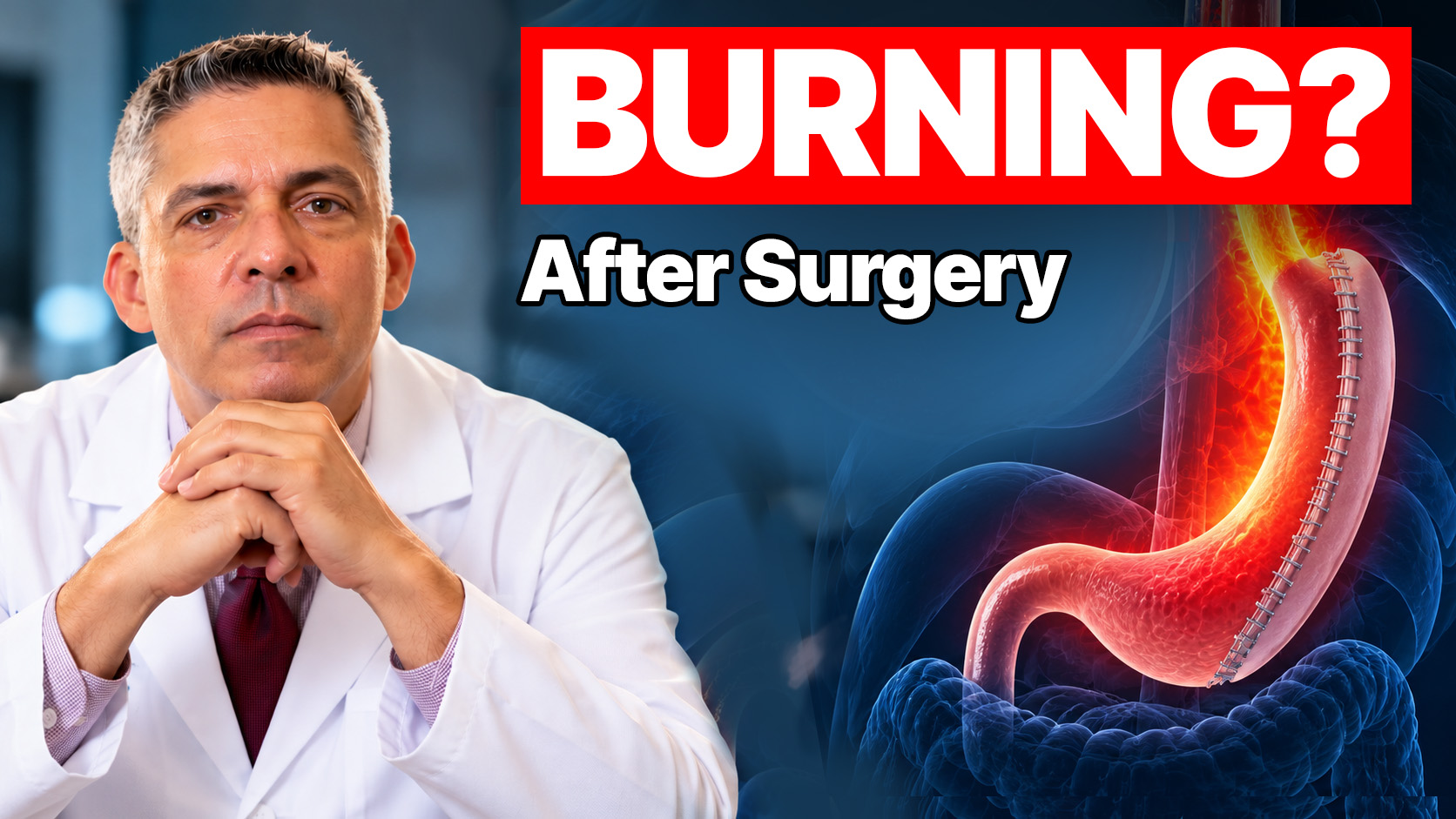
A sleeve gastrectomy removes most of the stomach, including the fundus, and leaves a narrow tube. That tube has less room to stretch, so pressure rises when you eat. The surgery also changes the angle where the esophagus joins the stomach, which normally acts as part of the anti-reflux barrier. If there's a hiatal hernia or a narrowing in the sleeve, acid and food are pushed upward even more. A gastric bypass reverses this by creating a small, low-pressure pouch and routing bile and digestive juices away from the esophagus.
Medical Topics Covered
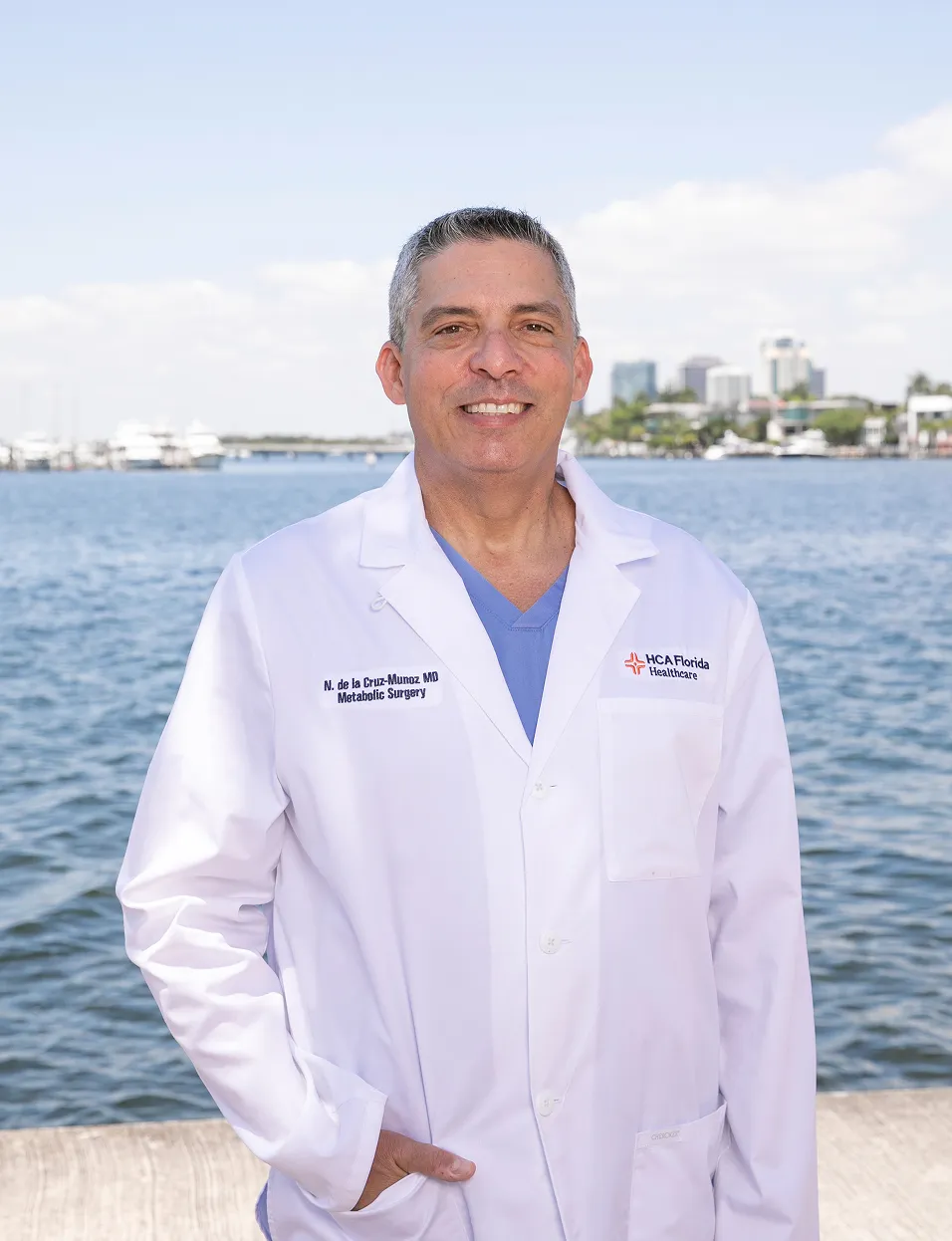

Dr. de la Cruz‑Muñoz specializes in advanced minimally invasive and robotic surgery, metabolic disease management, and comprehensive long‑term patient care. His work integrates clinical expertise, academic leadership, and a commitment to evidence‑based medicine. He has trained surgeons across the country, contributed to national guidelines, and is widely regarded for his outcomes, innovation, and patient‑centered approach.
Patients choose Dr. de la Cruz‑Muñoz for his combination of surgical excellence, metabolic expertise, and lifelong dedication to improving patient health through compassionate, high‑quality care.
Procedures We Offer


Conditions


FAQ
People Also Ask
Obesity is recognized as a chronic disease by major medical organizations, including the American Medical Association. It is influenced by genetics, hormones, brain signaling, environment, sleep, stress and medications, not simply willpower. Like other chronic diseases, it often requires long-term treatment, which may include nutrition, activity, behavioral support, medications and surgery. Lifestyle matters, but biology largely determines how the body responds.
The body has powerful systems that defend its weight. When you lose weight, hunger hormones rise, fullness hormones drop, the brain becomes more focused on food and metabolism slows, a process called metabolic adaptation. Genetics, sleep, stress, medications and the modern food environment add to the challenge. These are biological forces, not character flaws, which is why medical treatment is often needed.
Genetics play a major role. Studies of twins and adopted children suggest that roughly 40–70% of the variation in body weight is inherited, influencing appetite, fullness, metabolism and where fat is stored. Many genes each contribute a small effect, and a few rare single-gene forms cause severe early obesity. Genes interact with environment, sleep, stress and medications, so a family history raises risk but does not determine destiny.
GLP-1 medications mimic a natural gut hormone released after eating. They act on the brain to reduce hunger and increase fullness, slow stomach emptying so meals last longer, quiet "food noise," and improve insulin release and blood sugar. Tirzepatide also acts on a second hormone, GIP. In clinical trials, these medications produced average weight loss of about 15–20% (Wilding et al., New England Journal of Medicine, 2021; Jastreboff et al., New England Journal of Medicine, 2022).
Yes. Obesity is associated with more than 200 health conditions, including type 2 diabetes, high blood pressure, high cholesterol, heart disease, stroke, sleep apnea, fatty liver disease, reflux, osteoarthritis, infertility and PCOS, depression and at least 13 types of cancer. Losing weight, through medical treatment or bariatric surgery, improves or resolves many of these conditions.
Dieting alone usually cannot overcome the body's biological defenses against weight loss. As weight falls, hunger hormones rise, fullness hormones fall and metabolism slows, changes that can last for years. Most people regain the majority of diet-related weight loss within several years. That is not a failure of willpower, and it is why treatments that address appetite biology, such as GLP-1 medications and bariatric surgery, are more effective for many people with obesity.
Consider medical evaluation when excess weight affects your health, mobility or quality of life, or when you have related conditions such as prediabetes, diabetes, high blood pressure, sleep apnea, fatty liver or joint pain. Guidelines support medications for adults with a BMI of 30 or higher, or 27 or higher with a weight-related condition, and surgery for a BMI of 35 or higher, or 30 or higher with metabolic disease. Early treatment can help prevent complications.
Yes. Bariatric surgery treats the biological drivers of obesity, changing hunger and fullness hormones, insulin sensitivity and the weight the body defends. It is the most effective and durable treatment for severe obesity, producing large, sustained weight loss and improving or resolving diabetes, high blood pressure, sleep apnea and fatty liver. Long-term studies show it also reduces the risk of heart disease, cancer and early death.