Laparoscopic Nissen Fundoplication (360° Antireflux Surgery for GERD)


Overview
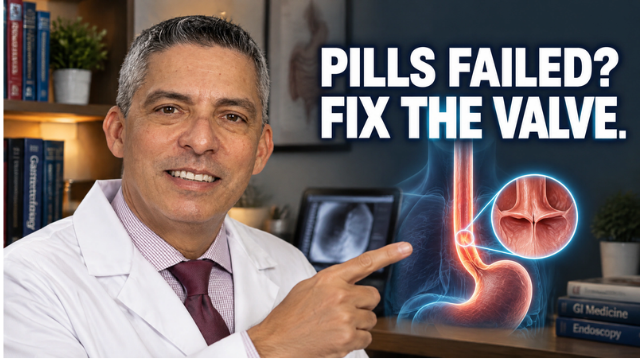
A Nissen fundoplication is the classic surgical treatment for gastroesophageal reflux disease (GERD) — a condition in which a weak or incompetent lower esophageal sphincter (LES), often combined with a hiatal hernia, allows stomach contents to reflux up into the esophagus and cause heartburn, regurgitation, and mucosal injury (Du et al., BMC Gastroenterology, 2025). The operation reinforces the LES by wrapping the gastric fundus a full 360° around the lower esophagus, raising LES pressure, lengthening the high-pressure zone, and reconstructing the angle of His to create a durable one-way valve (Du et al., BMC Gastroenterology, 2025).
Fundoplication — and the Nissen in particular — is widely regarded as the "gold-standard" antireflux procedure for its efficacy in improving the physiologic parameters of GERD, and because it creates a barrier against reflux of all gastric material (both acidic and non-acidic), it can address any reflux-related symptom (Katz et al., ACG GERD Guideline, 2022). Since laparoscopic antireflux surgery was introduced in 1991, the minimally invasive approach has essentially replaced open surgery, offering equivalent long-term effectiveness with far lower morbidity and markedly fewer incisional-hernia reoperations (Katz et al., ACG GERD Guideline, 2022; Broeders et al., Annals of Surgery, 2009). The Nissen (complete) wrap is one end of a spectrum of fundoplications; partial wraps (Toupet 270°, Dor 180°) provide similar reflux control with less postoperative dysphagia and gas-bloat, so the choice of wrap is individualized — the complete Nissen is often favored when objective, severe GERD control is the priority and esophageal motility is normal (Katz et al., ACG GERD Guideline, 2022; Slater et al., Surgical Endoscopy [SAGES/multisociety guideline], 2023).
How the Procedure Works
GERD develops when the antireflux barrier at the esophagogastric junction fails — through LES hypotension, a hiatal hernia that displaces the junction into the chest, impaired esophageal clearance, or delayed gastric emptying — allowing gastric contents to reflux into the esophagus (Du et al., BMC Gastroenterology, 2025). A Nissen fundoplication mechanically rebuilds that barrier: the gastric fundus is mobilized and wrapped completely (360°) around the distal esophagus and sutured in place, which reinforces LES pressure, extends the high-pressure zone, and restores the acute angle of His — together producing durable control of acid reflux (Du et al., BMC Gastroenterology, 2025).
Because reflux is frequently driven by a hiatal hernia, any hiatal hernia is repaired at the same time by reducing the stomach into the abdomen and closing the diaphragmatic crura, which is integral to a durable result (Thrumurthy et al., JAMA, 2026). The trade-off of a complete wrap is mechanical: a full 360° encirclement controls reflux most effectively but can modestly impede bolus passage, which is why the wrap is constructed "floppy" and short, and why a partial wrap may be chosen in patients with impaired esophageal motility (Du et al., BMC Gastroenterology, 2025).
Benefits
- Durable, long-term symptom relief — in a systematic review of 1,334 patients with a mean 13.1-year follow-up, heartburn fell from 94.2% to 33.7%, regurgitation from 68.7% to 13.4%, and esophagitis from 61.7% to 7.4% after laparoscopic Nissen fundoplication (Principe et al., Annals of Surgery, 2026).
- High, lasting patient satisfaction — overall satisfaction was 87% and the same proportion said they would undergo the operation again, even at >10 years (Principe et al., Annals of Surgery, 2026).
- Freedom from daily medication — most patients come off proton pump inhibitors; in a real-world Swedish cohort of 2,655 patients, over 80% did not resume antireflux medication during a mean 5-year follow-up (Katz et al., ACG GERD Guideline, 2022).
- Superior control of regurgitation versus medication — in a 5-year RCT, acid regurgitation persisted in 13% of medically treated patients versus only 2% of surgical patients (Maret-Ouda et al., JAMA, 2020).
- The most effective wrap for reflux control — the complete 360° Nissen is considered the most effective fundoplication for moderate-to-severe GERD (Du et al., BMC Gastroenterology, 2025).
- Low operative risk and quick recovery — serious adverse events (wound infection, bleeding, chronic pain, VTE) occur in under 1% of cases, and the minimally invasive approach allows a short stay and rapid return to activity (Thrumurthy et al., JAMA, 2026; Andolfi & Fisichella, JOMI, 2023).
Who Is a Candidate
The ideal candidate has objectively confirmed GERD with troublesome symptoms and is a reasonable surgical risk (Maret-Ouda et al., JAMA, 2020). Appropriate candidates include:
- PPI-refractory or incompletely controlled GERD, or patients who prefer surgery over lifelong medication — particularly when regurgitation is a dominant symptom, which responds better to surgery than to medication (Andolfi & Fisichella, JOMI, 2023; Maret-Ouda et al., JAMA, 2020).
- Objectively documented pathologic reflux — a positive 24-hour pH study (or erosive esophagitis/Barrett's esophagus) is the foundation of candidacy, because symptoms alone misclassify GERD in 30–50% of patients (Sanchez-Casalongue & Farrell, Journal of Laparoendoscopic & Advanced Surgical Techniques, 2020).
- Normal esophageal motility on manometry — which supports a complete (Nissen) wrap; significant dysmotility favors a partial wrap to avoid dysphagia (Slater et al., Surgical Endoscopy [SAGES/multisociety guideline], 2023).
- Complicated GERD — severe esophagitis, stricture, Barrett's esophagus, or GERD-related aspiration/respiratory disease (Slater et al., Surgical Endoscopy [SAGES/multisociety guideline], 2023).
Relative contraindications include prior upper-abdominal surgery, BMI >35 (where gastric bypass may better address both reflux and weight), esophageal dysmotility, a normal esophageal pH study, atypical symptoms (bloating, epigastric pain), and symptoms unresponsive to PPIs; absolute contraindications include esophageal outflow obstruction (e.g., achalasia), inability to tolerate general anesthesia, and uncorrectable coagulopathy (Thrumurthy et al., JAMA, 2026).
How the Procedure Is Performed
The operation is performed under general anesthesia, laparoscopically or robotically, typically through five small upper-abdominal ports (Andolfi & Fisichella, JOMI, 2023). The surgeon divides the gastrohepatic ligament and the phrenoesophageal membrane to expose the esophagogastric junction, identifying and preserving both vagus nerves, and mobilizes the esophagus well up into the mediastinum to obtain adequate tension-free intra-abdominal esophageal length (Sanchez-Casalongue & Farrell, Journal of Laparoendoscopic & Advanced Surgical Techniques, 2020). Any hiatal hernia is reduced and the crura are closed posteriorly with non-absorbable sutures (Thrumurthy et al., JAMA, 2026).
To create the wrap, the gastric fundus is mobilized — often by dividing the short gastric vessels — and passed behind the esophagus through the retroesophageal window; a "shoe-shine" maneuver confirms the fundus slides freely and is not twisted (Sanchez-Casalongue & Farrell, Journal of Laparoendoscopic & Advanced Surgical Techniques, 2020). The fundus is then wrapped a full 360° around the distal esophagus and sutured to itself to construct a short (typically ~1.5–2 cm), "floppy" complete fundoplication, frequently over an intraesophageal bougie/calibration to avoid an overly tight wrap (Du et al., BMC Gastroenterology, 2025). Robotic assistance follows identical principles. In a typical case the operation lasts under 90 minutes, and patients often resume a light diet and are discharged the following morning (Andolfi & Fisichella, JOMI, 2023).
Risks and Considerations
Laparoscopic Nissen fundoplication is safe in experienced hands, but patients are counseled candidly about the mechanical trade-offs of a complete wrap (Thrumurthy et al., JAMA, 2026):
- Dysphagia (difficulty swallowing) — early dysphagia from edema or a snug wrap is common and usually self-limited; some degree of dysphagia to solids is reported in roughly 26–29% long-term (up to 52% in some 10-year series), and persistent dysphagia occasionally requires endoscopic dilation (Principe et al., Annals of Surgery, 2026; Thrumurthy et al., JAMA, 2026; Harsányi et al., Surgical Endoscopy, 2025).
- Gas-bloat syndrome and inability to belch/vomit — the most characteristic side effects of a complete wrap, reported in roughly 46–53% and ~40% respectively at long-term follow-up — notably more common after Nissen than after a partial (Toupet/Dor) wrap (Principe et al., Annals of Surgery, 2026; Harsányi et al., Surgical Endoscopy, 2025).
- Increased flatulence (Varin et al., Archives of Surgery, 2009).
- Recurrent GERD / wrap failure — up to ~20% of patients have symptom recurrence within 10 years, and postoperative PPI use is reported in ~24% long-term, sometimes from a disrupted, herniated, or slipped wrap (Principe et al., Annals of Surgery, 2026; Thrumurthy et al., JAMA, 2026).
- Need for reoperation — about 6% long-term require revision surgery (Principe et al., Annals of Surgery, 2026).
- Esophageal/gastric injury or perforation, bleeding, splenic injury, pneumothorax, wound infection, and VTE — serious adverse events occur in under 1% of cases (Thrumurthy et al., JAMA, 2026).
- General surgical/anesthetic risks, including those related to pneumoperitoneum.
Recovery Timeline
Recovery after laparoscopic Nissen fundoplication is generally quick, and many patients are discharged the same day or the next morning after resuming a light diet (Andolfi & Fisichella, JOMI, 2023). Diet is advanced in a slow, stepwise fashion — liquids, to soft/pureed foods, to solids — over several weeks as the expected early dysphagia from edema at the esophagogastric junction improves. Patients are coached to eat small amounts slowly, chew thoroughly, stay upright during and after meals, and avoid carbonated beverages, which worsen gas-bloat. Strict control of nausea, vomiting, retching, and coughing is emphasized to protect the fresh wrap, and heavy lifting and strenuous straining are restricted for several weeks while the crural repair and wrap heal. Most patients return to light activity within one to two weeks and notice prompt relief of heartburn and regurgitation (Andolfi & Fisichella, JOMI, 2023; Principe et al., Annals of Surgery, 2026).
Long-Term Expectations
Most patients enjoy durable relief of reflux with high long-term satisfaction, but GERD can recur over many years, so realistic counseling is important (Principe et al., Annals of Surgery, 2026). Across studies with a mean 13-year follow-up, symptom recurrence occurs in about 17%, roughly a quarter of patients resume PPIs, and about 6% ultimately need a revision — yet 87% remain satisfied and would choose surgery again (Principe et al., Annals of Surgery, 2026). High-quality randomized data confirm this durability: at 10–17 years, GERD symptoms remained relieved in ~90–92% of patients, with roughly 60% still off daily PPIs at 17 years (Broeders et al., Annals of Surgery, 2009; Oor et al., Annals of Surgery, 2017). Gas-bloat and some dysphagia are the principal long-lasting trade-offs of the complete wrap (Principe et al., Annals of Surgery, 2026). Follow-up is driven by symptoms, with endoscopic surveillance maintained in patients who have Barrett's esophagus; outcomes are best when the operation is performed by experienced foregut surgeons (Sanchez-Casalongue & Farrell, Journal of Laparoendoscopic & Advanced Surgical Techniques, 2020).
Why Choose Dr. de la Cruz-Muñoz
Outcomes in antireflux surgery are strongly tied to surgeon and center experience — adequate esophageal mobilization, concurrent hiatal hernia repair, and a correctly calibrated, floppy, untwisted wrap are what separate durable results from recurrences and troublesome dysphagia (Sanchez-Casalongue & Farrell, Journal of Laparoendoscopic & Advanced Surgical Techniques, 2020; Thrumurthy et al., JAMA, 2026). As a board-certified surgeon with advanced expertise in minimally invasive and robotic foregut surgery, Dr. Nestor de la Cruz-Muñoz, MD, FACS, DABOM emphasizes the rigorous, guideline-concordant workup that defines modern GERD surgery — upper endoscopy, barium swallow, high-resolution manometry to exclude achalasia and assess motility, and ambulatory pH monitoring to objectively confirm pathologic reflux — before recommending an operation (Andolfi & Fisichella, JOMI, 2023; Slater et al., Surgical Endoscopy [SAGES/multisociety guideline], 2023). Critically, he individualizes the choice of wrap — a complete Nissen when objective reflux control is the priority and motility is normal, or a partial (Toupet/Dor) wrap when minimizing dysphagia and gas-bloat matters most — and repairs any hiatal hernia at the same time, reserving magnetic sphincter augmentation and gastric bypass for the specific patients in whom they are preferable (Katz et al., ACG GERD Guideline, 2022; Thrumurthy et al., JAMA, 2026). Patients receive candid counseling about expected reflux relief, the gas-bloat/dysphagia trade-offs, and every available option.
Total Body Weight Loss (TBWL) Expectations
Expected Reflux & Symptom Relief
Unlike a weight-loss operation, a Nissen fundoplication is intended to eliminate acid reflux and its symptoms, and symptom resolution is the primary measure of success (Katz et al., ACG GERD Guideline, 2022). Expected outcomes include durable relief of heartburn and regurgitation, healing of esophagitis, and freedom from daily acid-suppressing medication in the large majority of patients — with roughly 90% symptom relief and ~87% satisfaction sustained beyond a decade (Principe et al., Annals of Surgery, 2026; Broeders et al., Annals of Surgery, 2009). The complete wrap provides the most effective control of regurgitation, substantially better than medication (Maret-Ouda et al., JAMA, 2020). Patients are counseled that some reflux can recur over years and is usually manageable with medication or, uncommonly, revision (Principe et al., Annals of Surgery, 2026).
Expected Metabolic Improvements
Expected Swallowing & Functional Outcomes
The measurable goals are restored anatomy and a competent antireflux valve — not metabolic change (Du et al., BMC Gastroenterology, 2025). Most patients experience mild, temporary dysphagia for a few weeks from edema at the wrap, which resolves as the diet advances; persistent dysphagia is less common and responds to endoscopic dilation in the minority who need it (Principe et al., Annals of Surgery, 2026). Because a complete 360° wrap carries higher rates of long-term dysphagia, gas-bloat, and inability to belch than a partial wrap, the decision between a Nissen and a Toupet/Dor is made deliberately to balance maximal reflux control against these functional side effects — guided by preoperative motility testing (Varin et al., Archives of Surgery, 2009; Slater et al., Surgical Endoscopy [SAGES/multisociety guideline], 2023).
Weight Regain Prevention Strategy
Reflux Recurrence Prevention Strategy
Because wrap failure and recurrent reflux are the principal long-term challenges, prevention is engineered into the operation and recovery (Thrumurthy et al., JAMA, 2026). Technical cornerstones include concurrent hiatal hernia repair with secure crural closure, adequate mediastinal mobilization for tension-free intra-abdominal esophageal length, and a short, floppy, correctly calibrated 360° wrap that is not twisted or slipped (Sanchez-Casalongue & Farrell, Journal of Laparoendoscopic & Advanced Surgical Techniques, 2020; Du et al., BMC Gastroenterology, 2025). After surgery, strict control of retching, vomiting, and coughing, avoidance of heavy lifting until follow-up, and staged diet advancement protect the repair while it heals. Matching the wrap and operation to objective preoperative testing (pH, manometry, anatomy) is itself a recurrence-prevention strategy, since misdiagnosis and dysmotility are leading causes of failure (Sanchez-Casalongue & Farrell, Journal of Laparoendoscopic & Advanced Surgical Techniques, 2020).
GERD / Reflux Considerations
This operation is fundamentally a GERD operation, so objective confirmation of reflux is central: a positive ambulatory pH study, erosive esophagitis, or biopsy-proven Barrett's esophagus should establish the diagnosis before surgery, because symptoms and PPI response alone misclassify GERD in 30–50% of patients (Sanchez-Casalongue & Farrell, Journal of Laparoendoscopic & Advanced Surgical Techniques, 2020). The Nissen creates a barrier to both acidic and non-acidic reflux and is therefore effective across reflux-related symptoms (Katz et al., ACG GERD Guideline, 2022). Patients with objective severe GERD (Barrett's, dysplasia, severe esophagitis), or those after lung transplantation who must prevent reflux-driven graft injury, may reasonably prioritize the complete wrap's maximal reflux control even at the cost of more dysphagia and gas-bloat (Slater et al., Surgical Endoscopy [SAGES/multisociety guideline], 2023). Postoperative reflux is managed with PPIs and surveillance, and Barrett's esophagus requires continued endoscopic monitoring regardless of surgery (Sanchez-Casalongue & Farrell, Journal of Laparoendoscopic & Advanced Surgical Techniques, 2020).
Revision Options
Recurrent or persistent symptoms after Nissen fundoplication are evaluated and managed in a stepwise fashion (Principe et al., Annals of Surgery, 2026). Symptomatic recurrence is first worked up with endoscopy, contrast imaging, and often repeat pH/manometry (and FLIP/panometry where available) to define whether the wrap is intact, too tight, disrupted, herniated, or slipped (Lu et al., Neurogastroenterology & Motility, 2024). Options include:
- Optimized medical therapy for mild recurrent reflux (Katz et al., ACG GERD Guideline, 2022).
- Endoscopic dilation for persistent dysphagia from a snug wrap (Thrumurthy et al., JAMA, 2026).
- Revisional (redo) antireflux surgery — performed in about 6% long-term, including conversion of a tight Nissen to a partial wrap for troublesome dysphagia or gas-bloat, or re-do fundoplication for recurrent reflux; redo surgery is technically demanding and best done in experienced centers (Principe et al., Annals of Surgery, 2026; Katz et al., ACG GERD Guideline, 2022).
- Conversion to Roux-en-Y gastric bypass for selected patients (e.g., obesity or multiply-failed wraps) in whom bypass better controls reflux (Thrumurthy et al., JAMA, 2026).
Body Composition & Muscle Preservation
Rather than reducing body mass, the priority after Nissen fundoplication is restoring normal, comfortable eating (Du et al., BMC Gastroenterology, 2025). During the early weeks, small, slowly eaten meals and avoidance of carbonated drinks and gas-producing habits ease the transition past temporary dysphagia and gas-bloat, and dietitian guidance supports adequate protein and caloric intake as the diet advances to solids (Andolfi & Fisichella, JOMI, 2023). Patients who were eating poorly beforehand because of reflux or dysphagia typically resume a full, balanced diet; a graded return to activity and resistance training (after the early lifting restriction) rebuilds strength and conditioning.
Insurance & Qualification Requirements
Nissen fundoplication for GERD is covered as a medically necessary treatment for a documented reflux disorder, in contrast to elective weight-loss surgery. Payers typically expect documentation establishing the diagnosis and indication — upper endoscopy, and objective confirmation of pathologic reflux (ambulatory pH testing) and/or complicated GERD (erosive esophagitis, stricture, Barrett's), along with esophageal manometry to exclude a motility disorder and the patient's response to or intolerance of medical therapy (Sanchez-Casalongue & Farrell, Journal of Laparoendoscopic & Advanced Surgical Techniques, 2020; Slater et al., Surgical Endoscopy [SAGES/multisociety guideline], 2023). Specific coverage, documentation, coding, and any pre-authorization requirements should be confirmed with each individual plan.
Preparing for Surgery (Pre-Op Requirements)
- Upper endoscopy — to document esophagitis, stricture, or Barrett's esophagus and exclude other mucosal pathology/malignancy (Sanchez-Casalongue & Farrell, Journal of Laparoendoscopic & Advanced Surgical Techniques, 2020).
- Ambulatory pH (or pH-impedance) monitoring — to objectively confirm pathologic reflux and correlate symptoms, ideally off PPI when needed (Andolfi & Fisichella, JOMI, 2023; Slater et al., Surgical Endoscopy [SAGES/multisociety guideline], 2023).
- High-resolution esophageal manometry — to exclude achalasia and assess peristalsis, which determines whether a complete (Nissen) or partial wrap is safest (Andolfi & Fisichella, JOMI, 2023).
- Barium swallow — to define foregut anatomy and characterize any hiatal hernia for operative planning (Sanchez-Casalongue & Farrell, Journal of Laparoendoscopic & Advanced Surgical Techniques, 2020).
- Standard pre-anesthesia evaluation and confirmation of fitness for laparoscopy/pneumoperitoneum; weight optimization is considered when BMI >35 (Thrumurthy et al., JAMA, 2026).
Post-Op Nutrition Overview
Oral intake typically begins with liquids on the day of or morning after surgery and advances in stages — liquids, to soft/pureed foods, to solids — over several weeks as early dysphagia resolves (Andolfi & Fisichella, JOMI, 2023). Patients eat small amounts slowly, chew thoroughly, and remain upright after meals, and are advised to avoid carbonated beverages, straws, chewing gum, and gas-producing habits early on to limit the gas-bloat and swallowed air that a complete wrap makes more noticeable. The emphasis is on comfortable, adequate protein and caloric intake as the diet normalizes, with dietitian support as needed.
Post-Op Activity & Exercise Guidance
Early walking is encouraged to reduce pulmonary and clot-related complications, and with the minimally invasive approach there are no large incisions, allowing a return to light activity within one to two weeks (Andolfi & Fisichella, JOMI, 2023). Heavy lifting and strenuous core straining are restricted for several weeks to protect the crural repair and wrap, and anything that provokes retching or hard coughing is minimized during healing. Patients then progressively resume aerobic activity and, later, resistance training as cleared by the surgical team.
Special Considerations for International Patients
Quick Procedure Details
As treatment for a documented reflux disorder rather than an elective procedure, Nissen fundoplication is typically handled by payers as medically necessary when the diagnosis and indication are established by the standard workup (endoscopy, pH testing, manometry, ± barium swallow) and the patient has symptomatic or complicated GERD (Sanchez-Casalongue & Farrell, Journal of Laparoendoscopic & Advanced Surgical Techniques, 2020; Slater et al., Surgical Endoscopy [SAGES/multisociety guideline], 2023). Confirm specific plan criteria, coding, and any pre-authorization steps before scheduling.
Featured Procedures

Conditions


FAQ
A Nissen fundoplication is surgery for GERD in which the surgeon wraps the upper part of the stomach a full 360° around the lower esophagus and stitches it in place, reinforcing the weak valve (lower esophageal sphincter) that normally keeps acid down (Du et al., BMC Gastroenterology, 2025). This raises the pressure at the junction, lengthens the high-pressure zone, and rebuilds the natural angle that prevents reflux. Any hiatal hernia is repaired at the same time (Thrumurthy et al., JAMA, 2026). It is considered the "gold-standard" antireflux operation and is done through small laparoscopic or robotic incisions (Katz et al., ACG GERD Guideline, 2022).
It works well and is durable. In a review of 1,334 patients followed an average of 13 years, heartburn dropped from 94% to 34% and regurgitation from 69% to 13%, with 87% of patients satisfied and willing to have the surgery again (Principe et al., Annals of Surgery, 2026). Long-term randomized data show GERD symptoms relieved in about 90–92% of patients at 10–17 years, with roughly 60% still off daily reflux medication at 17 years (Broeders et al., Annals of Surgery, 2009; Oor et al., Annals of Surgery, 2017). Reflux recurs in up to 20% over a decade and about 6% need a revision operation (Principe et al., Annals of Surgery, 2026).
The most common side effects come from the complete 360° wrap. Early difficulty swallowing (dysphagia) from swelling is common and usually improves over a few weeks; some long-term dysphagia to solids occurs in roughly a quarter of patients (Principe et al., Annals of Surgery, 2026). Gas-bloat syndrome — bloating and difficulty belching or vomiting — is the signature trade-off of a full wrap, reported in roughly half of patients long-term, along with more flatulence (Principe et al., Annals of Surgery, 2026; Harsányi et al., Surgical Endoscopy, 2025). These are less common after a partial (Toupet or Dor) wrap, which is why the type of wrap is chosen individually (Varin et al., Archives of Surgery, 2009). Serious surgical complications occur in under 1% (Thrumurthy et al., JAMA, 2026).