Dor Fundoplication (Anterior 180°–200° Partial Wrap) for Reflux and After Heller Myotomy


Overview
Dor fundoplication is a laparoscopic (keyhole) operation in which the gastric fundus is folded anteriorly over the front of the lower esophagus and sutured in place, covering 180°–200° of the esophageal circumference and leaving the back of the esophagus uncovered (Flores et al., Cochrane Database of Systematic Reviews, 2026; Lee et al., Surgical Endoscopy, 2023). It is an anterior partial wrap, distinguishing it from the posterior partial Toupet wrap (270°) and the complete Nissen wrap (360°).
Dor has two principal uses. First and most established, it is the antireflux wrap most commonly added after a Heller myotomy for Achalasia. Because cutting the lower esophageal sphincter to relieve achalasia predictably creates new acid reflux, adding a Dor wrap reduces that risk substantially — in a landmark double-blind randomized trial, abnormal esophageal acid exposure fell from 47% after myotomy alone to 9% after myotomy with a Dor fundoplication (relative risk 0.11), a benefit that is sustained long term (Vaezi et al., American College of Gastroenterology, 2020). A unique advantage of the anterior wrap in this setting is that it drapes over and physically protects the exposed myotomy, and it does not require dissection behind the esophagus (Tassi et al., Annals of Surgery, 2023).
Second, Dor is used as a stand-alone partial antireflux wrap in selected patients with GERD, particularly when the goal is to minimize the swallowing side effects of a full wrap. A network meta-analysis of randomized trials found Dor comparable to both Nissen and Toupet across reflux control, regurgitation, bloating, reoperation, and patient satisfaction (Lee et al., Surgical Endoscopy, 2023). Like all antireflux and myotomy surgery, candidacy depends on objective esophageal testing — including high-resolution manometry — to confirm the diagnosis and guide the operation (Vaezi et al., American College of Gastroenterology, 2020).
How the Procedure Works
The anti-reflux effect of a Dor wrap comes from mechanically reinforcing the barrier at the esophagogastric junction without fully encircling the esophagus (Lee et al., Surgical Endoscopy, 2023):
- Restoring anatomy: Any hiatal hernia is reduced and the diaphragmatic opening is addressed, returning the esophagogastric junction to its normal intra-abdominal position.
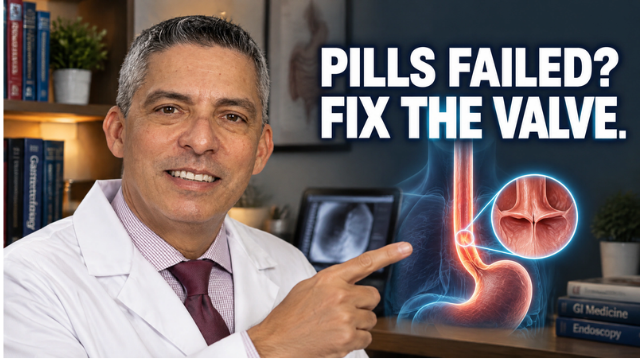
- Creating an anterior valve: The gastric fundus is folded up and over the front of the lower esophagus and sutured to the esophagus and the diaphragmatic rim, recreating the acute angle of His and re-establishing a one-way barrier to reflux (Flores et al., Cochrane Database of Systematic Reviews, 2026).
- Protecting the myotomy (in Heller-Dor): When combined with a Heller myotomy, the anterior wrap lies directly over the cut muscle, buttressing the exposed mucosa and helping keep the myotomy edges apart — a structural benefit unique to the anterior configuration (Tassi et al., Annals of Surgery, 2023).
- Preserving swallowing: Because only the front 180°–200° is covered and the posterior esophagus is left free, the reconstructed junction stays distensible, which limits obstruction to swallowing and reduces gas-bloat compared with a complete wrap (Du et al., BMC Gastroenterology, 2025).
Benefits
- Dramatic reduction in post-myotomy reflux: Adding Dor after a Heller myotomy lowers abnormal acid exposure from roughly 47% to 9% (relative risk 0.11), with benefit sustained long term (Vaezi et al., American College of Gastroenterology, 2020).
- Effective, durable reflux control comparable to Toupet and Nissen across heartburn, regurgitation, reoperation, and satisfaction in long-term randomized data (Lee et al., Surgical Endoscopy, 2023).
- Low rates of swallowing difficulty and gas-bloat relative to a complete wrap, as a partial anterior configuration preserves esophageal outflow (Du et al., BMC Gastroenterology, 2025; Katz et al., American College of Gastroenterology, 2022).
- No posterior esophageal dissection required and physical coverage of the myotomy, making it technically well-suited to the Heller-Dor operation (Tassi et al., Annals of Surgery, 2023).
- Excellent long-term quality of life after Heller-Dor, with durable relief of dysphagia and regurgitation reported out to a decade (Doubova et al., Annals of Thoracic Surgery, 2021).
- Minimally invasive approach — laparoscopic or robotic, with small incisions, short hospital stay, and quick recovery.
Who Is a Candidate
Dor fundoplication is appropriate in two main groups:
- Patients undergoing Heller myotomy for achalasia or EGJOO: A partial fundoplication (Dor or Toupet) is recommended after myotomy to control the reflux that the myotomy predictably creates, and Dor is the most frequently used and best-studied choice in this setting (Vaezi et al., American College of Gastroenterology, 2020; Midya et al., Cochrane Database of Systematic Reviews, 2022). For esophagogastric junction outflow obstruction (EGJOO), Heller myotomy with Dor fundoplication achieves favorable symptom outcomes while better preserving esophageal body function and generating less reflux than per-oral endoscopic myotomy (Sarici et al., Journal of Gastrointestinal Surgery, 2023).
- Selected GERD patients with objectively confirmed pathologic reflux who are candidates for a partial wrap — including those in whom minimizing dysphagia is a priority (Lee et al., Surgical Endoscopy, 2023).
For GERD, candidacy requires objective confirmation of pathologic reflux (abnormal pH study, erosive esophagitis, or Barrett's esophagus) and high-resolution manometry to characterize motility and exclude untreated achalasia (Yadlapati et al., American Gastroenterological Association, 2022). For achalasia and EGJOO, high-resolution manometry establishes the diagnosis and guides the myotomy-plus-Dor approach (Vaezi et al., American College of Gastroenterology, 2020).
How the Procedure Is Performed
Dor fundoplication is performed under general anesthesia, almost always laparoscopically or robotically through several small incisions. When combined with a Heller myotomy, the wrap is constructed after the muscle has been divided (Tassi et al., Annals of Surgery, 2023):
- Access and exposure: Several small incisions are made; the liver is retracted to expose the esophageal hiatus.
- Mobilization: The lower esophagus and gastric fundus are mobilized, dividing short gastric vessels as needed so the fundus reaches the front of the esophagus without tension. The anterior vagus nerve is identified and preserved. Unlike Toupet or Nissen, the anterior Dor wrap does not require passing the stomach behind the esophagus.
- Hiatal repair (when indicated): Any hiatal hernia is reduced and the diaphragmatic crura are approximated with sutures.
- Myotomy (in Heller-Dor): For achalasia or EGJOO, the lower esophageal sphincter muscle fibers are divided longitudinally across the esophagogastric junction, often under intraoperative assessment, leaving the underlying mucosa intact (Tassi et al., Annals of Surgery, 2023).
- Creating the anterior wrap: The gastric fundus is folded over the front of the esophagus (covering ~180°–200°) and sutured to the esophagus and the left and right edges of the diaphragmatic hiatus, draping over and protecting the myotomy when one has been performed.
- Closure: Instruments are removed and the small incisions are closed. The operation typically takes one to two hours.
Risks and Considerations
Dor fundoplication is safe and well-tolerated, but as with any surgery there are risks (Lee et al., Surgical Endoscopy, 2023):
- Temporary dysphagia in the early postoperative weeks from swelling, which usually resolves; persistent dysphagia is uncommon after a partial anterior wrap (Du et al., BMC Gastroenterology, 2025).
- Gas-bloat and increased flatulence, generally milder than after a complete wrap (Katz et al., American College of Gastroenterology, 2022).
- Recurrent reflux over time: After Heller-Dor, GERD symptoms and antireflux medication use can increase beginning 3 to 5 years post-operatively, warranting long-term surveillance (Doubova et al., Annals of Thoracic Surgery, 2021). As a stand-alone GERD wrap, partial fundoplication may carry a modestly higher long-term reflux-recurrence risk than a complete wrap, though randomized data generally show no significant difference (Katz et al., American College of Gastroenterology, 2022).
- Mucosal perforation at the time of myotomy (in Heller-Dor), recognized and repaired intraoperatively.
- Recurrent or persistent dysphagia after myotomy occasionally requiring endoscopic dilation; reoperation is rare (Doubova et al., Annals of Thoracic Surgery, 2021).
- General surgical risks including bleeding, infection, and, in less than 1% of antireflux operations, serious adverse events (Thrumurthy et al., JAMA, 2026).
Recovery Timeline
Most patients go home within one to two days.
- First 1–2 weeks: A staged diet — clear liquids advancing to full liquids and then soft foods — protects the healing wrap (and myotomy) and accommodates normal postoperative swelling.
- Swallowing: Mild difficulty swallowing is common early and typically improves as swelling subsides; after Heller-Dor, relief of the achalasia-related dysphagia is usually immediate and marked (Doubova et al., Annals of Thoracic Surgery, 2021).
- Activity: Light activity resumes within days; heavy lifting and strenuous exertion are restricted for several weeks to protect the repair.
- Return to work: Many patients return to desk work within one to two weeks.
Long-Term Expectations
After Heller-Dor for achalasia, the large majority of patients achieve durable, decade-long relief of dysphagia and regurgitation with preserved quality of life, though a subset develops increasing GERD symptoms and antireflux medication use starting around 3 to 5 years, making lifelong follow-up with periodic endoscopic surveillance important (Doubova et al., Annals of Thoracic Surgery, 2021; Tassi et al., Annals of Surgery, 2023). As a stand-alone antireflux wrap for GERD, Dor delivers reflux control, satisfaction, and reoperation rates comparable to Toupet and Nissen over long-term follow-up (Lee et al., Surgical Endoscopy, 2023). The consistent theme across the evidence is that wrap choice is individualized — balancing maximal reflux control against the desire to minimize swallowing and gas-related side effects (Katz et al., American College of Gastroenterology, 2022).
Why Choose Dr. de la Cruz-Muñoz
Matching the right wrap to the right esophagus is where experience matters most. Dr. Nestor de la Cruz-Muñoz, MD, FACS, DABOM, individualizes every myotomy and antireflux procedure based on objective esophageal physiologic testing (high-resolution manometry and ambulatory pH-impedance monitoring). For achalasia and EGJOO, he pairs a precise Heller myotomy with a Dor anterior fundoplication to control the reflux the myotomy creates while protecting the myotomy itself; for selected GERD patients, he reserves the anterior partial wrap for those in whom preserving swallowing function is paramount. This evidence-based, motility-preserving philosophy delivers durable symptom relief while minimizing the dysphagia and gas-bloat that drive dissatisfaction after foregut surgery.
Total Body Weight Loss (TBWL) Expectations
Expected Metabolic Improvements
Weight Regain Prevention Strategy
GERD / Reflux Considerations
The role of a fundoplication after Heller myotomy is well established: myotomy alone induces pathologic reflux in roughly 30% of patients, and adding a partial wrap reduces that substantially, with the benefit sustained long term (Vaezi et al., American College of Gastroenterology, 2020). Current evidence favors a partial wrap (Dor or Toupet) over a complete Nissen wrap after myotomy, because a complete wrap risks obstructing an esophagus that no longer has normal peristalsis (Midya et al., Cochrane Database of Systematic Reviews, 2022). Head-to-head randomized trials of Heller-Dor versus Heller-Toupet show comparable control of post-operative acid reflux and dysphagia, so the choice is individualized to anatomy and surgeon experience (Midya et al., Cochrane Database of Systematic Reviews, 2022). For GERD without achalasia, the Dor anterior wrap is one of three evidence-based fundoplication options, selected when a motility-preserving partial wrap is preferred (Lee et al., Surgical Endoscopy, 2023).
Revision Options
If dysphagia persists after a Heller-Dor, endoscopic dilation is usually the first step and reoperation is rarely required (Doubova et al., Annals of Thoracic Surgery, 2021). If reflux recurs or progresses, options include optimized medical therapy, conversion/revision of the wrap, or — in refractory cases — per-oral endoscopic myotomy considerations or other revisional antireflux strategies at an experienced foregut center, always guided by repeat objective testing (Vaezi et al., American College of Gastroenterology, 2020).
Body Composition & Muscle Preservation
Insurance & Qualification Requirements
Myotomy and antireflux surgery are generally covered when medical necessity is documented. Typical requirements include high-resolution manometry confirming achalasia or EGJOO (for Heller-Dor) or objective confirmation of GERD plus a trial of medical therapy (for a stand-alone antireflux wrap), along with supporting endoscopy and imaging (Vaezi et al., American College of Gastroenterology, 2020; Yadlapati et al., American Gastroenterological Association, 2022).
Preparing for Surgery (Pre-Op Requirements)
- Esophageal workup: Upper endoscopy and high-resolution manometry to establish the diagnosis; ambulatory pH or pH-impedance monitoring when evaluating GERD (Vaezi et al., American College of Gastroenterology, 2020; Yadlapati et al., American Gastroenterological Association, 2022).
- Barium esophagram / timed barium swallow to characterize esophageal emptying and anatomy in achalasia and EGJOO.
- Medication review and standard preoperative optimization.
- Dietary counseling for the staged postoperative diet.
Post-Op Nutrition Overview
- Diet: Advance through a staged diet — clear liquids, full liquids, soft foods, then regular diet over several weeks — eating small, slow, well-chewed meals to protect the wrap and myotomy during healing.
- Activity: Walk early to prevent blood clots; avoid heavy lifting and strenuous core exertion for several weeks.
- Follow-up: Scheduled visits to monitor swallowing and reflux control, with periodic long-term endoscopic surveillance after Heller-Dor given the delayed rise in GERD seen at 3 to 5 years (Doubova et al., Annals of Thoracic Surgery, 2021).
Post-Op Activity & Exercise Guidance
Special Considerations for International Patients
Quick Procedure Details
Featured Procedures

Conditions


FAQ
All three operations rebuild the antireflux barrier by wrapping the upper stomach around the lower esophagus; they differ in how far around the esophagus the wrap goes and on which side. A Dor is an anterior partial wrap covering about 180°–200° of the front of the esophagus, a Toupet is a posterior partial wrap covering 270° of the back, and a Nissen is a complete 360° wrap (Flores et al., Cochrane Database of Systematic Reviews, 2026; Lee et al., Surgical Endoscopy, 2023). In long-term randomized data, all three control reflux comparably, with the complete Nissen wrap carrying the highest rate of swallowing difficulty and the partial wraps (Dor and Toupet) causing less dysphagia and gas-bloat (Lee et al., Surgical Endoscopy, 2023). The anterior Dor wrap has a special advantage when combined with a Heller myotomy because it drapes over and protects the cut muscle (Tassi et al., Annals of Surgery, 2023).
Cutting the lower esophageal sphincter to relieve achalasia (the Heller myotomy) predictably allows new acid reflux, because the valve that normally prevents reflux has been deliberately weakened. Adding a Dor fundoplication dramatically reduces this: in a double-blind randomized trial, abnormal esophageal acid exposure fell from 47% after myotomy alone to 9% after myotomy plus a Dor wrap (relative risk 0.11), and the benefit persists long term (Vaezi et al., American College of Gastroenterology, 2020). A partial wrap like Dor is preferred over a complete Nissen wrap after myotomy because a full wrap can obstruct an esophagus that no longer has normal muscle contractions (Midya et al., Cochrane Database of Systematic Reviews, 2022). The anterior Dor also physically covers and protects the exposed myotomy (Tassi et al., Annals of Surgery, 2023).
Yes. For esophagogastric junction outflow obstruction (EGJOO) that requires treatment, laparoscopic Heller myotomy with Dor fundoplication is an effective option. In a comparative study, Heller myotomy with Dor achieved a favorable symptom outcome in about 86% of patients — comparable to per-oral endoscopic myotomy (POEM) — while producing significantly less reflux and better preserving esophageal body function than POEM (Sarici et al., Journal of Gastrointestinal Surgery, 2023). As with achalasia, the diagnosis should first be confirmed on high-resolution manometry, and treatment is reserved for patients with true obstruction and relevant symptoms (Vaezi et al., American College of Gastroenterology, 2020).
For most patients, relief is durable. After Heller-Dor for achalasia, patients report marked, lasting relief of difficulty swallowing and regurgitation with preserved quality of life out to about a decade; however, a subset develops increasing heartburn and antireflux medication use starting around 3 to 5 years, which is why long-term follow-up with periodic endoscopy is recommended (Doubova et al., Annals of Thoracic Surgery, 2021). Used as a stand-alone antireflux wrap for GERD, the Dor anterior wrap provides long-term reflux control, patient satisfaction, and reoperation rates comparable to the Toupet and Nissen procedures (Lee et al., Surgical Endoscopy, 2023). If reflux or dysphagia recurs, options range from medication and endoscopic dilation to revisional surgery.