GLP-1 Medications vs. Bariatric Surgery: How the Two Most Effective Obesity Treatments Compare

Quick Answer
Watch Related Video
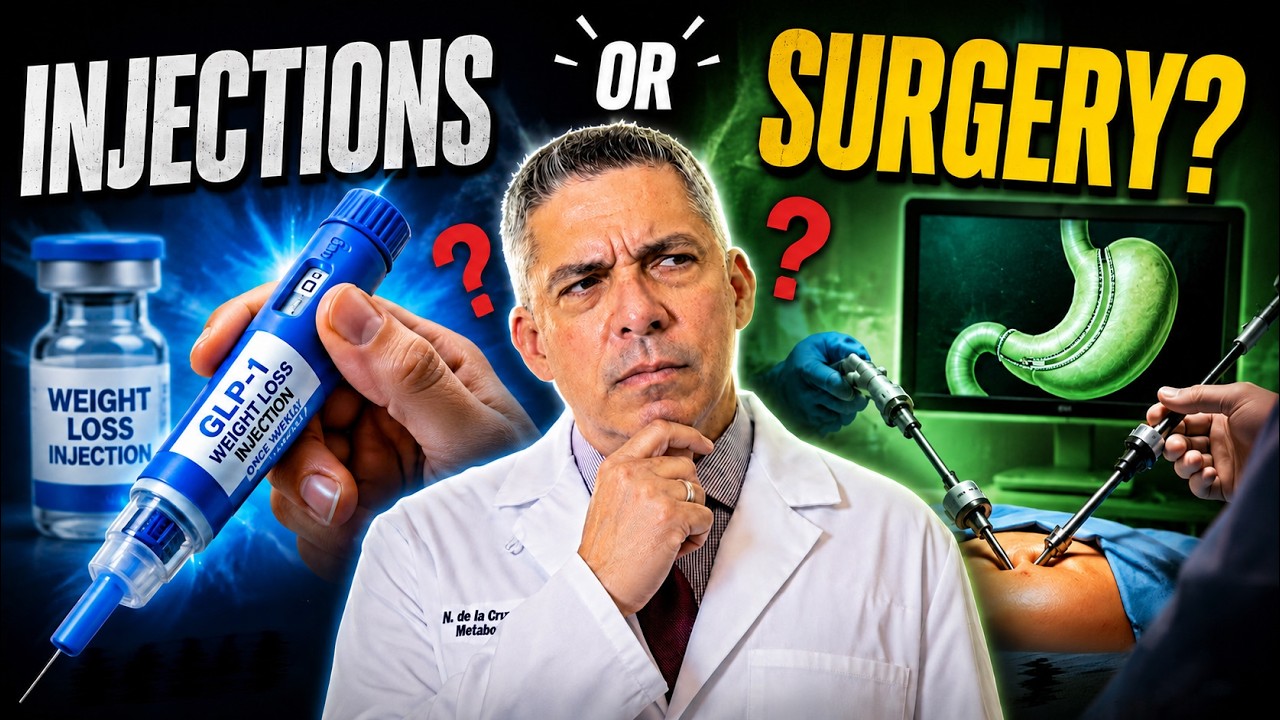
GLP-1 medications like semaglutide (Ozempic, Wegovy) and tirzepatide (Mounjaro, Zepbound) have transformed obesity care — so much so that many people now ask whether they have made weight-loss surgery obsolete. The honest, evidence-based answer is no. Bariatric surgery remains the most powerful and most proven metabolic intervention available, with decades of hard-outcome data behind it. But the two are not really rivals. They are complementary tools for a chronic disease, and the best choice depends on the person.
This is the final chapter of our GLP-1 series. Here is how these two treatments actually compare — on weight loss, diabetes, heart and kidney outcomes, durability, cost, safety, and how they can work together.
Weight Loss: Surgery Still Leads, But the Gap Is Narrowing
Start with the headline number. GLP-1 medications produce impressive weight loss — roughly 15% with semaglutide and about 20%–21% with tirzepatide in clinical trials. Bariatric surgery still exceeds them: sleeve gastrectomy produces about 25% total weight loss and Roux-en-Y gastric bypass about 28%–30% at one year (Elmaleh-Sachs et al., JAMA, 2023).
The best comparative evidence confirms this. A network meta-analysis of 30 randomized trials (over 20,000 patients) found that surgery achieved about 10 percentage points greater total weight loss than GLP-1 drugs, and this advantage persisted beyond two years (Sabatella et al., Obesity, 2026). A large real-world study across two health systems and 44,000 patients found even starker differences in everyday practice: at three years, gastric bypass produced about 28% weight loss and sleeve gastrectomy about 22%, versus roughly 7%–11% for semaglutide and tirzepatide as actually used (Brown et al., Obesity, 2026). Part of that gap reflects a real-world problem with medications — many people do not stay on them or reach full doses.
But there is an important nuance. When researchers analyzed tirzepatide specifically, the difference versus surgery was no longer statistically significant (Sabatella et al., Obesity, 2026). The newest and most potent medications are genuinely closing the gap — though for now, surgery remains the benchmark for the largest, most reliable weight loss.
Durability: The Permanence Difference
Perhaps the most important practical distinction is what happens over time. GLP-1 medications work only while you take them. When they are stopped, weight regain is the rule: the American Diabetes Association notes that discontinuing semaglutide or tirzepatide leads to recurrence of one-half to two-thirds of the lost weight within a year, along with reversal of the cardiometabolic improvements (American Diabetes Association, Standards of Care, 2026).
Bariatric surgery, by contrast, produces durable anatomical and hormonal changes — altered gut anatomy, sustained shifts in gut hormones, and bile-acid and microbiome changes — that maintain weight loss for many years. In the 10-year Nature Medicine comparison, surgery maintained roughly 20% weight loss at a decade, versus under 7% for GLP-1 therapy (Gasoyan et al., Nature Medicine, 2025). Weight regain after surgery does happen in some patients, but it is typically gradual and partial rather than the rapid, near-complete regain seen after stopping medication.
This is why the ADA frames obesity as a chronic, relapsing disease — like hypertension — that usually requires ongoing treatment to sustain benefits (American Diabetes Association, Standards of Care, 2026).
Diabetes and Metabolic Outcomes
Both treatments improve blood sugar dramatically, but they differ in depth and durability. GLP-1 medications are excellent glucose-lowering agents, and in some head-to-head metabolic measures the two are comparable. However, surgery more often produces true, medication-free diabetes remission and better long-term glycemic control. In the network meta-analysis, surgery produced greater reductions in body weight and waist circumference, with similar HbA1c improvement in people with diabetes (Sabatella et al., Obesity, 2026). Over 10 years, the surgical group maintained lower HbA1c and needed fewer diabetes and cardiovascular medications (Gasoyan et al., Nature Medicine, 2025). Interestingly, GLP-1 therapy tends to lower LDL ("bad") cholesterol more, while surgery raises HDL ("good") cholesterol more (Leslie et al., Lancet Diabetes & Endocrinology, 2026).
Heart, Kidney, and Long-Term Outcomes
This is where surgery's decades-long track record shows most clearly — though with an important caveat about study design.
The largest direct comparison to date followed 3,932 patients with type 2 diabetes and obesity for a median of nearly six years. Compared with GLP-1 therapy, bariatric surgery was associated with 32% lower all-cause mortality (HR 0.68), 35% lower risk of major cardiovascular events (HR 0.65), 47% lower risk of nephropathy (kidney disease, HR 0.53), and 54% lower risk of retinopathy (eye disease, HR 0.46) (Gasoyan et al., Nature Medicine, 2025). A separate real-world analysis found that surgery reduced estimated lifetime cardiovascular risk far more than GLP-1 therapy (an 8.6-point vs 1.7-point reduction), driven by greater weight loss and larger lipid improvements — even though the reductions in 10-year risk measured at one year were similar between groups (Ghusn et al., Annals of Surgery, 2026).
The essential caveat: these are observational studies, not randomized trials. No adequately powered head-to-head randomized trial has compared surgery and GLP-1 drugs for these hard outcomes, and such trials are difficult and expensive to run (Gasoyan et al., Nature Medicine, 2025). It is also worth noting that many of these comparisons used older or less potent GLP-1 regimens (often liraglutide), so results with today's more effective drugs could differ. The signal favoring surgery is consistent and biologically plausible, but the certainty is lower than a randomized trial would provide.
Safety and Complications: Two Different Risk Profiles
The two treatments carry fundamentally different kinds of risk.
Bariatric surgery is remarkably safe by modern standards but is still surgery. Perioperative mortality is low (roughly 0.1%–0.5%), and serious early complications — leaks, bleeding, strictures — occur in a small percentage of cases (Elmaleh-Sachs et al., JAMA, 2023). The trade-offs are lifelong: mandatory vitamin and mineral supplementation to prevent nutritional deficiencies, a small risk of internal hernias and marginal ulcers, dumping syndrome, and — importantly — an increased risk of alcohol use disorder after gastric bypass, a difference where GLP-1 drugs (which tend to reduce alcohol craving) may actually have an advantage.
GLP-1 medications avoid surgical risk entirely but come with their own profile: common gastrointestinal side effects (nausea, vomiting, diarrhea) in roughly 30%–50% of patients, rare pancreatitis and gallbladder events, and the need for indefinite treatment to maintain results (Samuels et al., Diabetes, Obesity and Metabolism, 2024). There is no perioperative risk, but there is the practical burden of ongoing injections or pills, cost, and access.
Cost
Cost comparisons increasingly favor surgery over the long run, because GLP-1 drugs must be taken indefinitely. An updated meta-analysis of nearly 15,000 patients found that out-of-pocket costs at 24 months were significantly higher for GLP-1 therapy than for surgery (Rivero-Moreno et al., Journal of Laparoendoscopic & Advanced Surgical Techniques, 2026). Because surgery is a one-time cost while medication costs recur every month, the financial gap widens over time — an important consideration given how common it is to stay on these drugs for years.
They Work Together: Surgery and Medication as Partners
The most important shift in thinking is away from "either/or." These treatments are complementary, and using them together — in sequence or in combination — is increasingly the standard of care.
The strongest evidence is for GLP-1 medications after surgery. When patients experience inadequate weight loss or weight regain following bariatric surgery, adding semaglutide or tirzepatide produces meaningful additional weight loss and can reduce the need for revisional surgery (Elawa et al., Diabetes Research and Clinical Practice, 2026). These drugs appear equally safe in patients who have had surgery as in those who have not, with the main caution being that starting any weight-loss medication within the first year after surgery carries somewhat higher odds of side effects (Samuels et al., Diabetes, Obesity and Metabolism, 2024). GLP-1 drugs can also be used before surgery to improve metabolic health, or as an alternative for patients who decline or are not candidates for an operation.
Who Should Consider What?
Guidelines increasingly support individualized, shared decision-making rather than a rigid ladder (Elmaleh-Sachs et al., JAMA, 2023). In broad strokes:
- Bariatric surgery is recommended for adults with a BMI of 35 or higher, and for those with a BMI of 30–34.9 who have metabolic disease such as type 2 diabetes — and it should be considered a first-line option for severe obesity, not a last resort (Elmaleh-Sachs et al., JAMA, 2023).
- GLP-1 medications are appropriate for a wide range of patients with obesity or overweight plus a weight-related condition, especially those who prefer a non-surgical option, are not surgical candidates, or want to try medication first.
- Combination or sequential approaches suit patients with weight regain after surgery, those who need more weight loss than either achieves alone, or those optimizing before an operation.
The Bottom Line
Bariatric surgery remains the most effective and most durable obesity treatment, with larger weight loss, more diabetes remission, and observational data suggesting greater reductions in death, heart disease, and kidney and eye complications than GLP-1 medications — though no randomized head-to-head trials exist for these hard endpoints, and the newest drugs like tirzepatide are narrowing the weight-loss gap. GLP-1 medications offer a powerful, less invasive option with benefits of their own, plus advantages in convenience and possibly in areas like alcohol use. The future of obesity medicine is not surgery versus medication — it is surgery and medication, chosen and combined to fit each patient. If you're weighing your options, that decision is best made with a physician who can tailor it to your health, your goals, and your circumstances.
Further Information
For additional context and a deeper professional perspective, you can read the companion LinkedIn article linked below.
Frequently Asked Questions
Is bariatric surgery better than Ozempic?
For total weight loss and durability, surgery generally outperforms GLP-1 drugs like Ozempic: surgery produces about 25%–30% weight loss that lasts for years, versus roughly 15%–21% with medication that is largely regained if the drug is stopped. Observational studies also link surgery to greater reductions in death and heart and kidney complications. However, "better" depends on the person — medications avoid surgery and suit many patients well, and the newest drug, tirzepatide, is closing the weight-loss gap.
How much more weight do you lose with surgery than with GLP-1 medications?
Across randomized trials, surgery produces about 10 percentage points more total weight loss than GLP-1 drugs, and in real-world practice the gap can be even larger (about 28% for gastric bypass vs 7%–11% for medications as actually used). Notably, tirzepatide specifically was not significantly different from surgery in one analysis, meaning the most potent medications are narrowing the difference.
Will I regain weight if I stop my GLP-1 medication?
Yes, weight regain is expected. Studies show that stopping semaglutide or tirzepatide leads to regain of one-half to two-thirds of the lost weight within about a year, along with reversal of improvements in blood pressure, blood sugar, and cholesterol. This is why these medications are considered long-term therapies, similar to blood pressure medications.
Is weight loss from bariatric surgery permanent?
Surgery produces the most durable weight loss of any current treatment, with substantial loss maintained at 10 years and beyond. It is not immune to some regain — a minority of patients regain a significant amount over time — but the regain is usually gradual and partial, unlike the rapid, near-complete regain seen after stopping medication.
Does bariatric surgery reduce the risk of death and heart disease more than GLP-1 drugs?
Observational studies suggest it does. In a 10-year comparison, surgery was associated with about 32% lower all-cause mortality and 35% lower risk of major cardiovascular events than GLP-1 therapy, plus lower kidney and eye complications. Importantly, these are not randomized trials, and many used older medications, so the findings are suggestive rather than definitive.
Can you take GLP-1 medications after bariatric surgery?
Yes. GLP-1 drugs are safe and effective after surgery, particularly for people who have inadequate weight loss or weight regain, and they can reduce the need for revisional surgery. The main caution is that starting a weight-loss medication within the first year after surgery may carry a somewhat higher risk of side effects, so timing is individualized.
Which is safer, surgery or GLP-1 medications?
They carry different risks. Surgery has a small upfront risk of complications and requires lifelong vitamin supplementation and monitoring, plus an increased risk of alcohol use disorder after gastric bypass. GLP-1 medications avoid surgical risk but commonly cause gastrointestinal side effects and rarely pancreatitis or gallbladder problems, and they must be continued long term. Both are considered safe when properly managed.
Are GLP-1 medications cheaper than bariatric surgery?
Over the long run, surgery is often less expensive because it is a one-time cost, whereas GLP-1 medications recur every month indefinitely. Studies have found higher out-of-pocket costs for medications by two years, and the gap widens over time — an important factor since obesity treatment is typically lifelong.
Should I try medication before considering surgery?
For many patients, especially those with a BMI under 35, guidelines recommend trying non-surgical options first. But for severe obesity (BMI 35 or higher, or 30–34.9 with metabolic disease like diabetes), surgery is considered a first-line option and should not be seen as a last resort. The best path is an individualized decision made with your physician.
Related reading in this series: the overview of how GLP-1 medications work, GLP-1 and the heart, GLP-1 and the kidneys, GLP-1 and the liver, and GLP-1 side effects and safety.
Medical Topics Covered


Dr. de la Cruz‑Muñoz specializes in advanced minimally invasive and robotic surgery, metabolic disease management, and comprehensive long‑term patient care. His work integrates clinical expertise, academic leadership, and a commitment to evidence‑based medicine. He has trained surgeons across the country, contributed to national guidelines, and is widely regarded for his outcomes, innovation, and patient‑centered approach.
Patients choose Dr. de la Cruz‑Muñoz for his combination of surgical excellence, metabolic expertise, and lifelong dedication to improving patient health through compassionate, high‑quality care.
Procedures We Offer








Conditions






FAQ
Yes. Both produce larger reductions in diabetes risk than lifestyle changes alone, but the benefit of medication lasts only while it's taken.
- Tirzepatide (Zepbound): In the 3-year SURMOUNT-1 trial (https://doi.org/10.1056/NEJMoa2410819) of adults with obesity and prediabetes, only 1.3% of people on tirzepatide developed type 2 diabetes, compared with 13.3% on placebo, about a 94% risk reduction (Jastreboff et al., New England Journal of Medicine, 2025).
- Semaglutide (Wegovy): In the STEP 1 trial, 84% of participants with prediabetes returned to normal blood sugar after 68 weeks, compared with 48% on placebo (Perreault et al., Diabetes Care, 2022). After semaglutide was stopped, many slipped back into the prediabetes range as weight returned (Wilding et al., Diabetes, Obesity and Metabolism, 2022).
- Bariatric surgery: In the Swedish Obese Subjects study (https://doi.org/10.1056/NEJMoa1112082), surgery reduced the long-term risk of type 2 diabetes by 78% over 15 years. In people with impaired fasting glucose (one form of prediabetes), the reduction was 87% (Carlsson et al., New England Journal of Medicine, 2012). In that group, about 1.3 patients needed surgery to prevent one case of diabetes over 10 years (Sjöström, Journal of Internal Medicine, 2013).
No medication is FDA-approved specifically to prevent diabetes (Echouffo-Tcheugui et al., JAMA, 2023). These treatments are used for patients who also have obesity, and the right choice depends on BMI, other health conditions, and long-term goals.
These GLP-1 medications slow stomach emptying and can leave food in the stomach despite fasting, which raises anesthesia safety concerns. Many teams hold weekly injections for about a week and daily pills on the day of surgery, but recommendations vary and management is individualized. The most important step is to tell your surgical and anesthesia team that you take one and exactly when you took your last dose.
It depends on your BMI, health conditions, and goals.
- Expected weight loss:
- Medications: 15–21% in trials
- Sleeve gastrectomy or gastric bypass: 25–35%, with lasting results that don't depend on a weekly prescription (Elmaleh-Sachs et al., JAMA, 2023)
- Medication is often a great first step for moderate obesity.
- Surgery offers the greatest benefit for BMI ≥35, uncontrolled diabetes, or severe obesity-related disease.
- Guidelines recommend referral for alternative medication or surgery if weight loss on GLP-1 therapy is inadequate or weight returns (Ndumele et al., AHA/ACC/ADA/ASN Guideline, 2026).
- Many patients benefit from both: medication before surgery to lower risk, or after surgery to treat regain.
Some muscle loss is expected, and much of it is preventable.
- How much: in randomized trials, lean mass made up about 35% of weight lost on semaglutide and about 25% on tirzepatide.
- Resistance training helps. Lifestyle plus resistance training cut lean mass loss to 17.5% (Eisa and Barood, Diabetes, Obesity and Metabolism, 2026).
The three keys:
- Strength training 2–3 times per week
- A daily protein target
- Body composition tracking with InBody or DEXA, so you know you're losing fat, not muscle
People Also Ask
Obesity is recognized as a chronic disease by major medical organizations, including the American Medical Association. It is influenced by genetics, hormones, brain signaling, environment, sleep, stress and medications — not simply willpower. Like other chronic diseases, it often requires long-term treatment, which may include nutrition, activity, behavioral support, medications and surgery. Lifestyle matters, but biology largely determines how the body responds.
The body has powerful systems that defend its weight. When you lose weight, hunger hormones rise, fullness hormones drop, the brain becomes more focused on food and metabolism slows — a process called metabolic adaptation. Genetics, sleep, stress, medications and the modern food environment add to the challenge. These are biological forces, not character flaws, which is why medical treatment is often needed.
Genetics play a major role. Studies of twins and adopted children suggest that roughly 40–70% of the variation in body weight is inherited, influencing appetite, fullness, metabolism and where fat is stored. Many genes each contribute a small effect, and a few rare single-gene forms cause severe early obesity. Genes interact with environment, sleep, stress and medications, so a family history raises risk but does not determine destiny.
GLP-1 medications mimic a natural gut hormone released after eating. They act on the brain to reduce hunger and increase fullness, slow stomach emptying so meals last longer, quiet "food noise," and improve insulin release and blood sugar. Tirzepatide also acts on a second hormone, GIP. In clinical trials, these medications produced average weight loss of about 15–20% (Wilding et al., New England Journal of Medicine, 2021; Jastreboff et al., New England Journal of Medicine, 2022).
Yes. Obesity is associated with more than 200 health conditions, including type 2 diabetes, high blood pressure, high cholesterol, heart disease, stroke, sleep apnea, fatty liver disease, reflux, osteoarthritis, infertility and PCOS, depression and at least 13 types of cancer. Losing weight — through medical treatment or bariatric surgery — improves or resolves many of these conditions.
Dieting alone usually cannot overcome the body's biological defenses against weight loss. As weight falls, hunger hormones rise, fullness hormones fall and metabolism slows — changes that can last for years. Most people regain the majority of diet-related weight loss within several years. That is not a failure of willpower, and it is why treatments that address appetite biology, such as GLP-1 medications and bariatric surgery, are more effective for many people with obesity.
Consider medical evaluation when excess weight affects your health, mobility or quality of life, or when you have related conditions such as prediabetes, diabetes, high blood pressure, sleep apnea, fatty liver or joint pain. Guidelines support medications for adults with a BMI of 30 or higher, or 27 or higher with a weight-related condition, and surgery for a BMI of 35 or higher, or 30 or higher with metabolic disease. Early treatment can help prevent complications.
Yes. Bariatric surgery treats the biological drivers of obesity, changing hunger and fullness hormones, insulin sensitivity and the weight the body defends. It is the most effective and durable treatment for severe obesity, producing large, sustained weight loss and improving or resolving diabetes, high blood pressure, sleep apnea and fatty liver. Long-term studies show it also reduces the risk of heart disease, cancer and early death.