Long-Term Outcomes After Adolescent Bariatric Surgery
Nestor de la Cruz-Muñoz, Luyu Xie, Hallie J. Quiroz, Onur C. Kutlu, Folefac Atem, Steven E. Lipshultz, M. Sunil Mathew, Sarah E. Messiah
- At 10 to 18 years after surgery (about 14 years on average), this was the longest follow-up of teenagers after bariatric surgery reported at the time of publication.
- Patients kept off an average of 31% of their starting body weight, and median BMI fell from about 45 to about 32.
- Everyone who had high cholesterol, asthma, or diabetes or high blood sugar before surgery reported being off treatment for it at follow-up.
- Sleep apnea and high blood pressure each dropped from more than 1 in 8 patients to 1 in 100, and treatment for depression fell from 27% to 4%.
- Most patients had stopped seeing their bariatric team years earlier, so these are real-world results rather than outcomes from a closely monitored trial.
- Gastric bypass produced more lasting weight loss than the adjustable gastric band (32% vs. 22.5% of body weight).
- The main long-term problems were anemia and problem drinking in a minority of patients, both of which lifelong supplements and follow-up can help prevent.
- More than 9 in 10 participants (91.7%) said they would choose surgery again.
Published in the Journal of the American College of Surgeons in October 2022, this study by Dr. Nestor de la Cruz-Muñoz and colleagues reports what happened to young people 10 to 18 years after they had metabolic and bariatric surgery at age 21 or younger. The team reviewed the records of 130 patients operated on between 2002 and 2010, most of them by Dr. de la Cruz-Muñoz in community practice in South Florida, and reached 96 of them (74%) for a structured telehealth interview about weight, health conditions, complications and quality of life.
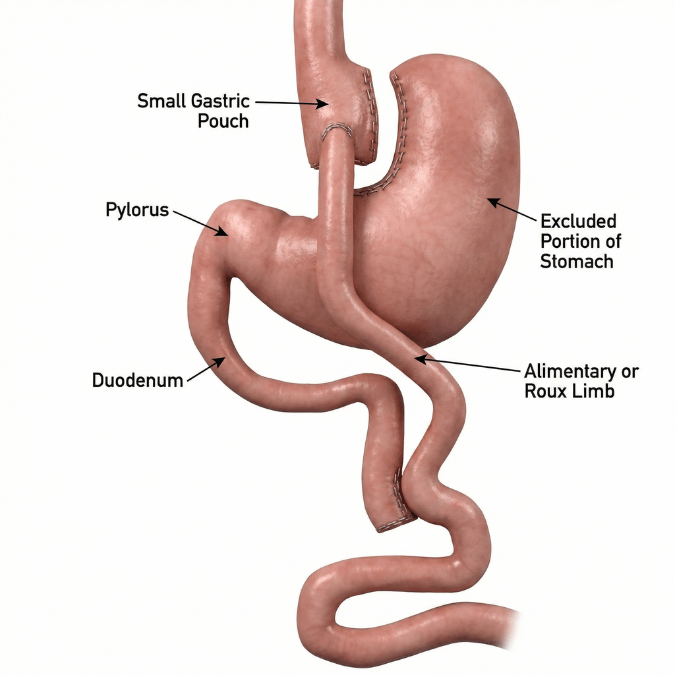
Average age at surgery was 18.8 years (range 15 to 21); 83% of participants were female and three in four were Hispanic. Nine in ten had Roux-en-Y gastric bypass, and the rest mostly had an adjustable gastric band. Fourteen years after surgery on average, participants had maintained substantial weight loss and reported large, statistically significant reductions in obesity-related conditions, with low rates of serious long-term complications. The authors conclude that bariatric surgery in adolescence delivers benefits that last well into adulthood.
Why This Study Was Needed
About 12% of non-Hispanic Black, 9% of Hispanic and 7% of non-Hispanic White adolescents in the United States have severe obesity, which raises their lifetime risk of diabetes, heart disease and some cancers. The American Academy of Pediatrics recommends early referral of these teens to multidisciplinary bariatric programs, yet surgery remains rarely used in this age group. One reason is the lack of long-term evidence. Earlier landmark studies, including the U.S. Teen-LABS cohort and Sweden’s AMOS trial, followed patients for roughly three to ten years, and no study had reported results beyond ten years. Almost all existing data also came from research cohorts with close follow-up, while in everyday practice as many as 60% of bariatric patients eventually stop attending follow-up visits.
How the Study Was Done
This was a retrospective chart review combined with a structured follow-up interview. The researchers identified everyone who had bariatric surgery at age 21 or younger between January 2002 and September 2010. Members of the bariatric team, including physicians, dietitians and nurses, then contacted each patient by phone. They made up to ten attempts, followed by national directory searches and mailed questionnaires for anyone they could not reach. Each participant completed a two-page questionnaire covering current weight, health conditions, new diagnoses, later operations, education, work, relationships, pregnancy, alcohol use, physical activity and diet. Weight and height were self-reported, which earlier research has shown to be reliable in bariatric patients.
Of 130 eligible patients, 96 took part. One declined, and one had died nine months after surgery from an unrelated condition. Those who took part did not differ from those who could not be reached in age, sex, insurance type or starting BMI.
What the Study Found
Weight
Median weight fell from 278.5 to 195 pounds. At their lowest point after surgery, patients had lost a median of 44% of their body weight, and years later they still kept off 31%. Three in four gastric bypass patients (74.7%) and five in eight band patients (62.5%) maintained more than 20% total body weight loss, the usual benchmark for long-term success. Age at surgery, sex, ethnicity, education, insurance and baseline health conditions did not predict who did best.
Health conditions
Remission was defined strictly as being off medication and no longer under treatment. In addition to the complete remission of high cholesterol, asthma and diabetes, sleep apnea fell from 16.7% to 1%, high blood pressure from 13.5% to 1%, reflux (GERD) from 13.5% to 3.1%, and depression from 27.1% to 4.2%. Anxiety also decreased, from 7.3% to 2.1%, although that change was not statistically significant.
Life after surgery
Most participants were thriving as adults. Fifty-nine percent had a college or graduate degree, 84% were employed, 52% were married, and 67% of the women had had a successful pregnancy. Sixty percent exercised regularly, 87% said they ate more healthfully than before surgery, and 88.5% were satisfied with their results.
Complications and risks
About one in five participants (19.8%) had been readmitted to the hospital at some point, most often for anemia or intussusception, and 39.6% had another abdominal operation, most commonly body contouring or gallbladder removal. Anemia was common over the long term, and 24% had needed a blood transfusion at some point. Many participants admitted they had not taken their supplements consistently in their early twenties. About half drank alcohol regularly, and 8.3% reported a drinking problem at some point after surgery, consistent with known risks after gastric bypass. Of the eight patients with a gastric band, four had needed the band removed or repositioned or had a band that had deflated.
What This Means for Teens and Families
For a teenager with severe obesity, waiting is unlikely to lead to a healthy weight. National modeling cited in the study estimates that a 19-year-old with severe obesity has only a 3.5% (boys) to 8.2% (girls) chance of reaching a normal weight by age 35. This study shows that surgery in the teen years can deliver weight loss and health benefits that are still present nearly two decades later, even for patients who drifted away from regular follow-up.
It also shows what matters most afterward: daily vitamins and iron, periodic blood tests, and honest guidance about alcohol after surgery. Dr. de la Cruz-Muñoz now performs sleeve gastrectomy for most adolescents, uses gastric bypass selectively, and no longer places gastric bands, partly because of the band’s weaker results seen here.
Clinical Pearls
- Refer early. Delaying surgery for adolescents with severe obesity rarely changes their weight trajectory and allows comorbidities to accumulate.
- Weight and comorbidity benefits proved durable even when follow-up lapsed; nutritional status did not. Build supplementation habits before surgery.
- Screen for iron, B12 and other deficiencies for life, especially after gastric bypass.
- Counsel on alcohol before and after surgery. Younger age and gastric bypass are both associated with problem drinking.
- Expect follow-up to lapse with insurance changes, relocation and the transition to adulthood, and coordinate care with pediatricians and primary care physicians.
- Ethnicity, insurance and education did not predict long-term BMI, so benefits extend to the groups least likely to be referred for surgery.
Strengths and Limitations
The study’s strengths include the longest follow-up reported for adolescent bariatric surgery at the time, a 74% response rate after many years without contact, and a predominantly Hispanic and Black cohort, groups that are underrepresented in obesity research and less likely to be offered surgery. Its limitations include the retrospective design, the absence of a non-surgical comparison group, self-reported weights and health conditions, the quarter of patients who could not be reached, and a cohort that mostly had gastric bypass, so the results may not apply directly to sleeve gastrectomy.
Expert Commentary
When I began operating on teenagers in the early 2000s, the question I heard most from pediatricians was whether the benefits would last. Many of the young people in this study came to me because a parent had already had surgery with us and did not want their child to face the same struggles. Reaching them again 10 to 18 years later, now adults with careers, marriages and children of their own, answered that question better than any trial could have.
What stands out to me is not only the weight loss but the conditions that never came back: the diabetes, the sleep apnea, the blood pressure medications. These patients avoided decades of chronic disease at the age when it does the most damage. Too often, teenagers are told to keep dieting until they turn 18 or 21, and by then many have developed the very conditions surgery could have prevented.
The study also showed us what we must do better. Many patients stopped their vitamins in their early twenties, and anemia followed. Some struggled with alcohol. Today we spend more time preparing teens and their families for lifelong supplementation, we talk openly about alcohol, and we perform sleeve gastrectomy for most adolescents.
GLP-1 medications now give families more options, and they have an important place in treatment. But for a teenager with severe obesity, this study shows that surgery has the longest proven track record, with benefits measured not in months but in decades.
— Dr. Nestor de la Cruz-Muñoz
de la Cruz-Muñoz N, Xie L, Quiroz HJ, et al. Long-term outcomes after adolescent bariatric surgery. J Am Coll Surg. 2022;235(4):592-602. doi:10.1097/XCS.0000000000000325. PMID: 36102560; PMCID: PMC9484037.