

Hair Loss After Bariatric Surgery: Why It Happens, When It Stops, and What Actually Works

Quick Answer
Watch Related Video
Article
Hair Loss After Bariatric Surgery
You're three months out from bariatric surgery. The weight is coming off. You're feeling better than you have in years. And then you look down at the shower drain — and there's a clump of hair.
This is one of the most emotionally distressing side effects of bariatric surgery — and one of the most common. But here's the good news: it is almost always temporary, it is not a sign that something went wrong, and there are specific, evidence-based steps to minimize it and speed up recovery.
This guide breaks down exactly what the research says about hair loss after gastric sleeve, gastric bypass, and duodenal switch surgery — why it happens, how long it lasts, which nutrients matter most, and what actually works.
How Common Is Hair Loss After Bariatric Surgery?
More common than most patients expect.
The most recent and largest meta-analysis on this topic — published in 2025, analyzing 41 studies and over 7,000 patients — found that approximately 47% of patients experience hair loss after bariatric surgery. An earlier meta-analysis of 18 studies put the number even higher, at 57%. So roughly half of all bariatric surgery patients will notice increased hair shedding.
In a large cohort study of over 550 patients, 65% reported hair loss in the first year after surgery. But by three years out, that number dropped to 35% — meaning the majority see significant improvement over time.
And the most reassuring statistic: in a study of 156 women after sleeve gastrectomy, permanent hair loss — meaning alopecia that never resolved — was observed in zero patients. Not one.
Why Does Hair Fall Out After Surgery? The Biology of Telogen Effluvium
To understand why this happens, it helps to understand how hair grows. Each hair follicle cycles through three phases:
Anagen (growth phase): The hair is actively growing. About 85–90% of hair is in this phase at any given time. It lasts 2–6 years.
Catagen (transition phase): The hair stops growing and the follicle shrinks. This lasts a few weeks.
Telogen (resting phase): The hair sits in the follicle for 3–5 months, then falls out naturally as a new hair begins growing.
After bariatric surgery, the physiological stress of rapid weight loss — combined with dramatic caloric restriction, hormonal shifts, and changes in nutrient absorption — pushes a large number of hair follicles out of the growth phase and into the resting phase all at once. Research suggests this stress can prematurely force up to 70% of hair follicles from their growth phase into the shedding phase.
This is called telogen effluvium. It's the same type of hair loss that can happen after childbirth, major illness, high fever, or any significant physical stress.
The key point: the hair isn't being destroyed. The follicle isn't damaged. The hair is simply entering its resting phase early — and then falling out on schedule 3–5 months later. That's why shedding doesn't start immediately after surgery. It shows up at months 3–4, because that's when the hairs pushed into telogen right after surgery reach the end of their resting phase.
In a study of 156 women after sleeve gastrectomy, 79% of those who experienced hair loss reported it beginning between months 3 and 4. The shedding continued for an average of about 5.5 months. The typical pattern: surgery, then a quiet period; month 3–4, shedding begins; month 4–5, shedding peaks; month 9–12, gradual resolution and regrowth.
The 5 Nutrients That Drive Hair Loss After Bariatric Surgery
Telogen effluvium from the stress of rapid weight loss is the primary driver. But nutritional deficiencies make hair loss worse, last longer, and harder to recover from. The research has identified five key nutrients.
1. Protein. Hair is made of a protein called keratin. When the body doesn't get enough protein, it prioritizes vital organs — heart, liver, muscles — and hair production gets deprioritized. A large cohort study found that in patients with hair loss, blood parameters of protein metabolism were significantly lower than in patients without hair loss — both in the short term and long term. The AACE/ASMBS clinical practice guidelines recommend a minimum protein intake of 60 grams per day after bariatric surgery, with a target of up to 1.5 grams per kilogram of ideal body weight per day. Most patients don't hit these targets without protein supplementation.
2. Iron and Ferritin. Iron is essential for hair follicle function. A meta-analysis found that ferritin levels — which reflect the body's iron stores — were significantly lower in patients who experienced hair loss compared to those who didn't. A 2025 prospective study confirmed that patients in the moderate-to-severe hair loss group had significantly lower preoperative serum ferritin levels. Important detail: iron levels can be "normal" on a standard lab test and still be too low for optimal hair growth. Ferritin is the more sensitive marker.
3. Zinc. Multiple studies have found a significant association between low zinc levels and hair loss after bariatric surgery. One study found that patients with combined zinc and iron levels below a threshold of 115 were four times more likely to experience hair loss. The AACE/ASMBS guidelines specifically recommend screening for zinc deficiency in any bariatric patient with hair loss. Critical caution: if supplementing zinc, also supplement copper — 1 mg of copper for every 8–15 mg of elemental zinc — because zinc supplementation can cause copper deficiency.
4. Folic Acid. A meta-analysis found that folic acid levels were significantly lower in patients with hair loss after bariatric surgery. Folic acid is critical for cell division, including the rapidly dividing cells in hair follicles.
5. Serum Albumin and Calcium. A 2025 prospective cohort study found that drops in serum albumin and calcium levels at one month after surgery were independent risk factors for developing hair loss. This reinforces the message that overall nutritional status — not just one vitamin — is what matters.
Does Hair Loss Differ by Procedure? Sleeve vs. Bypass vs. Duodenal Switch
Yes — and the difference is significant. The 2025 meta-analysis found that gastric bypass has approximately twice the odds of hair loss compared to gastric sleeve (OR 1.91). The duodenal switch has the highest rate of all — even higher than gastric bypass.
The reason is straightforward: the more a procedure changes how nutrients are absorbed, the more likely nutritional shifts will affect hair. The sleeve is purely restrictive. Gastric bypass adds a mild malabsorptive component. The duodenal switch has the most significant malabsorptive effect.
This doesn't mean patients should avoid more powerful procedures — the duodenal switch produces the greatest weight loss and metabolic improvement. But it does mean that patients who undergo malabsorptive procedures need to be especially vigilant about vitamin and mineral supplementation.
Who Is Most at Risk for Hair Loss After Weight Loss Surgery?
Younger patients: a meta-analysis found that patients with hair loss were on average about 2.5 years younger than those without. Women are about four times more likely to report significant hair loss, though this may partly reflect reporting differences. Patients with preoperative nutritional deficiencies are also at higher risk — many people with obesity have significant micronutrient deficiencies before surgery, and up to 30% may have low zinc levels preoperatively. One study found that patients who developed hair loss already had lower zinc and vitamin B12 levels before surgery compared to those who didn't; the deficiency didn't start after surgery, surgery made it worse. Malabsorptive procedures carry the highest risk, in this order: duodenal switch, gastric bypass, sleeve gastrectomy.
6 Evidence-Based Steps to Minimize Hair Loss and Speed Recovery
Step 1 — Hit Your Protein Targets Every Day. Sixty grams per day is the minimum. Eighty to ninety grams is better. For many patients, this means using a protein supplement — a shake, a powder, or a ready-to-drink product — especially in the first 3–6 months when food volume is very limited. Protein is the foundation of long-term success — not just for hair, but for muscle preservation, immune function, and wound healing.
Step 2 — Take Your Bariatric Multivitamin Every Day. The ASMBS guidelines recommend that all bariatric surgery patients take a daily bariatric-specific multivitamin — not a regular over-the-counter multivitamin. Bariatric formulations contain higher doses of iron, zinc, folic acid, B12, and vitamin D. After gastric bypass or duodenal switch, 200% of the daily value is recommended. One study found that multivitamin compliance dropped from 97% in the first year to just 78% by year three. Don't be in that declining group.
Step 3 — Get Your Labs Checked on Schedule. The guidelines recommend screening for micronutrient and mineral deficiencies at least quarterly for the first year, then annually. If iron, ferritin, zinc, folic acid, or B12 are low, targeted supplementation at therapeutic doses — higher than what's in a multivitamin — can be prescribed.
Step 4 — Treat Zinc Deficiency Aggressively. One study found that in patients with low zinc and iron levels, zinc supplements achieved the cessation of hair loss in most cases. But remember the copper rule: supplement 1 mg of copper for every 8–15 mg of zinc.
Step 5 — Be Gentle with Your Hair During the Shedding Phase. Avoid tight hairstyles, excessive heat styling, harsh chemical treatments, and aggressive brushing. These won't cause telogen effluvium, but they can worsen breakage and make thinning more visible.
Step 6 — Manage Your Expectations and Your Timeline. If shedding has started at month 3 or 4, know that this is the peak. For most patients, the worst is over by month 6, and significant regrowth is visible by months 9–12.
Does Biotin Actually Help?
This is the supplement marketed everywhere for hair loss. But the evidence is disappointing. A study of 156 women after sleeve gastrectomy found that biotin supplementation — even in patients with confirmed biotin deficiency — showed low efficacy for reducing hair loss. Only 23% of patients with biotin deficiency who took supplements reported a meaningful decline in shedding. Biotin won't hurt, but it should not be expected to be a magic bullet. The evidence much more strongly supports adequate protein, iron, zinc, and folic acid as the nutritional priorities.
When to Be Concerned: Warning Signs That Need Medical Attention
Most hair loss after bariatric surgery is telogen effluvium — temporary, self-limited, and recoverable. But certain situations warrant medical evaluation: hair loss continuing beyond 12 months with no improvement, which may indicate a persistent nutritional deficiency that hasn't been corrected; patchy hair loss (specific bald spots rather than diffuse thinning), which suggests a different condition such as alopecia areata, an autoimmune condition; associated symptoms such as extreme fatigue, brittle nails, mouth sores, numbness or tingling, or unusual bruising, which could indicate iron deficiency anemia, B12 deficiency, or copper deficiency; and male pattern hair loss (receding hairline or crown thinning), which is androgenetic alopecia, a separate condition with different treatments.
Will My Hair Grow Back?
Yes. In the vast majority of cases, hair regrowth occurs naturally once the body stabilizes — typically between months 9 and 12 after surgery. Some patients report that their hair grows back with a slightly different texture — curlier or straighter than before — but it grows back.
The key is supporting the process: adequate protein, consistent vitamin supplementation, regular lab monitoring, and aggressive treatment of any deficiencies. The shedding phase is temporary. The health benefits of bariatric surgery — resolution of diabetes, improvement in blood pressure, reduction in cardiovascular risk, added years of life — are permanent. Don't let a few months of shedding overshadow the incredible transformation your body is going through.
Frequently Asked Questions
How long does hair loss last after bariatric surgery? Hair loss typically begins 3–4 months after surgery and lasts about 5–6 months, resolving by months 9–12. The shedding is caused by telogen effluvium, a temporary condition triggered by rapid weight loss and nutritional changes. Permanent hair loss is extremely rare.
Is hair loss worse after gastric bypass or gastric sleeve? Yes — gastric bypass has approximately twice the rate of hair loss compared to gastric sleeve. The duodenal switch has the highest rate of all. The more a procedure affects nutrient absorption, the greater the risk.
What vitamins should I take to prevent hair loss after bariatric surgery? The most important nutrients are protein (60–90 g/day), iron, zinc, folic acid, and a bariatric-specific multivitamin. The AACE/ASMBS guidelines recommend bariatric multivitamins at 200% of the daily value after gastric bypass or duodenal switch.
Does biotin help with hair loss after bariatric surgery? The evidence is limited. Only 23% of patients with confirmed biotin deficiency reported meaningful improvement. Protein, iron, zinc, and folic acid have much stronger evidence.
Can hair loss after bariatric surgery be permanent? Permanent hair loss after bariatric surgery is extremely rare. In a study of 156 women after sleeve gastrectomy, zero patients experienced permanent alopecia. However, if hair loss persists beyond 12 months, it may indicate an uncorrected nutritional deficiency and should be evaluated by a physician.
Should I delay bariatric surgery because I'm worried about hair loss? No. Hair loss is temporary and manageable. Bariatric surgery resolves or improves type 2 diabetes, high blood pressure, sleep apnea, and many other conditions — and adds years to life expectancy. A few months of increased shedding is a small and temporary trade-off for those permanent health benefits.
When should I see a doctor about hair loss after bariatric surgery? See your doctor if hair loss continues beyond 12 months, if you notice patchy bald spots rather than diffuse thinning, or if you're experiencing extreme fatigue, brittle nails, numbness, or tingling — which could indicate significant nutritional deficiencies requiring treatment.
People Also Ask
Does hair grow back thicker after bariatric surgery? Hair typically grows back at its normal thickness once the body stabilizes nutritionally, usually by months 9–12. Some patients report a change in texture — curlier or straighter — but thickness generally returns to baseline with adequate nutrition.
Can I use Rogaine (minoxidil) for hair loss after bariatric surgery? Minoxidil is FDA-approved for androgenetic alopecia (pattern baldness), not telogen effluvium. Since post-bariatric hair loss is almost always telogen effluvium, minoxidil is not the standard treatment. Correcting nutritional deficiencies is the primary approach.
Is hair loss a sign that bariatric surgery failed? Absolutely not. Hair loss is a common, expected, and temporary side effect of rapid weight loss — not a sign of surgical failure. It occurs because the body is undergoing significant metabolic changes, and it resolves as the body adapts.
Key Statistics
47–57% of bariatric patients experience hair loss. Shedding starts at months 3–4 and peaks at months 4–5. It resolves by months 9–12 in most patients. Zero percent permanent hair loss was found in the largest sleeve gastrectomy study. Gastric bypass carries 2x the hair loss rate of gastric sleeve. 60–90 g protein/day is the number one protective factor. Only 23% of patients benefited from biotin supplements.
Key Takeaways
Hair loss after bariatric surgery is common (about 50% of patients) and almost always temporary. It's caused by telogen effluvium — stress-induced shedding, not follicle damage. Protein, iron/ferritin, zinc, and folic acid are the nutrients that matter most. Biotin is overhyped — the evidence shows limited benefit. Gastric bypass and duodenal switch carry higher risk than gastric sleeve. Most patients see full regrowth by months 9–12. Take your bariatric multivitamin every day — compliance drops over time, and so does your protection.
Obesity By The Numbers
Hair loss is driven by telogen effluvium from rapid weight loss and worsened by deficiencies in protein, iron, zinc, folic acid, B12, albumin, and calcium.
Medical Topics Covered
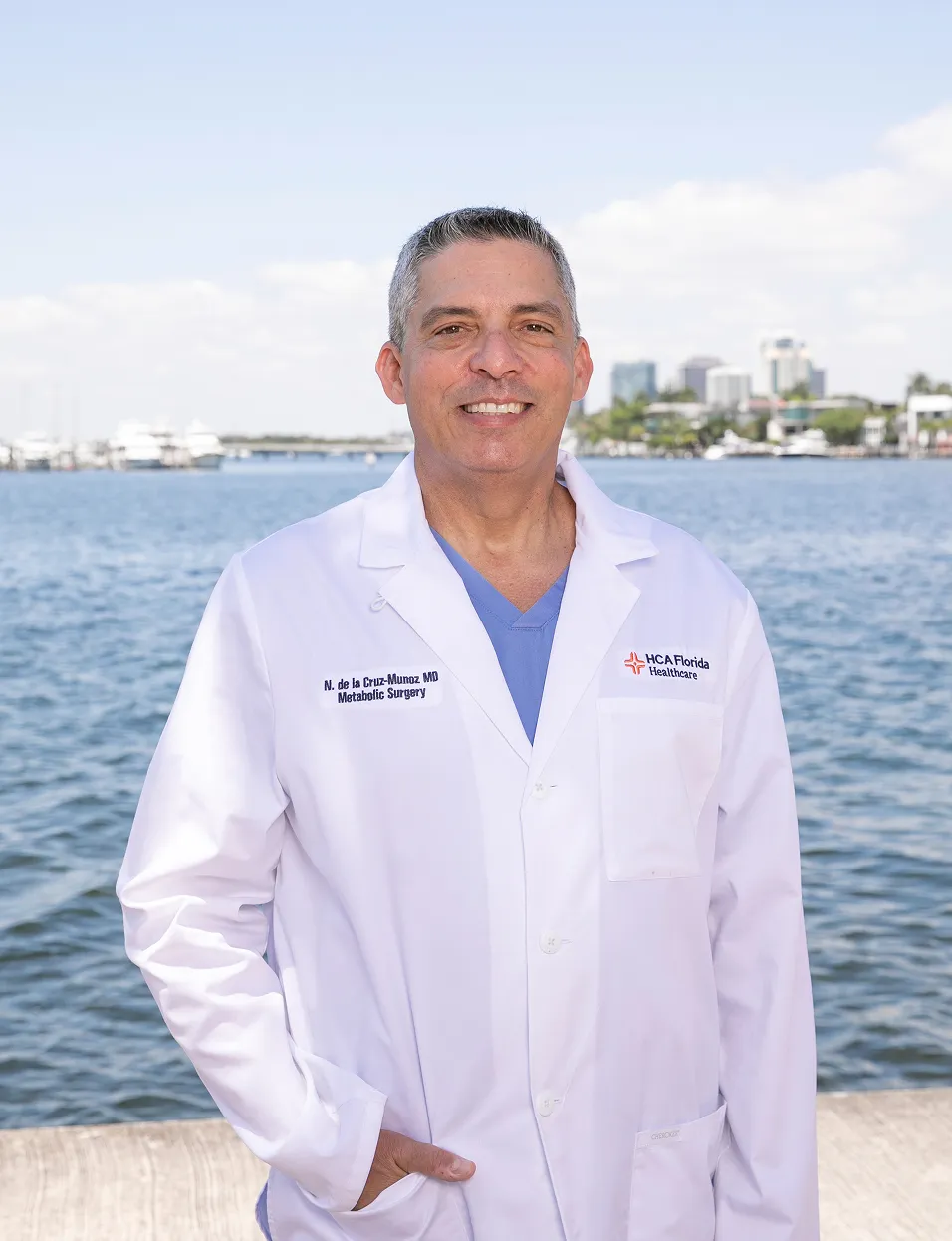

Dr. de la Cruz‑Muñoz specializes in advanced minimally invasive and robotic surgery, metabolic disease management, and comprehensive long‑term patient care. His work integrates clinical expertise, academic leadership, and a commitment to evidence‑based medicine. He has trained surgeons across the country, contributed to national guidelines, and is widely regarded for his outcomes, innovation, and patient‑centered approach.
Patients choose Dr. de la Cruz‑Muñoz for his combination of surgical excellence, metabolic expertise, and lifelong dedication to improving patient health through compassionate, high‑quality care.
Procedures We Offer




Conditions


FAQ
People Also Ask
Obesity is recognized as a chronic metabolic disease influenced by genetics, hormones, environment, and biological factors — not simply lifestyle choices.
The body has built-in mechanisms that defend weight, including hunger hormones and metabolic adaptations that make long-term weight loss challenging.
Yes. Genetics can significantly influence body weight regulation, appetite, metabolism, and an individual's susceptibility to obesity.
GLP-1 medications help regulate appetite, slow stomach emptying, improve satiety, and support sustainable weight management.
Yes. Obesity is associated with conditions such as Type 2 diabetes, hypertension, sleep apnea, fatty liver disease, and cardiovascular disease.
Dieting alone often cannot overcome the biological adaptations that increase hunger and decrease energy expenditure after weight loss.
Medical evaluation may be appropriate when excess weight affects health, quality of life, or contributes to obesity-related medical conditions.
Yes. Bariatric surgery addresses biological and metabolic factors involved in obesity and can lead to significant long-term health improvements.