Understanding Set-Point Theory: Why Your Body Fights Weight Loss

Quick Answer
Watch Related Video
Introduction
If you’ve ever lost weight, only to regain it — sometimes even more — you’re not alone.
And you’re not imagining it.
Your body has a built‑in system designed to defend your weight, even when that weight is harming your health.
This system is called the set‑point, and it’s one of the most important — and misunderstood — concepts in obesity science.
Understanding set‑point theory changes everything:
- It explains why dieting feels impossible
- It explains why weight regain is common
- It explains why obesity is not a willpower problem
- It explains why bariatric surgery and GLP‑1 medications work
Let’s break it down clearly and simply.
1. Your Body Has a “Weight Thermostat” — and It’s Not Under Your Control
Think of your body like a home thermostat.
You set the temperature to 72°F.
If the house gets too cold, the heat turns on.
If it gets too warm, the AC kicks in.
Your body does the same thing with weight.
Your set‑point = the weight your body defends.
If you go below it, your body activates powerful biological responses to push you back up.
If you go above it, your body often does… nothing.
This is why weight gain is easy.
Weight loss is hard.
And weight regain is common.
This is not psychology.
This is neurobiology.
2. The Set‑Point Lives in the Hypothalamus — Your Metabolic Control Center
The hypothalamus is a small region in the brain that regulates:
- Hunger
- Fullness
- Metabolism
- Energy expenditure
- Hormones
- Body temperature
- Sleep
- Stress response
It constantly monitors:
- Fat stores
- Hormone levels
- Nutrient signals
- Blood sugar
- Gut hormones
And it adjusts your behavior and metabolism to keep your weight stable.
Your brain is always trying to get you back to your set‑point — even if that set‑point is unhealthy.
3. When You Lose Weight, Your Body Fights Back
This is the part patients feel but rarely understand.
When you lose weight, your body responds with:
Hunger increases
Ghrelin rises.
You feel hungrier than before.
Fullness decreases
Leptin drops.
You feel less satisfied after eating.
Cravings intensify
The brain’s reward system becomes more sensitive to food cues.
Metabolism slows
Your body burns fewer calories at rest.
Energy drops
You feel tired, sluggish, and unmotivated.
Muscle loss accelerates
Your body tries to conserve fat and burn muscle.
Fat storage becomes more efficient
Your body becomes better at storing calories.
This is not “falling off the wagon.”
This is your biology trying to restore the set‑point.
4. Dieting Raises the Set‑Point — Making Future Weight Loss Harder
This is the cruel irony of dieting:
The more you diet, the higher your set‑point can climb.
Why?
Because your body interprets dieting as starvation.
So it adapts by:
- Lowering metabolism
- Increasing hunger
- Increasing fat storage efficiency
- Reducing muscle mass
- Increasing food reward sensitivity
This is why yo‑yo dieting is so common.
It’s not a lack of discipline — it’s a biological survival response.
5. Genetics Influence Your Set‑Point
Some people have a naturally low set‑point.
They stay thin without trying.
Others have a high set‑point.
They gain weight easily and struggle to lose it.
This is not fairness or unfairness.
This is genetics.
More than 100 genes influence:
- Appetite
- Cravings
- Metabolism
- Fat storage
- Insulin sensitivity
- Food reward pathways
You didn’t choose your set‑point.
You inherited it.
6. The Modern Food Environment Pushes the Set‑Point Higher
Our biology was designed for:
- Scarcity
- High physical activity
- Whole foods
- Long periods without eating
Instead, we live in an environment of:
- Ultra‑processed foods
- Constant availability
- High sugar
- High fat
- High reward stimulation
- Low physical activity
This environment pushes the set‑point upward.
Your biology is ancient.
Your environment is modern.
They are not compatible.
7. Bariatric Surgery Resets the Set‑Point — This Is the Real Magic
This is the part most people don’t understand:
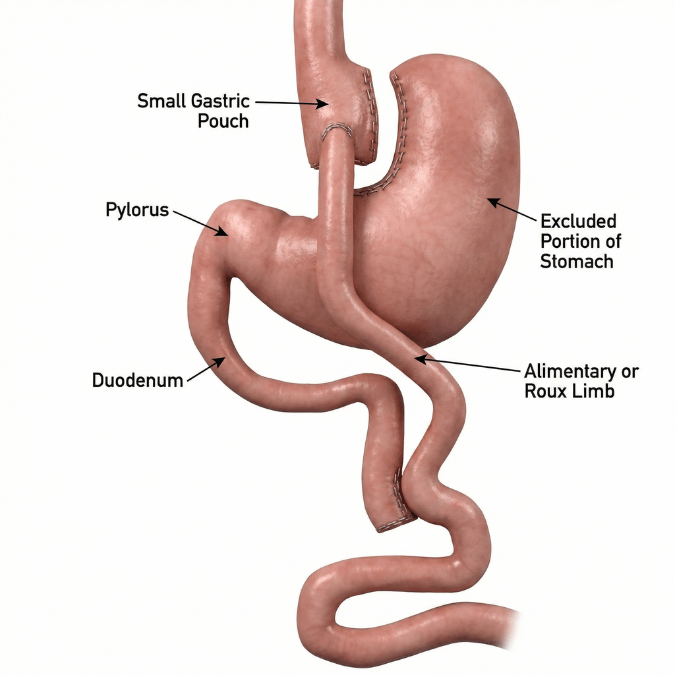
Bariatric surgery doesn’t just reduce stomach size — it resets the set‑point.
After surgery:
- Ghrelin drops
- GLP‑1 increases
- PYY increases
- Insulin sensitivity improves
- Inflammation decreases
- Gut‑brain signaling changes
- Bile acids shift
- The microbiome improves
These changes send a new message to the hypothalamus:
“This lower weight is safe. You can stop fighting.”
This is why patients:
- Feel less hungry
- Feel satisfied with small portions
- Lose cravings
- Maintain weight loss long‑term
The set‑point is no longer working against them.
8. GLP‑1 Medications Lower the Set‑Point Too
Medications like:
- Wegovy
- Zepbound
- Saxenda
work by:
- Reducing hunger
- Reducing cravings
- Improving insulin sensitivity
- Slowing gastric emptying
- Reducing inflammation
- Improving gut‑brain signaling
Over time, these changes lower the defended weight.
This is why GLP‑1s are not “cheating.”
They are treating the biology.
9. Long‑Term Success Requires Long‑Term Biological Support
Obesity is chronic.
The set‑point is chronic.
Treatment must be chronic.
This doesn’t mean “forever medication.”
It means:
- Ongoing follow‑up
- Nutrition support
- Strength training
- Vitamin adherence
- Body‑composition monitoring
- Metabolic support when needed
You don’t treat chronic diseases with short‑term plans.
Conclusion
If you’ve struggled with weight, here’s the truth:
You weren’t fighting your habits.
You were fighting your set‑point.
And your set‑point was fighting back.
Understanding this changes everything:
- It removes shame
- It removes blame
- It removes guilt
- It replaces frustration with clarity
- It replaces hopelessness with strategy
- It replaces self‑criticism with self‑compassion
Obesity is not a willpower problem.
It is a set‑point problem.
And when we treat the biology — not the behavior — patients finally succeed.
Further Information
Medical Topics Covered


Dr. de la Cruz‑Muñoz specializes in advanced minimally invasive and robotic surgery, metabolic disease management, and comprehensive long‑term patient care. His work integrates clinical expertise, academic leadership, and a commitment to evidence‑based medicine. He has trained surgeons across the country, contributed to national guidelines, and is widely regarded for his outcomes, innovation, and patient‑centered approach.
Patients choose Dr. de la Cruz‑Muñoz for his combination of surgical excellence, metabolic expertise, and lifelong dedication to improving patient health through compassionate, high‑quality care.
Procedures We Offer





Conditions









FAQ
Ultra-processed food overrides satiety signals, hijacks the dopamine reward system, and drives overconsumption. An NIH study found that participants eating processed food consumed 508 extra calories per day compared to those eating whole food with the same available calories and macronutrients. Beyond calories, processed food creates chronic inflammation, insulin resistance, and oxidative stress that modify epigenetic tags on genes controlling hunger, fat storage, and metabolic rate. This effectively raises the biological set point, undermining the metabolic reset that surgery provided.
A bariatric stomach holds only a few ounces. Eating 80 grams of protein in three meals is physically impossible, especially in the first year. Five meals (three meals plus two planned protein-rich snacks) makes protein targets achievable, keeps amino acids available for continuous muscle protein synthesis, and stabilizes blood sugar throughout the day. Five meals is not grazing. It is planned, structured, and intentional.
Obesity is considered a chronic disease because it is driven by long‑term biological changes — not short‑term behavior. Hormones like ghrelin, leptin, insulin, GLP‑1, and PYY regulate hunger, fullness, metabolism, and fat storage. When these systems become dysregulated, the body defends a higher weight set‑point and resists weight loss. Obesity also progresses over time, increases the risk of more than 250 diseases, and requires ongoing medical treatment, just like diabetes or hypertension.
Obesity is a chronic, progressive disease driven by biology—not willpower. Hormones that regulate hunger, fullness, metabolism, and fat storage become dysregulated, causing the body to defend a higher weight set‑point. This makes long‑term weight loss extremely difficult without medical or surgical treatment. Obesity also increases the risk of more than 250 diseases, including diabetes, heart disease, fatty liver disease, sleep apnea, and multiple cancers.
People Also Ask
Obesity is recognized as a chronic disease by major medical organizations, including the American Medical Association. It is influenced by genetics, hormones, brain signaling, environment, sleep, stress and medications — not simply willpower. Like other chronic diseases, it often requires long-term treatment, which may include nutrition, activity, behavioral support, medications and surgery. Lifestyle matters, but biology largely determines how the body responds.
The body has powerful systems that defend its weight. When you lose weight, hunger hormones rise, fullness hormones drop, the brain becomes more focused on food and metabolism slows — a process called metabolic adaptation. Genetics, sleep, stress, medications and the modern food environment add to the challenge. These are biological forces, not character flaws, which is why medical treatment is often needed.
Genetics play a major role. Studies of twins and adopted children suggest that roughly 40–70% of the variation in body weight is inherited, influencing appetite, fullness, metabolism and where fat is stored. Many genes each contribute a small effect, and a few rare single-gene forms cause severe early obesity. Genes interact with environment, sleep, stress and medications, so a family history raises risk but does not determine destiny.
GLP-1 medications mimic a natural gut hormone released after eating. They act on the brain to reduce hunger and increase fullness, slow stomach emptying so meals last longer, quiet "food noise," and improve insulin release and blood sugar. Tirzepatide also acts on a second hormone, GIP. In clinical trials, these medications produced average weight loss of about 15–20% (Wilding et al., New England Journal of Medicine, 2021; Jastreboff et al., New England Journal of Medicine, 2022).
Yes. Obesity is associated with more than 200 health conditions, including type 2 diabetes, high blood pressure, high cholesterol, heart disease, stroke, sleep apnea, fatty liver disease, reflux, osteoarthritis, infertility and PCOS, depression and at least 13 types of cancer. Losing weight — through medical treatment or bariatric surgery — improves or resolves many of these conditions.
Dieting alone usually cannot overcome the body's biological defenses against weight loss. As weight falls, hunger hormones rise, fullness hormones fall and metabolism slows — changes that can last for years. Most people regain the majority of diet-related weight loss within several years. That is not a failure of willpower, and it is why treatments that address appetite biology, such as GLP-1 medications and bariatric surgery, are more effective for many people with obesity.
Consider medical evaluation when excess weight affects your health, mobility or quality of life, or when you have related conditions such as prediabetes, diabetes, high blood pressure, sleep apnea, fatty liver or joint pain. Guidelines support medications for adults with a BMI of 30 or higher, or 27 or higher with a weight-related condition, and surgery for a BMI of 35 or higher, or 30 or higher with metabolic disease. Early treatment can help prevent complications.
Yes. Bariatric surgery treats the biological drivers of obesity, changing hunger and fullness hormones, insulin sensitivity and the weight the body defends. It is the most effective and durable treatment for severe obesity, producing large, sustained weight loss and improving or resolving diabetes, high blood pressure, sleep apnea and fatty liver. Long-term studies show it also reduces the risk of heart disease, cancer and early death.