Four-Year Weight Outcomes of Laparoscopic Gastric Bypass Surgery and Adjustable Gastric Banding Among Multiethnic Adolescents
Nestor de la Cruz-Muñoz, Sarah E. Messiah, Juan Cabrera, Cristina Torres, Manuel Cuesta, Guillermo Lopez-Mitnik, Kristopher L. Arheart

- Teens who had gastric bypass or gastric banding lost a large amount of weight in the first year, about 92 to 105 pounds on average.
- The weight loss was maintained four years after surgery.
- Most patients were Hispanic, providing some of the earliest medium-term evidence in this community.
- Gastric banding is now rarely used in teens; sleeve gastrectomy and gastric bypass are the main options today.
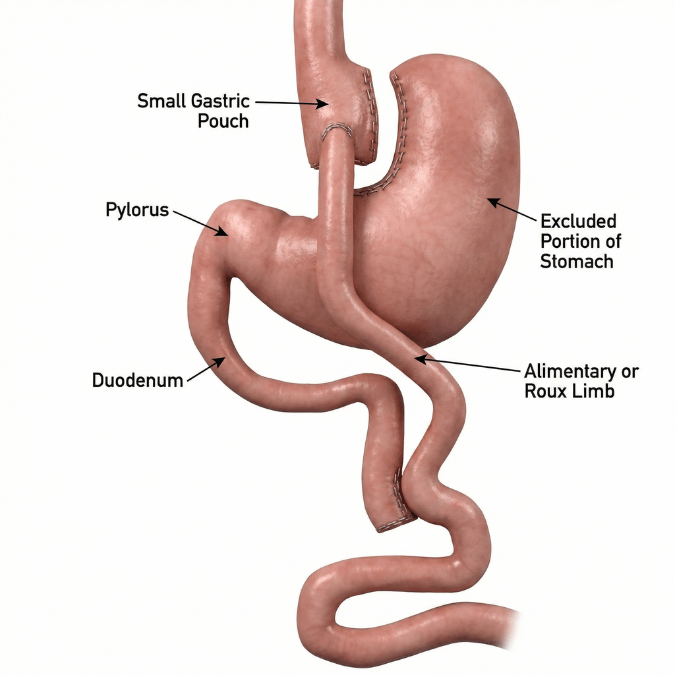
This retrospective study examined four-year weight outcomes of gastric bypass and gastric banding among multiethnic adolescents with severe obesity in South Florida, demonstrating significant and sustained weight loss through four years for both procedures, with gastric bypass producing greater overall reduction. This was one of the first studies reporting medium-term comparative outcomes in multiethnic adolescents, helping establish the evidence base for AAP and ASMBS endorsements.
Why This Study Was Needed
Adolescent bariatric surgery was gaining support in 2010, but almost nothing was known about its medium-term results in ethnic minority teens. Families and pediatricians wanted to know whether the weight would stay off.
How the Study Was Done
The team reviewed 78 adolescents aged 16 to 19 (77% Hispanic, 19% non-Hispanic White; 77% female) who had gastric bypass or an adjustable gastric band with Dr. de la Cruz-Muñoz’s practice from 2002 to 2009. All met NIH criteria for surgery. Weight and BMI were tracked for four years.
What the Study Found
- At one year, non-Hispanic White teens had lost about 105 pounds and 17.3 BMI units; Hispanic teens had lost about 92 pounds and 15.1 BMI units.
- Weight loss plateaued at 12 months in White teens and 18 months in Hispanic teens.
- Both groups maintained their weight loss at four years, with total BMI reductions of 18.6 and 16.2 units.
What This Means for Teens and Families
Weight lost after adolescent surgery can be maintained for years. This early study was later extended by our 10- to 18-year follow-up. Learn about adolescent obesity and start with Am I a Candidate?.
Clinical Pearls
- One of the first medium-term studies of bariatric surgery in predominantly Hispanic adolescents.
- Weight loss was sustained at four years.
- Hispanic teens plateaued slightly later than non-Hispanic White teens.
Strengths and Limitations
The four-year follow-up was long for its time. The sample was small, from a single private practice, and included gastric banding, which is rarely used in teens today.
Expert Commentary
When I started operating on teenagers, the question everyone asked was whether the weight would come back. This was our first chance to answer it, and four years later these young people had kept it off. It gave us the confidence to keep following them for much longer.
— Dr. Nestor de la Cruz-Muñoz
Related Research
de la Cruz-Muñoz N, Messiah S, Cabrera J, Torres C, Cuesta M, Lopez-Mitnik G, Arheart K. Four-Year Weight Outcomes of Laparoscopic Gastric Bypass Surgery and Adjustable Gastric Banding Among Multiethnic Adolescents. Surgery for Obesity and Related Diseases. 2010;6(5):542-547. doi:10.1016/j.soard.2010.06.004. PMID: 20692878.