Comment on: The Effect of Laparoscopic Sleeve Gastrectomy With or Without Hiatal Hernia Repair on Gastroesophageal Reflux Disease in Obese Patients
Zhamak Khorgami, Chi Zhang, Nestor de la Cruz-Muñoz
- Acid reflux is a common concern about sleeve gastrectomy. SOARD invited Dr. de la Cruz-Muñoz to comment on whether hiatal hernia repair during sleeve surgery reduces reflux.
- Being invited to write a journal commentary reflects recognized subject-matter expertise.
- Dr. de la Cruz-Muñoz has continued investigating this through prospective research at ASMBS 2022, 2024, and a 2023 SOARD publication.
- For patients concerned about reflux, this shows a proactive, evidence-based approach to managing GERD risk during sleeve surgery.
This invited commentary published in SOARD provided expert analysis on a study examining the effect of laparoscopic sleeve gastrectomy with or without concomitant hiatal hernia repair on GERD in obese patients. The commentary discussed the clinical significance of addressing hiatal hernias at the time of sleeve gastrectomy and the need for prospective studies. Being invited to write this reflects recognized expertise Dr. de la Cruz-Muñoz has continued to investigate through prospective research presented at ASMBS 2022 and 2024.
The Study Being Discussed
Reflux is one of the main concerns with sleeve gastrectomy. In 2014, a study by Santonicola and colleagues compared 78 patients with a hiatal hernia who had a sleeve with hernia repair against 102 patients without a hernia who had a sleeve alone. Reflux symptoms improved in the sleeve-only group, while patients who had the hernia repaired did not show the same improvement and reported more heartburn at follow-up.
What the Commentary Addresses
SOARD invited Dr. Khorgami, Dr. Zhang and Dr. de la Cruz-Muñoz to comment. The commentary discusses the clinical importance of addressing hiatal hernias at the time of sleeve gastrectomy, the difficulty of comparing patients who start with a hernia to those who do not, and the need for prospective studies to answer the question properly.
What Happened Next
Dr. de la Cruz-Muñoz went on to study the question prospectively. His team’s 2023 SOARD study found that hiatal hernias are present in a large share of sleeve patients, that preoperative barium swallows miss about two-thirds of them, and that careful inspection of the hiatus during surgery finds many hernias that would otherwise be missed.
What This Means for Patients
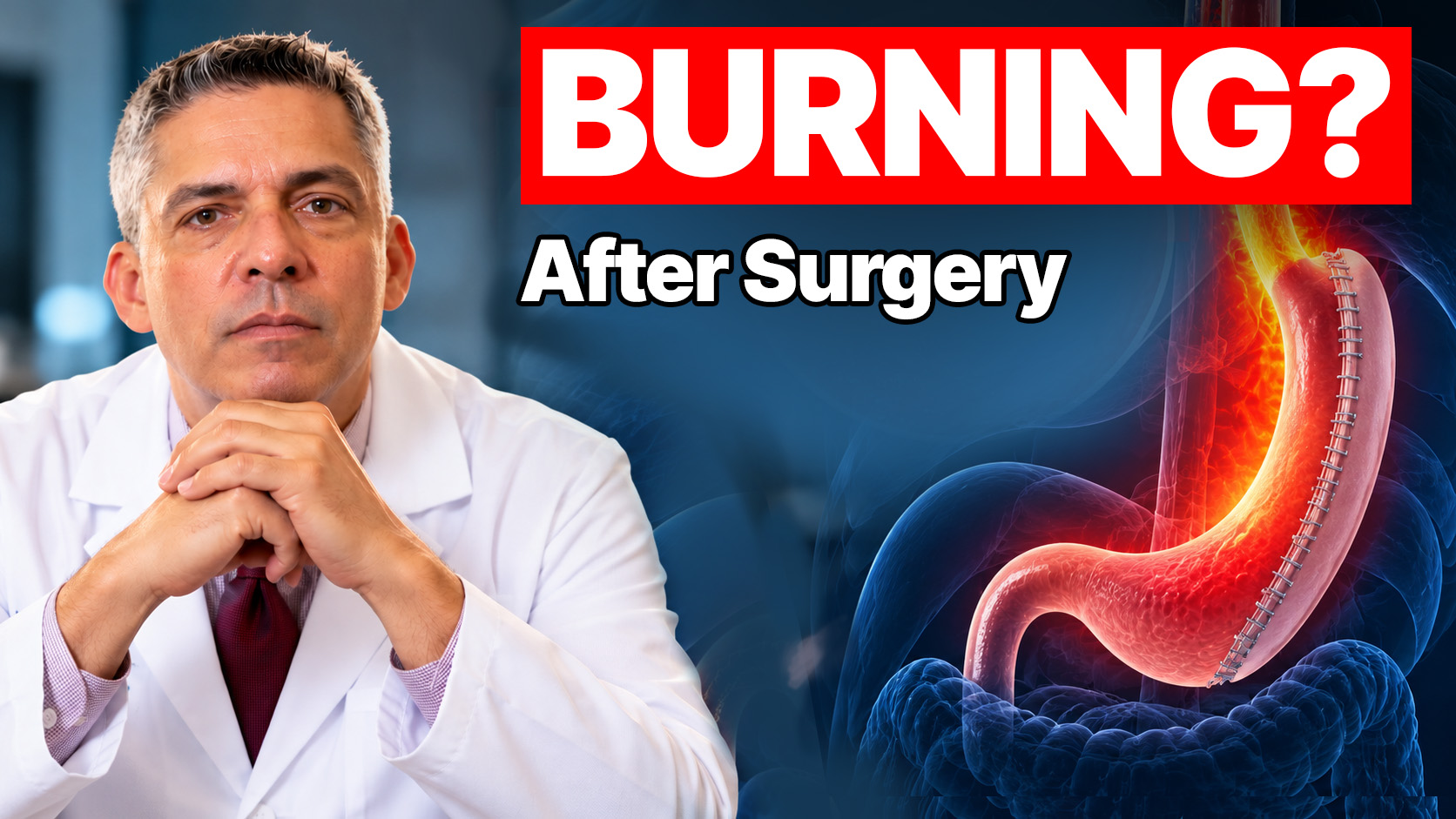
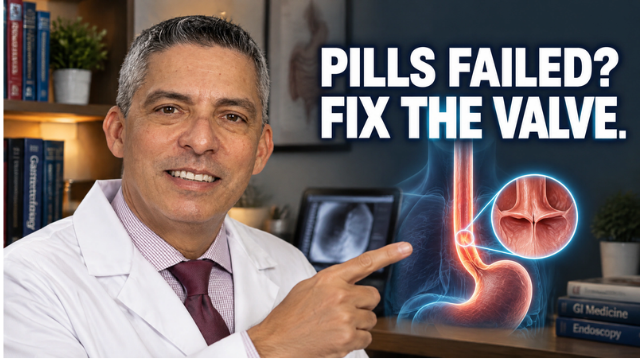
If you are planning a sleeve, ask how your surgeon evaluates and repairs the hiatus. If you already have reflux after sleeve gastrectomy, a missed or recurrent hernia is a common cause, and hiatal hernia repair after sleeve or sleeve-to-bypass conversion can help. Our Reflux Surgery Guide explains the options.
Expert Commentary
This commentary raised a question I have spent the last decade trying to answer with better data. Patients with a hiatal hernia start with a weaker reflux barrier, so comparing them with patients who never had a hernia is not a fair test. That is why we designed our own prospective work.
— Dr. Nestor de la Cruz-Muñoz
Related Research
Khorgami Z, Zhang C, De La Cruz-Muñoz N. Comment on: The Effect of Laparoscopic Sleeve Gastrectomy With or Without Hiatal Hernia Repair on Gastroesophageal Reflux Disease in Obese Patients. Surgery for Obesity and Related Diseases. 2014;10(2):255-256.