

Gastric Sleeve Surgery Explained: A Complete Patient Guide

Quick Answer
Watch Related Video
Article
Gastric Sleeve Surgery Explained: A Complete Patient Guide
> Quick Answer: Gastric sleeve surgery (laparoscopic sleeve gastrectomy) removes approximately 75–85% of the stomach, leaving a narrow banana-shaped tube. It is the most commonly performed bariatric surgery worldwide. Patients typically lose 25–29% of their total body weight, with maximum weight loss at 12–24 months. The sleeve works not just by restricting food intake but by reprogramming hunger hormones — ghrelin drops, GLP-1 rises. Perioperative mortality is 0.03–0.2%. The most important long-term concern is gastroesophageal reflux (GERD), which develops in approximately 19–23% of patients. About 10–20% of patients may eventually need revisional surgery.
TABLE OF CONTENTS: What Is Gastric Sleeve Surgery? Who Is a Candidate? How the Gastric Sleeve Is Performed. How the Sleeve Works — It's Not Just About Stomach Size. Weight Loss Results. Diabetes and Metabolic Results. Weight Regain — What to Expect Long-Term. Risks and Complications. GERD and Barrett's Esophagus. Gastric Sleeve vs. Other Bariatric Procedures. Life After Gastric Sleeve Surgery. FAQ. People Also Ask. Gastric Sleeve by the Numbers. Key Takeaways.
Introduction
The gastric sleeve — formally called laparoscopic sleeve gastrectomy — is the most commonly performed weight-loss surgery in the United States and worldwide, accounting for more than 70 percent of all bariatric procedures.
There's a reason for that. It's effective, it's safe, and it's technically simpler than most other bariatric operations. But "simpler" doesn't mean "simple." This surgery permanently changes your stomach, your hormones, and your relationship with food.
If you're researching the gastric sleeve, you probably have questions. How does it actually work? Is it just about making the stomach smaller? How much weight will you lose — and will you keep it off? What about reflux? What are the real risks?
This guide covers all of it — with the same data and detail your surgeon would use to help you make this decision.
What Is Gastric Sleeve Surgery?
The sleeve gastrectomy removes approximately 75 to 85 percent of the stomach, including nearly all of the fundus — the dome-shaped top of the stomach that produces the hunger hormone ghrelin. What remains is a narrow, banana-shaped tube (the "sleeve") that holds roughly 60 to 100 milliliters — about a quarter cup to just under half a cup.
The small intestine is not touched. There is no rerouting, no bypass, no intestinal connections. That's one of the things that makes the sleeve simpler than procedures like gastric bypass or the duodenal switch.
The sleeve gastrectomy first emerged as a standalone procedure in 2000 and has since become the dominant bariatric operation worldwide, comprising over 54 percent of all bariatric procedures globally as of 2016 and continuing to grow.
The surgery is permanent. The removed portion of the stomach cannot be put back. This is not reversible.
Who Is a Candidate for the Gastric Sleeve?
Current ASMBS and IFSO guidelines — updated in 2022 — recommend metabolic and bariatric surgery for patients with a BMI of 35 or higher, with or without obesity-related conditions; a BMI of 30 to 34.9 with metabolic disease such as type 2 diabetes, hypertension, or sleep apnea; or a BMI of 27.5 or above for individuals of Asian descent. These guidelines replaced the older 1991 NIH criteria that required a BMI of 40, or 35 with comorbidities.
The sleeve gastrectomy is appropriate for a wide range of patients — from BMI 30 all the way up to BMI 60 or higher. For patients with very high BMI, the sleeve can also serve as a first-stage procedure, with a second operation like a duodenal switch added later if needed.
Before surgery, every patient undergoes a comprehensive evaluation: nutritional counseling, psychological assessment, blood work, and often an upper endoscopy. Some insurance plans require a supervised weight-loss program before approval.
Certain conditions may delay or prevent surgery: severe heart or lung disease, active cancer treatment, uncontrolled substance use, or a planned pregnancy within one to two years. This evaluation isn't a hurdle — it's how we make sure you're safe and set up for success.
How the Gastric Sleeve Is Performed
The surgery is performed laparoscopically — or robotically — through five or six small incisions, each about half an inch to an inch long. There is no large open incision.
Step 1 — Mobilize the stomach. The blood vessels and attachments along the outer curve of the stomach are divided using an energy device, from near the pylorus up to the angle of His at the top. This frees the stomach so it can be reshaped.
Step 2 — Insert the calibration tube. A bougie — typically 36 to 40 French in diameter, about the width of your thumb — is passed through the mouth and into the stomach as a guide to create a uniform, narrow sleeve.
Step 3 — Staple and divide. A series of linear staplers are fired along the length of the stomach, removing approximately 75 to 85 percent of the stomach, including nearly all of the fundus.
Step 4 — Reinforce the staple line. Many surgeons reinforce the staple line with sutures, buttress material, or both, though the evidence on whether reinforcement reduces complications is mixed.
Step 5 — Repair hiatal hernia if present. A hiatal hernia is found in roughly 25 to 40 percent of bariatric patients. Repairing it during the sleeve has been shown to decrease the rate of postoperative reflux.
The entire operation typically takes 40 to 70 minutes. MBSAQIP data from over 434,000 patients show that operative time has decreased over time, from 75 minutes in 2015 to 71 minutes in 2018. Most patients stay one night in the hospital and return to normal activities within one to two weeks.
How the Sleeve Works — It's Not Just About Stomach Size
The sleeve gastrectomy is not just a restrictive procedure. If all it did was make your stomach smaller, it would be no different from a diet — and diets fail long-term in the vast majority of patients. The sleeve works because it fundamentally changes your hormonal environment.
The smaller stomach limits how much you can eat at one time. Early on, meals may be just a few tablespoons; over time, you'll work up to about half a cup to a cup per meal.
Ghrelin drops. By removing the fundus, the primary source of ghrelin — the hormone that makes you hungry — is removed. A meta-analysis of 28 studies confirmed that fasting ghrelin levels decrease significantly after sleeve gastrectomy. Dieting does the opposite: ghrelin goes up, which is why you feel hungrier the more you restrict.
GLP-1 rises. After the sleeve, food moves through the stomach faster and reaches the lower small intestine sooner, triggering a surge in GLP-1 — the same hormone targeted by medications like semaglutide and tirzepatide. GLP-1 tells your brain you're full, improves insulin sensitivity, and helps regulate blood sugar.
PYY rises. Peptide YY is another satiety hormone that increases after the sleeve, reinforcing fullness after meals. The same meta-analysis confirmed that both postprandial GLP-1 and PYY increased significantly after sleeve gastrectomy.
A separate study comparing surgery to diet alone found that even with identical weight loss, surgical patients had more favorable changes in ghrelin, GLP-1, and appetite ratings — confirming that the hormonal changes are a direct effect of the surgery, not just the weight loss. These hormonal changes also improve insulin sensitivity, which is why diabetes often improves within days to weeks of surgery, before significant weight loss has occurred.
Weight Loss Results
The sleeve gastrectomy produces significant, durable weight loss — though some weight regain over time is expected. At 12 months, patients typically achieve approximately 25% total body weight loss, or 60–70% excess weight loss; a meta-analysis of 28 studies reported mean TWL of 25.1% and EWL of 57.5%. At 5 years, TWL averages 16–25% and EWL averages 53–64% — a study of 578 patients with mean 8.8-year follow-up reported EWL of 58.9% at last follow-up. At 10 years, EWL averages 51–54%, and a 14-year multicenter study of 830 patients found maximum TWL of 29.0% at 24 months, with gradual regain thereafter. Maximum weight loss typically occurs between 12 and 24 months; after that, some degree of weight regain is the norm, not the exception.
Diabetes and Metabolic Results
The sleeve gastrectomy significantly improves obesity-related metabolic conditions. Type 2 diabetes remission ranges from 58–72% depending on the study and follow-up duration; a study of 134 patients with at least 5 years of follow-up found long-term glycemic control in 63%, diabetes remission in 26%, and complete remission in 11%, though relapse after initial remission occurred in 44%. Hypertension improves or resolves in 45–52%, dyslipidemia improves in 41–58%, and sleep apnea resolves in 61–66%.
An important nuance: a recent Scandinavian registry study of 1,440 matched patients found that Roux-en-Y gastric bypass achieved higher rates of type 2 diabetes remission than sleeve gastrectomy (68.6% vs. 60.8%), independent of weight loss. For patients with severe diabetes, this may influence procedure selection. Bariatric surgery overall is associated with approximately a 50 percent reduction in all-cause mortality and a median life expectancy gain of about six years.
Weight Regain — What to Expect Long-Term
Weight regain after the sleeve is common and should be discussed honestly before surgery. A multicenter study of 830 patients found that 63.9% experienced weight regain of more than 10% from their lowest weight, and 57.5% regained more than 20%. A study of 578 patients found that 34.6% had clinically significant weight regain, and a multicenter study of 339 patients with more than 5 years of follow-up found that only 20% maintained appropriate weight loss without any regain. Between 10.1% and 22.6% of patients eventually require revisional surgery, depending on follow-up duration.
The most common reasons patients give for weight regain include not following dietary guidelines, lack of exercise, being able to eat larger quantities, and not meeting with the dietitian. Risk factors for significant regain include having type 2 diabetes, poor adherence to follow-up visits, and higher preoperative BMI. The surgery changes your anatomy, your hormones, and your metabolism — it does not change your habits; if regain happens, tools are available including nutrition counseling, GLP-1 receptor agonists, and revisional surgery when appropriate.
Risks and Complications
The sleeve gastrectomy has an excellent safety profile — the best short-term safety of any major bariatric procedure. Early complications within 30 days include mortality of 0.03 to 0.2% (MBSAQIP data from over 611,000 patients showed 0.07% for sleeve vs. 0.15% for gastric bypass), staple line leak of 0.26 to 2.2% (a 45.8% relative reduction from 2015 to 2018), bleeding in 1 to 6%, serious adverse events in 0.8 to 5.6%, readmission in 1.2 to 3.4%, and reoperation in 0.5 to 3.0%. Venous thromboembolism is prevented with blood thinners and compression devices.
Late complications beyond 30 days include GERD/reflux (the most important long-term concern, covered below), sleeve stricture treatable with endoscopic dilation, nutritional and vitamin deficiencies (less common than after bypass procedures but still requiring monitoring), gallstones common after rapid weight loss, and incisional hernia. Overall, the literature supports that the short- and long-term risk of major adverse events is lower after sleeve gastrectomy than after Roux-en-Y gastric bypass.
GERD and Barrett's Esophagus — The Most Important Long-Term Concern
Gastroesophageal reflux disease is the most significant long-term complication of the sleeve gastrectomy. The sleeve alters the angle of His — the sharp angle between the esophagus and stomach that normally helps prevent reflux — and increases intragastric pressure in the narrow tube, which can unmask or worsen a hiatal hernia.
A meta-analysis of 46 studies (10,718 patients) found that postoperative GERD increased by 19% and de novo reflux occurred in 23%. A prospective multicenter study at 10+ years found GERD symptoms in 58.9% of sleeve patients, up from 26.3% before surgery. GERD is most often managed with proton pump inhibitors.
On Barrett's esophagus — the precancerous concern — the same meta-analysis found a long-term prevalence of 8% after sleeve gastrectomy, and a more recent meta-analysis of 19 studies found a pooled de novo rate of 5.6%. A prospective multicenter study at 10+ years found Barrett's esophagus in 16.8% of sleeve patients, and it was found only in the sleeve group, not in bypass, banding, or OAGB patients. One patient in a 10-year study developed esophageal adenocarcinoma after sleeve gastrectomy.
If you have significant GERD before surgery, the sleeve may not be the best choice — Roux-en-Y gastric bypass resolves reflux in the majority of patients. If you develop persistent reflux after the sleeve, you should be monitored with endoscopy. Approximately 4% of all sleeve patients eventually require conversion to gastric bypass for severe, medically refractory reflux, and repairing a hiatal hernia at the time of the sleeve reduces this risk. This is not a reason to avoid the sleeve — it remains an excellent operation for most patients — but it is a reason to discuss reflux risk honestly before surgery and commit to long-term follow-up afterward.
Gastric Sleeve vs. Other Bariatric Procedures
A meta-analysis of 9 randomized trials (1,489 patients) with 5+ years of follow-up comparing the sleeve to Roux-en-Y gastric bypass found that RYGB produces significantly greater long-term weight loss — approximately 14% more excess weight loss and 5.7% more total weight loss than the sleeve — and higher diabetes remission. GERD outcomes are significantly better after RYGB, which resolves reflux while the sleeve can cause it. The sleeve has significantly fewer late major complications, with lower readmission, reoperation, and ICU admission rates. RYGB produces more weight loss and better diabetes/reflux outcomes; the sleeve is safer in the short and long term. The right choice depends on the individual patient's profile.
The SADI-S and traditional duodenal switch produce significantly more weight loss and higher diabetes remission rates than the sleeve, but are more complex operations with higher nutritional monitoring requirements; the sleeve can serve as a first stage, with the intestinal bypass added later if needed. The adjustable gastric band has largely fallen out of favor due to poor long-term outcomes and high revision rates — the sleeve is more effective and more durable.
Life After Gastric Sleeve Surgery
Diet progresses through clear liquids for one to two weeks, then purees, then soft foods, and regular food by approximately six to eight weeks. Lifelong dietary principles include protein first — at least 60 to 80 grams per day — eating slowly, chewing thoroughly, stopping when full, avoiding drinking with meals, and avoiding carbonation, sugar, and fried foods, while staying hydrated with at least 64 ounces of water daily.
The sleeve has a lower risk of nutritional deficiencies than bypass procedures because the small intestine is not altered, but lifelong supplementation is still required: a bariatric multivitamin, calcium citrate at 1,200 to 1,500 mg/day, vitamin D at 3,000 IU/day (adjusted based on levels), vitamin B12 as needed, and iron as needed, especially for premenopausal women. Blood work is needed every 3 to 6 months in the first year, then at least annually, monitoring CBC, iron panel, vitamin D, B12, calcium, folate, and metabolic panel.
Start walking immediately after surgery and build to at least 150 minutes of exercise per week. The biggest predictor of long-term failure after any bariatric procedure is loss to follow-up — a multicenter study found that adherence to follow-up (5 or more postoperative visits) was significantly associated with maintaining weight loss. Most patients experience dramatic improvements in quality of life, energy, and mood; a study of 578 patients found that 62.3% reported satisfaction with the sleeve at long-term follow-up. But rapid weight loss can bring depression, anxiety, body image changes, and relationship shifts, so ongoing support is essential.
Frequently Asked Questions
How much weight will I lose after gastric sleeve surgery? Most patients lose approximately 25% of their total body weight, or 60–70% of their excess weight, within the first 12–24 months. At 10 years, excess weight loss averages 51–54%. Some weight regain over time is normal.
Is the gastric sleeve better than gastric bypass? Neither is universally "better." Gastric bypass produces more weight loss, higher diabetes remission, and resolves reflux. The sleeve is safer, simpler, and has fewer complications. The right choice depends on BMI, diabetes status, reflux history, and goals.
Does the gastric sleeve cause acid reflux? Yes — GERD is the most important long-term concern after the sleeve. De novo reflux develops in approximately 19–23% of patients. Most cases are managed with PPIs, but about 4% of patients eventually need conversion to gastric bypass for severe reflux.
Can the gastric sleeve be reversed? No. The removed portion of the stomach is permanently gone. However, the sleeve can be converted to other procedures, such as gastric bypass or duodenal switch, if needed.
What is Barrett's esophagus and should I worry about it after the sleeve? Barrett's esophagus is a precancerous change in the lining of the esophagus caused by chronic acid exposure. Meta-analyses report de novo Barrett's in 5.6–8% of sleeve patients, which is why long-term endoscopic surveillance is recommended.
How long is the recovery after gastric sleeve surgery? Most patients stay one night in the hospital and return to normal activities within one to two weeks. Full dietary progression takes about six to eight weeks.
Will I need vitamins after the sleeve? Yes, lifelong. The sleeve has lower nutritional risk than bypass procedures, but a bariatric multivitamin, calcium, vitamin D, and B12 are still required, with regular blood work.
What happens if I regain weight after the sleeve? Weight regain is common — 57–64% of patients regain more than 10% from their lowest weight. Options include nutritional counseling, GLP-1 medications, and revisional surgery. About 10–20% of patients eventually need a second operation.
People Also Ask
How long does gastric sleeve surgery take? The operation typically takes 40 to 70 minutes.
What is the death rate for gastric sleeve surgery? Perioperative mortality is 0.03 to 0.2%, lower than gastric bypass at 0.15%.
Is the gastric sleeve permanent? Yes. The removed portion of the stomach is permanently gone. The remaining sleeve will stretch slightly over time but will never return to its original size.
Can you eat normally after gastric sleeve? You will eat much smaller portions — about half a cup to a cup per meal. Most patients can eventually eat a wide variety of foods, but portion sizes remain significantly smaller, and protein-rich foods should be prioritized.
Does insurance cover gastric sleeve surgery? Most major insurance plans cover bariatric surgery for patients who meet BMI criteria, with requirements varying by plan.
What is the gastric sleeve failure rate? Suboptimal weight loss occurs in about 15.8% of patients, and about 10–20% eventually require revisional surgery, though most patients achieve meaningful, sustained weight loss.
Gastric Sleeve by the Numbers
Total body weight loss at 12 months: ~25%. Maximum TWL at 24 months: ~29%. Excess weight loss at 5 years: 53–64%. Excess weight loss at 10 years: 51–54%. Type 2 diabetes remission: 58–72%. Hypertension resolution: 45–52%. Sleep apnea resolution: 61–66%. Perioperative mortality: 0.03–0.2%. Staple line leak rate: 0.26–2.2%. 30-day serious adverse events: 0.8–5.6%. De novo GERD: 19–23%. Barrett's esophagus (de novo): 5.6–8%. Conversion to RYGB for reflux: ~4%. Weight regain greater than 10% from nadir: ~64%. Revisional surgery rate: 10–22.6%. Operative time: 40–70 minutes. Hospital stay: 1 night. Return to normal activity: 1–2 weeks.
Key Takeaways
The gastric sleeve is the most commonly performed bariatric surgery worldwide — safe, effective, and technically simpler than bypass procedures. It works through hormonal reprogramming, not just restriction — ghrelin drops, GLP-1 rises, and hunger fundamentally changes. Weight loss is significant: ~25% TWL at 1 year, 51–54% EWL maintained at 10 years. Diabetes, hypertension, and sleep apnea improve substantially, though gastric bypass achieves higher diabetes remission rates independent of weight loss. GERD is the most important long-term concern — de novo reflux occurs in ~23% of patients, and Barrett's esophagus in 5.6–8%; if significant reflux exists before surgery, gastric bypass may be a better choice. Weight regain is common, and about 10–20% eventually need revisional surgery. The sleeve can serve as a first-stage procedure, with a duodenal switch or other bypass added later if needed. Lifelong follow-up is the single most important predictor of long-term success.
Obesity By The Numbers
The sleeve reduces stomach volume, suppresses ghrelin, improves insulin sensitivity, accelerates gastric emptying, and enhances satiety signaling.
Medical Topics Covered
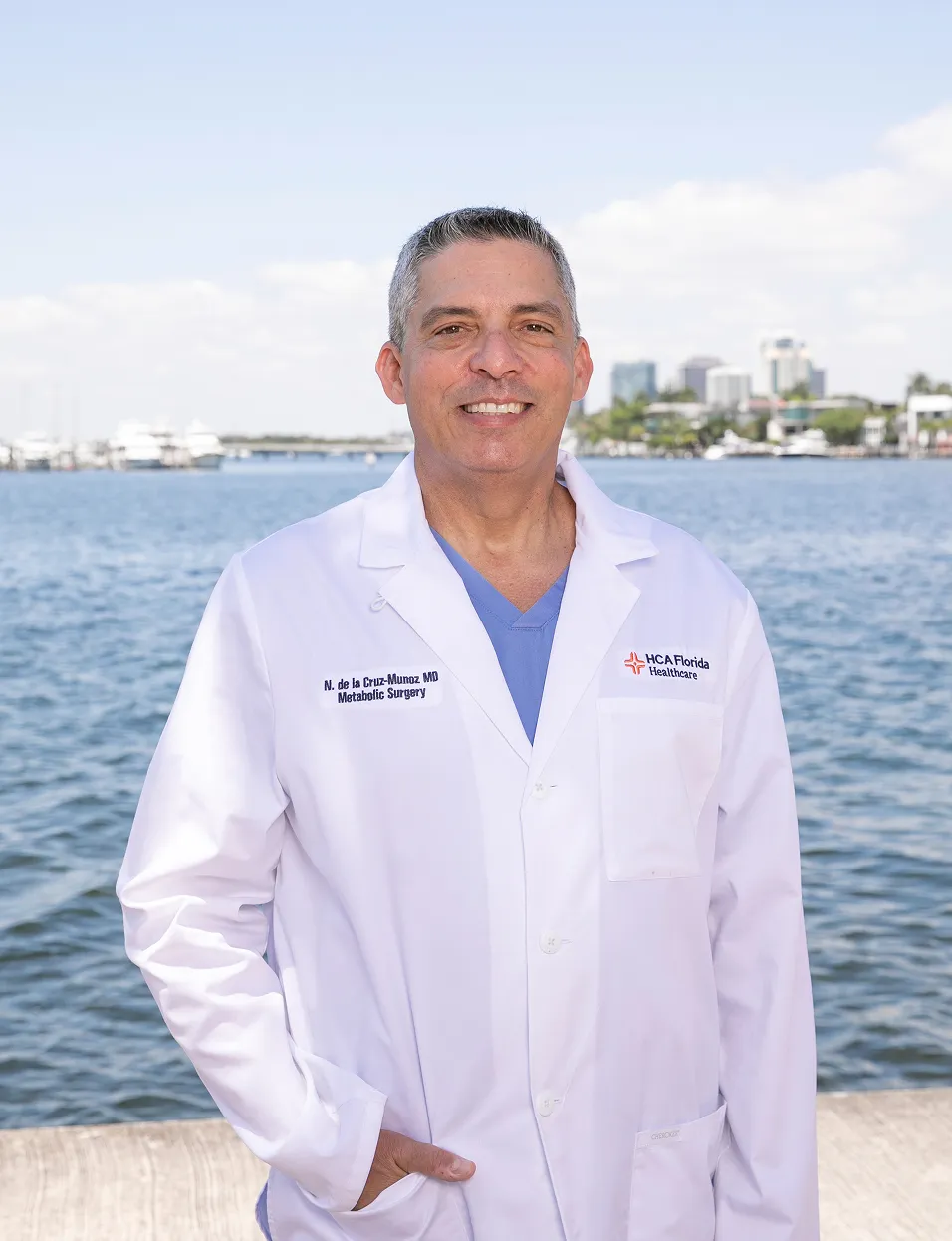

Dr. de la Cruz‑Muñoz specializes in advanced minimally invasive and robotic surgery, metabolic disease management, and comprehensive long‑term patient care. His work integrates clinical expertise, academic leadership, and a commitment to evidence‑based medicine. He has trained surgeons across the country, contributed to national guidelines, and is widely regarded for his outcomes, innovation, and patient‑centered approach.
Patients choose Dr. de la Cruz‑Muñoz for his combination of surgical excellence, metabolic expertise, and lifelong dedication to improving patient health through compassionate, high‑quality care.
Procedures We Offer







FAQ
People Also Ask
Obesity is recognized as a chronic metabolic disease influenced by genetics, hormones, environment, and biological factors — not simply lifestyle choices.
The body has built-in mechanisms that defend weight, including hunger hormones and metabolic adaptations that make long-term weight loss challenging.
Yes. Genetics can significantly influence body weight regulation, appetite, metabolism, and an individual's susceptibility to obesity.
GLP-1 medications help regulate appetite, slow stomach emptying, improve satiety, and support sustainable weight management.
Yes. Obesity is associated with conditions such as Type 2 diabetes, hypertension, sleep apnea, fatty liver disease, and cardiovascular disease.
Dieting alone often cannot overcome the biological adaptations that increase hunger and decrease energy expenditure after weight loss.
Medical evaluation may be appropriate when excess weight affects health, quality of life, or contributes to obesity-related medical conditions.
Yes. Bariatric surgery addresses biological and metabolic factors involved in obesity and can lead to significant long-term health improvements.