

Endoscopic Management of Complications: What Patients Should Know

Quick Answer
Watch Related Video
Article
INTRODUCTION
Complications after bariatric surgery are uncommon — especially in experienced hands — but when they do occur, endoscopic treatment has transformed the way we manage them.
Years ago, many complications required major surgery.
Today, most can be treated from the inside, using a flexible endoscope passed through the mouth:
- No incisions
- No scars
- Faster recovery
- Lower risk
- Less pain
- Shorter hospital stays
Endoscopic therapy is one of the most important advances in modern bariatric care.
This article explains the most common complications, how they’re treated, and why endoscopy is often the safest, most effective solution.
1. Why Endoscopy Matters in Bariatric Care
Endoscopy allows us to:
- Diagnose problems early
- Treat complications without surgery
- Avoid reoperations
- Reduce recovery time
- Improve outcomes
- Preserve the original bariatric anatomy
It is the firstline tool for most postoperative issues.
2. Leaks: One of the Most Serious Complications — Now Often Treated Endoscopically
A leak occurs when a staple line or connection doesn’t seal completely.
Symptoms may include:
- Fever
- Rapid heart rate
- Abdominal pain
- Shoulder pain
- Nausea
- Feeling unwell
Endoscopic treatments include:
1. Stents
A covered metal stent is placed to seal the leak and allow healing.
2. Endoscopic suturing
The leak opening is closed with internal stitches.
3. Internal drainage
Fluid collections are drained from inside the stomach.
Why this matters:
Most leaks can now be treated without major surgery, dramatically improving recovery.
3. Strictures: Narrowing That Causes Difficulty Eating
A stricture is a tight narrowing, usually at:
- The sleeve’s midportion
- The gastric bypass outlet
- The bypass connection (GJA)
Symptoms include:
- Vomiting
- Difficulty swallowing
- Food getting “stuck”
- Early fullness
- Inability to tolerate solids
Endoscopic treatments:
1. Balloon dilation
A balloon is inflated to gently stretch the narrowed area.
2. Stent placement
Used for more severe or recurrent strictures.
3. Endoscopic incision therapy
Small cuts are made to release scar tissue.
Most strictures resolve completely with endoscopic therapy.
4. Ulcers: A Common, Treatable Issue After Gastric Bypass
Ulcers can form at the gastric bypass connection (GJA).
Causes include:
- Nicotine
- NSAIDs
- Steroids
- Alcohol
- Stress
- Acid exposure
Symptoms:
- Burning pain
- Nausea
- Vomiting
- Bleeding
- Anemia
Endoscopic treatments:
- Direct visualization and diagnosis
- Injection therapy
- Clipping of bleeding vessels
- Stent placement for severe ulcers
- Followup healing checks
Ulcers almost always heal with proper treatment and lifestyle changes.
5. Fistulas: Abnormal Connections That Can Be Closed Endoscopically
A fistula is an abnormal connection between two areas, such as:
- Stomach to pouch
- Pouch to bypassed stomach
- Stomach to skin (rare)
Symptoms vary but may include:
- Weight regain
- Pain
- Infection
- Drainage
Endoscopic treatments:
- Suturing
- Clips
- Stents
- Tissue sealants
Most fistulas can be closed without surgery.
6. Weight Regain After Bypass: Endoscopic TORe
One of the most common “complications” is weight regain, often due to:
- Outlet dilation
- Pouch stretching
- Hormonal adaptation
Endoscopic solution: TORe
TORe tightens the outlet using sutures placed from inside the stomach.
Benefits:
- Restores fullness
- Reduces hunger
- Reduces cravings
- Helps restart weight loss
- No incisions
- Outpatient procedure
TORe is the gold standard for weight regain after bypass.
7. Sleeve Dilation or Shape Issues: Endoscopic Revision Options
Some sleeves become:
- Dilated
- Twisted
- Funnelshaped
- Irregular
Endoscopic solutions:
- Suturing to reduce volume
- Plication to reshape the sleeve
- Stents for functional obstruction
These techniques can restore restriction and improve symptoms.
8. Bleeding: Often Managed Endoscopically
Postoperative bleeding can occur at:
- Staple lines
- Connections
- Ulcer sites
Endoscopic treatments:
- Clipping
- Injection therapy
- Cautery
- Stent placement
Most bleeding can be controlled without surgery.
9. Why Endoscopic Therapy Is So Effective
Endoscopy works because it:
- Treats the problem at its source
- Avoids major surgery
- Preserves anatomy
- Reduces risk
- Speeds recovery
- Allows repeat treatments if needed
- Works synergistically with medications
It is one of the most important tools in modern bariatric medicine.
CONCLUSION
Endoscopic therapy has revolutionized the management of bariatric complications.
Today, most issues — from leaks to strictures to ulcers to weight regain — can be treated:
- Safely
- Effectively
- Without surgery
- Without incisions
- With faster recovery
Complications are not a sign of failure.
They are a sign that your body needs support — and endoscopy provides that support with precision and minimal risk.
Modern bariatric care is not just about surgery.
It’s about comprehensive, longterm, minimally invasive solutions that keep patients safe, healthy, and successful.
Obesity By The Numbers
Medical Topics Covered
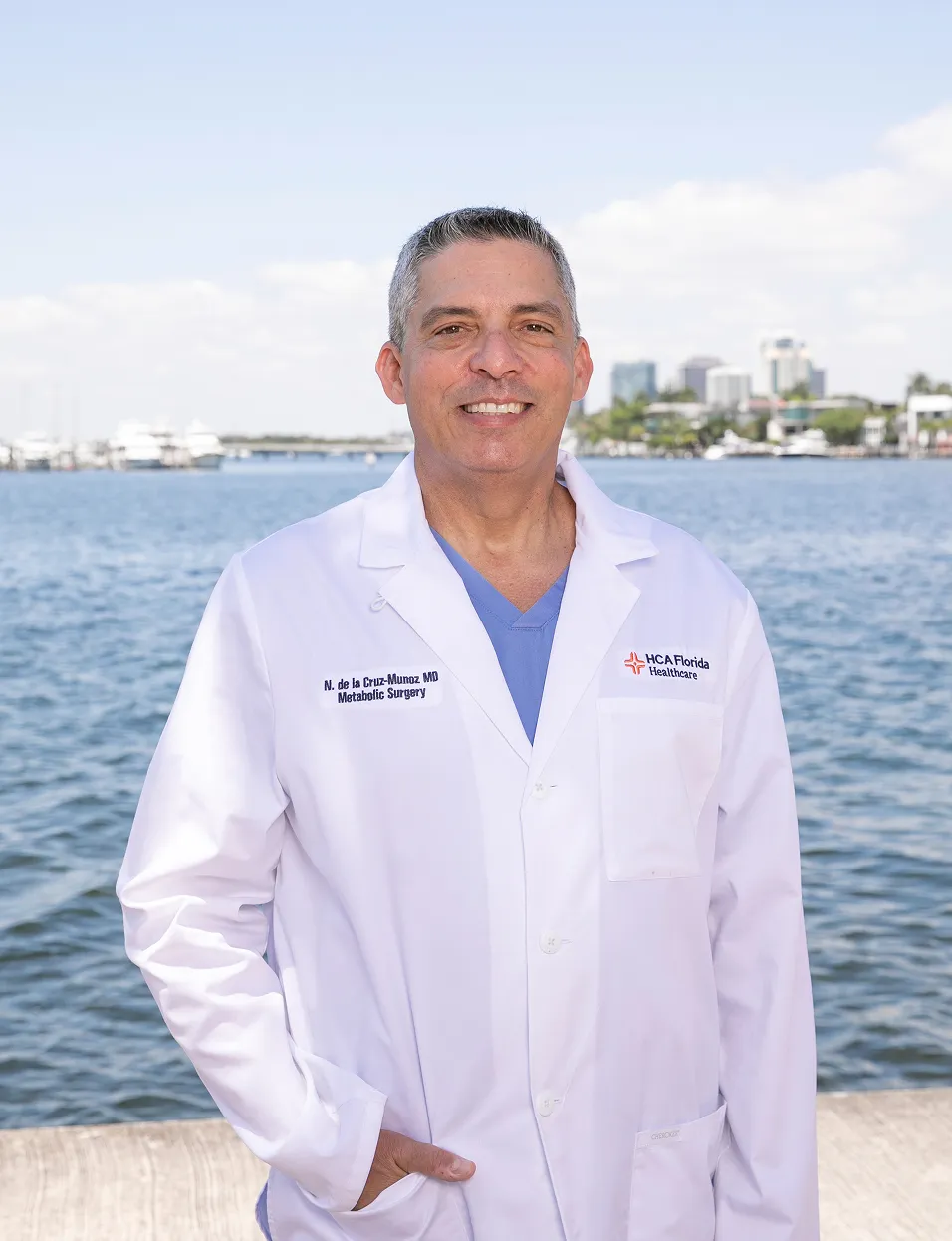

Dr. de la Cruz‑Muñoz specializes in advanced minimally invasive and robotic surgery, metabolic disease management, and comprehensive long‑term patient care. His work integrates clinical expertise, academic leadership, and a commitment to evidence‑based medicine. He has trained surgeons across the country, contributed to national guidelines, and is widely regarded for his outcomes, innovation, and patient‑centered approach.
Patients choose Dr. de la Cruz‑Muñoz for his combination of surgical excellence, metabolic expertise, and lifelong dedication to improving patient health through compassionate, high‑quality care.
Procedures We Offer
Conditions

FAQ
People Also Ask
Obesity is recognized as a chronic metabolic disease influenced by genetics, hormones, environment, and biological factors — not simply lifestyle choices.
The body has built-in mechanisms that defend weight, including hunger hormones and metabolic adaptations that make long-term weight loss challenging.
Yes. Genetics can significantly influence body weight regulation, appetite, metabolism, and an individual's susceptibility to obesity.
GLP-1 medications help regulate appetite, slow stomach emptying, improve satiety, and support sustainable weight management.
Yes. Obesity is associated with conditions such as Type 2 diabetes, hypertension, sleep apnea, fatty liver disease, and cardiovascular disease.
Dieting alone often cannot overcome the biological adaptations that increase hunger and decrease energy expenditure after weight loss.
Medical evaluation may be appropriate when excess weight affects health, quality of life, or contributes to obesity-related medical conditions.
Yes. Bariatric surgery addresses biological and metabolic factors involved in obesity and can lead to significant long-term health improvements.