

Revisional Bariatric Surgery: A Surgeon's Complete Guide to Every Option After Weight Regain or Complications

Quick Answer
Watch Related Video
Article
Revisional Bariatric Surgery: A Surgeon's Complete Guide to Every Option After Weight Regain or Complications
If you've had weight-loss surgery and the results have started to fade, or new problems have shown up, you're not alone. And you haven't failed.
Revisional bariatric surgery is far more common than most people realize. A population-level registry of over 145,000 bariatric patients found that roughly 4 percent needed a second operation within 10 years. Other studies show that 20 to 30 percent of patients experience meaningful weight regain after their initial procedure.
That doesn't mean the first surgery didn't work. It means obesity is a chronic disease. Like diabetes or high blood pressure, it sometimes requires a change in treatment over time.
This guide walks through why bariatric procedures sometimes need revision, how surgeons figure out what went wrong, every surgical and non-surgical option available today, and what realistic results look like.
Why Bariatric Procedures Need Revision
Different procedures fail for different reasons. Understanding the mechanism is the first step toward the right solution.
Weight Regain After Sleeve Gastrectomy
Sleeve gastrectomy is the most commonly performed bariatric surgery in the world. It works well for the majority of patients, but it isn't permanent in every case.
Weight regain after sleeve happens through two pathways that usually overlap.
The first is mechanical. Over time, the narrow sleeve can gradually stretch, going from its original 75 to 100 milliliters back to 200, 300, or even 400 milliliters. Portions get bigger. Restriction fades. Studies using 3D CT volumetry have confirmed that sleeve volume directly correlates with weight regain.
The second is hormonal. After surgery, hunger hormones drop dramatically. Ghrelin falls. GLP-1 rises. The constant drive to eat quiets down. But over months and years, the body adapts. Ghrelin rebounds. Leptin resistance returns. Resting metabolic rate slows. This isn't weakness. It's metabolic adaptation, the body's evolutionary programming fighting to return to its previous set point.
Most patients who regain weight have some of both: mechanical dilation and hormonal rebound, compounded by behavioral factors like grazing, emotional eating, and reduced activity.
GERD After Sleeve: The Number One Reason for Revision
This surprises many patients. The most common reason for revision after sleeve gastrectomy isn't weight regain. It's acid reflux.
In the Australian and New Zealand Bariatric Surgery Registry, the largest population-level analysis of revisional surgery ever published, GERD accounted for 29 percent of all sleeve revisions. In the U.S. national database, 54 percent of sleeve-to-bypass conversions were driven by reflux rather than weight.
The reflux data after sleeve are striking. An 8-year prospective study found that nearly 95 percent of sleeve patients met criteria for conclusive GERD at 8 years, compared to only 25 percent after gastric bypass. Erosive esophagitis was present in almost three-quarters of sleeve patients. A separate meta-analysis found that about 4 percent of all sleeve patients eventually require conversion to bypass for severe reflux. And Barrett's esophagus, a precancerous change in the esophageal lining, has been found in up to 17 percent of sleeve patients at 10-year follow-up.
This is why post-sleeve reflux is taken seriously. It's not just heartburn. It's a progressive condition that can damage the esophagus over time.
Weight Regain After Gastric Bypass
Gastric bypass is more durable than the sleeve for weight loss, but it isn't immune to regain. About 20 to 25 percent of the initial weight lost is regained by 5 to 7 years.
The mechanisms include pouch dilation, stretching of the connection between the pouch and the intestine (the gastrojejunal anastomosis), and the same hormonal and behavioral factors that affect sleeve patients.
A dilated anastomosis is particularly important because it allows food to pass through the pouch too quickly, reducing the feeling of fullness. This is the specific target of endoscopic revision procedures.
Why Gastric Bands Fail
The adjustable gastric band has largely fallen out of favor. The Swedish Obese Subjects study followed patients for 26 years and found that over 40 percent of band patients required revisional surgery, the highest rate of any bariatric procedure. Band-related problems include slippage, erosion, port malfunction, esophageal dilation, and inadequate weight loss.
The Diagnostic Workup Before Revisional Surgery
Before any revisional procedure, a systematic evaluation is essential. The goal is to answer three questions. What is the anatomy? What is the physiology? And what is the behavior?
Upper endoscopy is the cornerstone. It directly visualizes the size of the sleeve or pouch, the diameter of the anastomosis, the presence of a hiatal hernia, erosive esophagitis, Barrett's esophagus, marginal ulcers, band erosion, or a gastrogastric fistula.
Upper GI contrast study, whether a barium swallow or esophagram, shows the shape and caliber of the sleeve, the size of the pouch, the rate of emptying, and any anatomic abnormality. A 3D CT scan with gastric volumetry can precisely measure sleeve or pouch volume.
Lab work includes a complete metabolic panel, CBC, HbA1c, lipid panel, iron studies, vitamin B12, folate, vitamin D, vitamin A, thiamine, albumin, and prealbumin.
Nutritional and psychological evaluation is critical. Emotional eating, binge eating disorder, depression, and substance use must be identified and addressed before surgery.
Additional studies may include high-resolution manometry and pH testing for reflux concerns, or a gastric emptying study if gastroparesis is suspected.
Every Revisional Option, Explained
Sleeve to Roux-en-Y Gastric Bypass
This is the most commonly performed revisional bariatric procedure in the United States and the gold standard for GERD after sleeve gastrectomy. The SAGES guidelines recommend conversion to Roux-en-Y for patients with medically refractory GERD and BMI above 35.
The Roux-en-Y configuration diverts bile and acid away from the esophagus. The small gastric pouch produces minimal acid. The Roux limb prevents bile reflux.
Reflux symptom resolution occurs in 80 to 94 percent of patients. One study found that 94 percent had complete resolution of reflux symptoms and 97 percent reduced or eliminated their reflux medications. Additional total weight loss runs approximately 23 to 35 percent from the time of revision.
A 7-year comparative study confirmed that Roux-en-Y yields dramatically better GERD resolution than SADI-S as a revisional procedure: 95 percent versus 5 percent. When reflux is the primary problem, Roux-en-Y is the clear choice.
Risks include leak (1 to 3 percent), bleeding, stricture, marginal ulcer, internal hernia, and dumping syndrome. Thirty-day readmission runs about 5 percent, compared to 3 percent for primary procedures.
Sleeve to Duodenal Switch (SADI-S or BPD/DS)
When the primary problem is weight regain rather than reflux, the duodenal switch procedures produce the most additional weight loss of any revisional option.
A network meta-analysis of 23 studies and over 3,200 patients found that SADI-S produced the greatest excess weight loss and the greatest total weight loss of any revisional procedure, and had the lowest risk of weight recidivism.
But GERD resolution after SADI-S is poor, only 5 percent in a 7-year study. If reflux is a significant problem, SADI-S is the wrong choice. Nutritional monitoring requirements are also higher, with lower calcium, zinc, folate, and vitamin D levels compared to Roux-en-Y.
Sleeve to One-Anastomosis Gastric Bypass (OAGB)
OAGB is a simpler bypass with one intestinal connection instead of two. Meta-analyses show it produces slightly greater total weight loss than Roux-en-Y as a revisional procedure, with about 30 minutes shorter operative time. GERD resolution is approximately 68 to 77 percent. That's good, but lower than Roux-en-Y.
Re-Sleeve Gastrectomy
Re-sleeving means resecting the dilated portion of the sleeve to restore restriction. It's the simplest revisional option. But the data are not encouraging. Network meta-analyses rank re-sleeve last for both excess weight loss and total weight loss, with the highest rate of significant complications. It is rarely recommended.
Band Removal and Conversion
Almost all band patients who need revision should be converted to another procedure. A 5-year study found that band-to-Roux-en-Y produced significantly greater weight loss than band-to-sleeve: 51 percent excess weight loss versus 7 percent at 5 years. National database analyses of over 19,000 band conversions found that band-to-SADI had complication rates comparable to band-to-sleeve and significantly lower than band-to-Roux-en-Y.
Endoscopic Revision (TORe)
For gastric bypass patients with weight regain from a dilated anastomosis, endoscopic transoral outlet reduction, called TORe, is a non-surgical option.
A flexible endoscope is passed through the mouth. The dilated anastomosis is treated with argon plasma coagulation and then sutured closed using a full-thickness suturing device. No incisions. No general anesthesia in some cases.
A propensity-matched study of 164 patients found that endoscopic revision achieved similar weight loss to surgical revision at 12 months, about 10 percent total weight loss versus 13 percent, with a significantly better safety profile. Zero percent serious adverse events versus 11 percent for surgical revision.
TORe is best suited for bypass patients with moderate weight regain and a clearly dilated anastomosis who want to avoid another operation.
GLP-1 Medications for Weight Regain After Surgery
Not every patient with weight regain needs another procedure. GLP-1 receptor agonists, medications like semaglutide and tirzepatide, have transformed the management of weight regain after bariatric surgery.
Meta-analyses show that these medications produce meaningful weight loss in post-bariatric patients: about 9 percent total weight loss with liraglutide, 11 percent with semaglutide, and 15 to 16 percent with tirzepatide. The BARI-OPTIMISE randomized trial confirmed that liraglutide produced approximately 9 percent weight loss at 24 weeks in patients with poor weight loss after surgery, compared to near-zero change with placebo.
For patients with moderate regain, say 10 to 15 percent from their lowest weight, who have good dietary habits and no anatomic problem on endoscopy, a trial of GLP-1 medication plus intensive nutritional counseling may be the right first step before considering surgical revision.
Risks and Complications of Revisional Surgery
Revisional bariatric surgery is more complex than primary surgery. An analysis of over 158,000 patients in the U.S. national database found that revisional procedures were associated with a 49 percent increase in serious complications compared to primary surgery. Readmission was about 5 percent versus 3 percent. Reoperation was about 2.5 percent versus 1 percent.
But the important part: mortality was not significantly different. Revisional bariatric surgery is more complex, but the risk of death remains very low, in the range of 0.03 to 0.5 percent.
A French national analysis of over 284,000 bariatric procedures confirmed higher morbidity with revisional surgery, particularly after revisional gastric bypass.
The bottom line is that revisional surgery carries real but manageable risk. It should be performed by experienced surgeons at accredited centers.
The Emotional Side
Coming back for a second surgery is hard. Many patients feel shame, guilt, fear, and grief. They wonder what they did wrong.
The answer, in most cases, is nothing.
Obesity is a chronic, relapsing disease. Weight regain after bariatric surgery is driven by biology: hormonal adaptation, metabolic slowing, and neurochemical changes. Not by personal failure. Studies show that depression and anxiety scores are no different between revisional and primary bariatric surgery patients at baseline or at 1, 2, and 3 years after surgery. Revisional surgery can be just as effective for mental health as primary surgery.
That said, revisional patients do have higher rates of shape and weight concern, depression, and compulsive grazing in the early months after surgery. Psychological support, whether that's counseling, support groups, or behavioral therapy, is essential.
What Realistic Weight Loss Looks Like
Revisional procedures generally produce less additional weight loss than primary procedures. Here's what the data show:
- Sleeve-to-Roux-en-Y: 23 to 35 percent additional total weight loss
- Sleeve-to-SADI-S: the greatest additional weight loss of any revisional option, but with higher nutritional monitoring requirements
- Endoscopic revision (TORe) after bypass: 8 to 12 percent total weight loss at 12 months
- A university hospital study of 89 patients with at least 3 years of follow-up found a median BMI reduction of 6 points, with duodenal switch showing the highest total weight loss at 20 percent
These numbers are lower than primary surgery, but they are clinically meaningful. They translate into improved diabetes control, better blood pressure, less joint pain, and better quality of life.
Why Revisional Surgery Matters for Long-Term Health
The benefits of bariatric surgery extend far beyond weight loss. A meta-analysis of nearly 175,000 participants found that metabolic-bariatric surgery was associated with a 49 percent reduction in all-cause mortality and a median life expectancy gain of about 6 years. For patients with diabetes, the gain was over 9 years. The Swedish Obese Subjects study, with 24 years of follow-up, confirmed about 3 additional years of life expectancy compared to usual obesity care.
When a primary procedure is no longer working, revision restores the metabolic and health advantages that surgery provides. That's why it matters.
Life After Revisional Surgery
Life after revisional surgery follows the same principles as life after primary surgery, with even more emphasis on consistency.
Protein first. At least 60 to 80 grams per day. Small meals. Eat slowly. Chew well. Avoid carbonation, sugar, and fried foods. Stay hydrated with at least 64 ounces of water daily.
Vitamins are mandatory for life. Bariatric multivitamin, calcium citrate, vitamin D, B12, iron, and fat-soluble vitamins as needed. Blood work every 3 to 6 months in the first year, then at least annually.
Exercise. Start walking immediately and build to 150 minutes per week.
Follow-up. The single biggest predictor of long-term failure after any bariatric procedure, primary or revisional, is loss to follow-up. Stay connected with your surgical team.
How to Know If Revisional Surgery Is Right for You
If you're experiencing any of the following after a prior bariatric procedure, a consultation with a surgeon who specializes in revisional surgery is the right next step:
- Significant weight regain, more than 15 to 20 percent from your lowest weight
- Persistent or worsening acid reflux despite medication
- Difficulty eating, food intolerance, or vomiting
- Band-related complications like slippage, erosion, or port problems
- Recurrence of obesity-related conditions like diabetes, sleep apnea, or hypertension
- Barrett's esophagus found on endoscopy
The evaluation will include a thorough workup: endoscopy, imaging, labs, nutritional and psychological assessment. The goal is to determine the cause and guide the right treatment plan.
Revisional bariatric surgery is not a sign of failure. It is the next step in treating a chronic disease. The options are better than ever, the data are stronger than ever, and the outcomes, when the right operation is matched to the right patient, are excellent.
Real science. Real surgery. Real results.
Obesity By The Numbers
Revisions address anatomical dilation, outlet enlargement, hormonal adaptation, reflux, strictures, ulcers, fistulas, and metabolic downshifting. They restore metabolic power and correct complications.
Medical Topics Covered
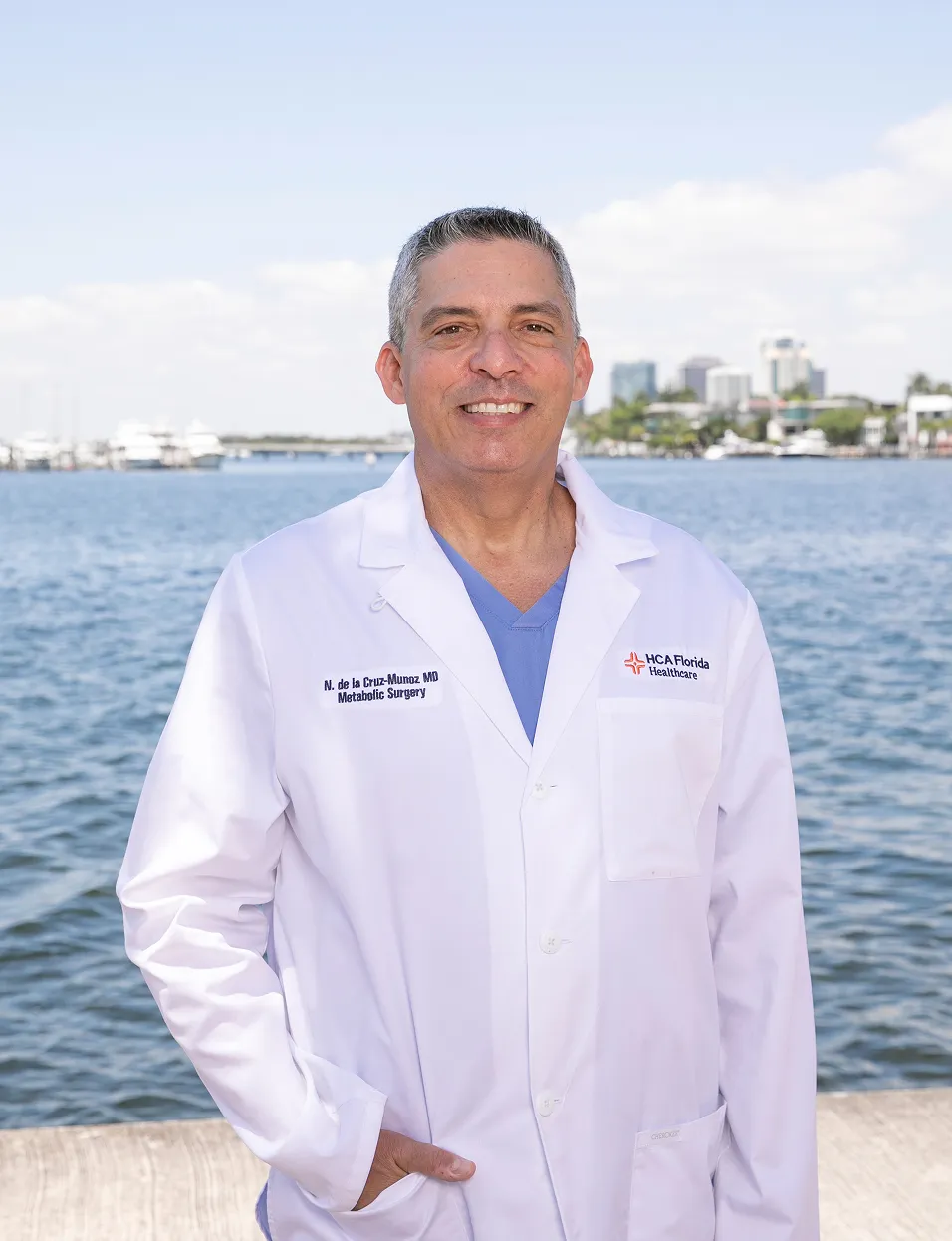

Dr. de la Cruz‑Muñoz specializes in advanced minimally invasive and robotic surgery, metabolic disease management, and comprehensive long‑term patient care. His work integrates clinical expertise, academic leadership, and a commitment to evidence‑based medicine. He has trained surgeons across the country, contributed to national guidelines, and is widely regarded for his outcomes, innovation, and patient‑centered approach.
Patients choose Dr. de la Cruz‑Muñoz for his combination of surgical excellence, metabolic expertise, and lifelong dedication to improving patient health through compassionate, high‑quality care.
Procedures We Offer








FAQ
People Also Ask
Obesity is recognized as a chronic metabolic disease influenced by genetics, hormones, environment, and biological factors — not simply lifestyle choices.
The body has built-in mechanisms that defend weight, including hunger hormones and metabolic adaptations that make long-term weight loss challenging.
Yes. Genetics can significantly influence body weight regulation, appetite, metabolism, and an individual's susceptibility to obesity.
GLP-1 medications help regulate appetite, slow stomach emptying, improve satiety, and support sustainable weight management.
Yes. Obesity is associated with conditions such as Type 2 diabetes, hypertension, sleep apnea, fatty liver disease, and cardiovascular disease.
Dieting alone often cannot overcome the biological adaptations that increase hunger and decrease energy expenditure after weight loss.
Medical evaluation may be appropriate when excess weight affects health, quality of life, or contributes to obesity-related medical conditions.
Yes. Bariatric surgery addresses biological and metabolic factors involved in obesity and can lead to significant long-term health improvements.