Allurion Balloon (Swallowable Gastric Balloon)

Overview
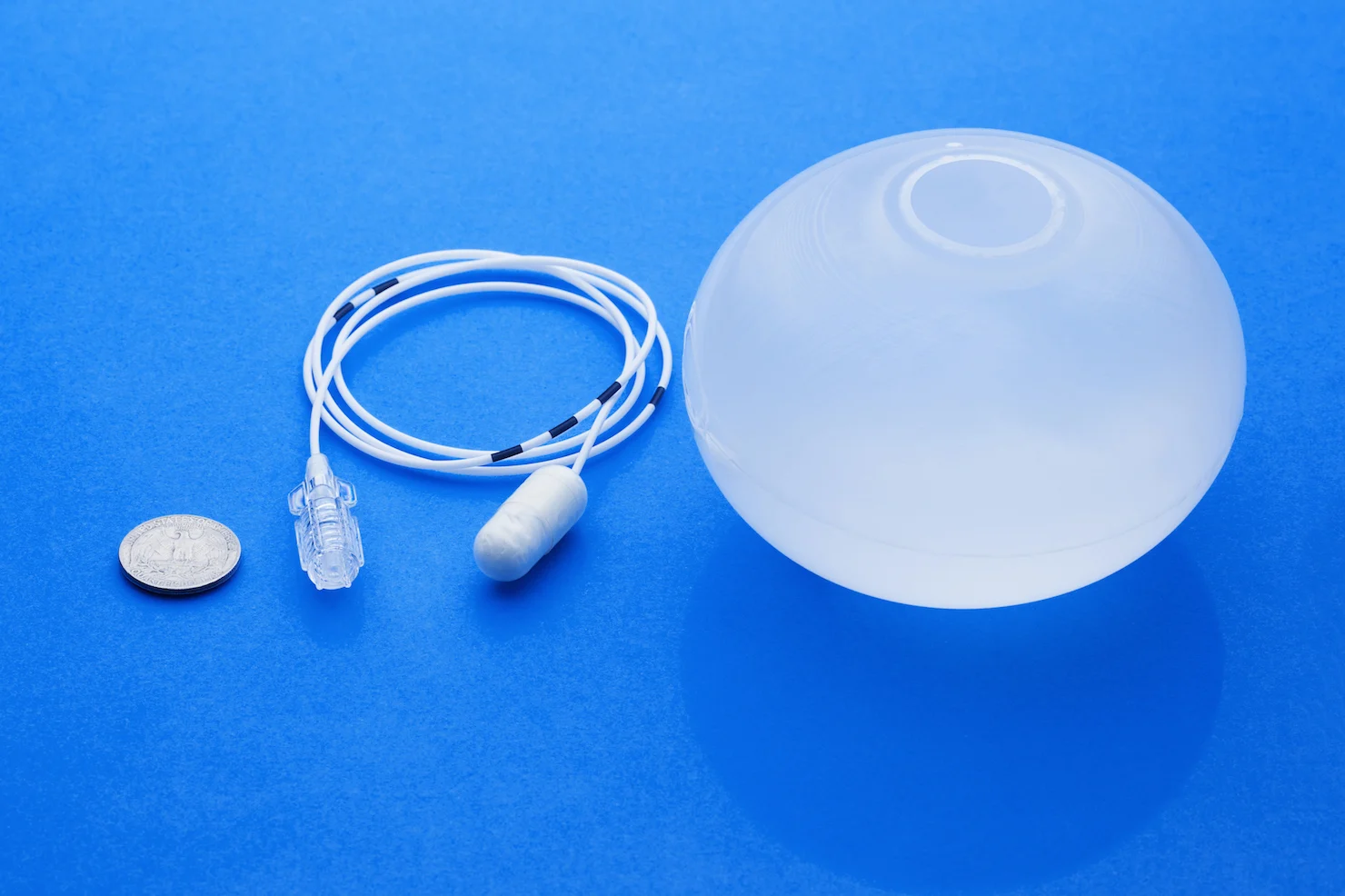
The Allurion balloon (formerly the Elipse balloon, Allurion Technologies) is a type of intragastric balloon and the only device in its class that requires no endoscopy, no sedation, and no anesthesia for either placement or removal (Silva et al., Obesity Surgery, 2024; Jirapinyo & Thompson, Digestive Diseases and Sciences, 2022). The balloon is folded inside a vegetable capsule attached to a thin catheter. The patient swallows the capsule, correct position is confirmed with X-ray/fluoroscopy, and the balloon is then filled with approximately 550 mL of liquid before the catheter is gently withdrawn (Silva et al., 2024; Muriel et al., J Laparoendosc Adv Surg Tech, 2025).
The balloon occupies space in the stomach to promote early fullness and reduce food intake. It stays in place for roughly four months, after which a time-dependent release valve opens, the balloon empties, and it passes naturally through the GI tract — no removal procedure required (Jirapinyo & Thompson, 2022; Vantanasiri et al., Obesity Surgery, 2020). It occupies a space between anti-obesity medication and surgery: lower risk and fully non-invasive, but less powerful and shorter-acting than surgical options. As with all obesity care, outcomes are best when the balloon is paired with a structured, multidisciplinary lifestyle program (Kosai et al., Obesity Surgery, 2024; Muniraj et al., AGA Clinical Practice Guidelines, 2021).
How the Procedure Works
The Allurion balloon produces weight loss primarily through gastric restriction and prolonged satiety — the fluid-filled balloon occupies stomach volume, slows gastric emptying, and reduces the amount of food needed to feel full (Silva et al., 2024). Unlike bariatric surgery, it does not resect the stomach, reroute the intestine, or substantially alter gut hormones; its mechanism is mechanical and temporary. Because the device is in place only about four months, the behavioral and dietary changes built during that window are what carry weight loss forward — data show much of the loss can be maintained a year after the balloon passes when patients stay in a structured program (Tinoco Ortiz et al., Obesity Surgery, 2026).
Benefits
- No endoscopy, no anesthesia, no sedation — the single feature that distinguishes it from every other intragastric balloon (Silva et al., 2024; Vantanasiri et al., 2020).
- No removal procedure — the balloon empties and passes naturally at ~4 months (Jirapinyo & Thompson, 2022).
- Incisionless and organ-preserving — no surgical scars and no permanent change to anatomy.
- Quick, outpatient placement — typically about 20 minutes in an office/radiology setting (Muriel et al., 2025).
- Meaningful short-term weight loss — roughly 12–15% total body weight loss during treatment (Jirapinyo & Thompson, 2022; Muriel et al., 2025).
- Metabolic improvement — reductions in HbA1c, blood pressure, and LDL cholesterol (Tinoco Ortiz et al., 2026).
- An option for people who don't qualify for or don't want surgery, or who want a temporary "jump-start" or a bridge before definitive surgery (Kosai et al., 2024).
Who Is a Candidate
The Allurion balloon is generally offered to adults who are overweight or have class I–II obesity and have not succeeded with diet and lifestyle alone. Published programs have enrolled patients with a BMI above 27 kg/m², and some centers use it as an early-intervention or bridge therapy across a broad BMI range (Jense et al., Obesity Surgery, 2023; Kosai et al., 2024). It is particularly suited to patients who:
- Do not meet criteria for — or wish to avoid — bariatric surgery (Kosai et al., 2024).
- Want a non-surgical, no-anesthesia option, or have anxiety about endoscopy/surgery.
- Seek a temporary intervention before a planned definitive procedure (Kosai et al., 2024).
Common exclusions include prior bariatric or upper-GI surgery, pregnancy, swallowing disorders, severe reflux or a large hiatal hernia (>5 cm), prior small-bowel obstruction, eating disorders or severe psychological disease, GI bleeding risk or anticoagulant use, and active GI disease (Kosai et al., 2024; Tinoco Ortiz et al., 2026). Candidacy is confirmed after a full multidisciplinary evaluation.
How the Procedure Is Performed
Placement is done in an outpatient setting by a trained clinician, typically in about 20 minutes, with no sedation (Muriel et al., 2025). The patient swallows the vegetable capsule containing the folded balloon, which is attached to a thin catheter; if swallowing is difficult, a guide wire through the catheter assists passage (Muriel et al., 2025). Correct gastric position is confirmed with a radio-opaque marker under fluoroscopy/X-ray, the balloon is filled with approximately 550 mL of fill solution (distilled water with a preservative), and a second radiological check confirms proper filling and placement in the gastric fundus (Muriel et al., 2025; Silva et al., 2024). The catheter is then disconnected with a gentle traction maneuver and withdrawn through the mouth (Silva et al., 2024).
Risks and Considerations
The Allurion balloon has a favorable safety profile, and its procedureless nature avoids the risks of endoscopy, sedation, and anesthesia (Vantanasiri et al., 2020). The most common effects are mild, self-limited nausea, vomiting, and abdominal pain in the first several days, typically well controlled with medication (Muriel et al., 2025; Silva et al., 2024). In a meta-analysis of over 2,000 patients, nausea (~29%) and abdominal pain (~24%) were the dominant adverse events (Silva et al., 2024).
Serious adverse events are uncommon — roughly 2% or less across large series, within the <5% threshold set by ASGE/ASMBS (Tinoco Ortiz et al., 2026; Jirapinyo & Thompson, 2022). A large registry of 1,770 patients reported an SAE rate of 0.34%, an intolerance rate requiring early removal of 2.9%, and early deflation in 0.6% (Jirapinyo & Thompson, 2022). Reported serious events across studies include:
- Early balloon intolerance requiring endoscopic removal (most common reason for reintervention) (Silva et al., 2024; Tinoco Ortiz et al., 2026).
- Early deflation with natural or vomited passage (~0.6–1.8%) (Jirapinyo & Thompson, 2022).
- Small bowel obstruction (rare, has required laparoscopic removal — several early cases tied to an earlier-generation balloon) (Jirapinyo & Thompson, 2022; Silva et al., 2024).
- Gastric perforation or gastric outlet obstruction (rare) (Jirapinyo & Thompson, 2022).
- Balloon hyperinflation, esophagitis, pancreatitis, aspiration pneumonia, and GI bleeding (rare) (Silva et al., 2024; Tinoco Ortiz et al., 2026).
No deaths were reported in the pooled meta-analysis data (Silva et al., 2024). Patients are counseled on alarm signs — persistent liquid intolerance >24 hours, orthostatic symptoms, tachycardia, sweating, or abdominal distension — and instructed to contact the team promptly (Muriel et al., 2025).
Recovery Timeline
Recovery is fast because there is no incision, sedation, or endoscopic removal. Most patients resume normal activity within about 48 hours once they tolerate liquids (Muriel et al., 2025). The first several days commonly bring nausea, cramping, and reflux-type discomfort that are managed with a short course of antiemetics, antispasmodics, and a proton pump inhibitor, which is continued throughout treatment (Muriel et al., 2025). A liquid diet is used for the first 24–48 hours, advancing gradually to semisolid then solid foods (Tinoco Ortiz et al., 2026; Muriel et al., 2025).
Long-Term Expectations
The balloon itself is a short-term tool (~4 months), so durable results depend on the lifestyle changes made during and after treatment. During treatment, patients typically lose about 12–15% of total body weight (Jirapinyo & Thompson, 2022; Muriel et al., 2025). Weight-loss maintenance after the balloon passes is encouraging within structured programs — one international cohort found patients retained roughly 95% of the weight lost one year after the balloon passed, and a single-center series reported ~14% total weight loss sustained at 12 months (Tinoco Ortiz et al., 2026). However, long-term data beyond 12 months remain limited compared with surgery, and some weight regain can occur after the balloon is gone (Silva et al., 2024). If more weight loss is needed, options include a sequential balloon, anti-obesity medication, or bariatric surgery (Shah et al., AGA Technical Review, 2021).
More in Endoscopic Weight-Loss Procedures
Related procedures: Transoral Outlet Reduction, Medical Weight Loss Program, Gastric Balloon, Orbera Intragastric Balloon, Endoscopic Balloon Removal. For an overview of all options, see Endoscopic Sleeve Gastroplasty.
Conditions treated: Obesity, Overweight, Weight Regain, Metabolic Adaptation.
Why Choose Dr. de la Cruz-Muñoz
Dr. de la Cruz-Muñoz is an experienced Metabolic and Bariatric Surgeon. He was one of the early physicians in the US to offer gastric balloons after the Orbera balloon received FDA approval in 2015. He was a Principal Investigator in the Allurion Balloon trial, and the Allurion Balloon received FDA approval in 2026. Dr. de la Cruz-Muñoz offers the full continuum of weight-loss care — from non-surgical options like the Allurion balloon through endoscopic therapies and primary and revision surgery. That breadth means candidates receive an unbiased, individualized recommendation and a seamless pathway to escalate to medication, a repeat balloon, or surgery if their needs change.
Dr. de la Cruz-Muñoz has been performing bariatric surgery for over 25 years and has completed more than 9,000 bariatric operations — a volume very few surgeons in the country, and even fewer in Florida, have reached.
Total Body Weight Loss (TBWL) Expectations
Expect approximately 12–15% TBWL during the ~4-month treatment period (Jirapinyo & Thompson, 2022; Muriel et al., 2025). A multicenter Latin American series reported mean TBWL of 8.3%, 11.6%, and 14.9% at 3, 6, and 12 months (Muriel et al., 2025), and a 1,770-patient registry found 14.2% TBWL at 4 months (Jirapinyo & Thompson, 2022). In terms of excess weight loss, pooled data show roughly 48% %EWL — comfortably above the 25% ASGE/ASMBS benchmark (Silva et al., 2024). Individual results depend heavily on starting BMI and, most importantly, adherence to the nutrition and activity program (Tinoco Ortiz et al., 2026).
Expected Metabolic Improvements
Weight loss with the Allurion balloon translates into meaningful cardiometabolic improvement. Reported changes at 12 months include a mean HbA1c reduction of ~0.4%, systolic blood pressure down ~6 mmHg, and LDL cholesterol down ~12 mg/dL, along with improved quality-of-life scores (Tinoco Ortiz et al., 2026). The WHO notes that even a 5–10% total weight reduction improves the metabolic profile and reduces obesity-related morbidity and mortality — a threshold this device reliably exceeds (Silva et al., 2024). These improvements are driven by the weight loss itself rather than by hormonal effects.
Weight Regain Prevention Strategy
Because the balloon is temporary, the lifestyle program is the treatment — the device simply creates a window of opportunity. Durable results require protein-prioritized, hypocaloric nutrition, adequate hydration (≥1.5 L/day), regular physical activity, and behavioral/psychological support, ideally continued well beyond balloon passage (Muriel et al., 2025; Kosai et al., 2024). Evidence shows that patients who maintain a moderate- to high-intensity dietary program keep losing or maintain weight even after the balloon is gone (Muniraj et al., AGA, 2021). Digital tools (connected scales, apps) and structured follow-up visits improve adherence and help sustain weight loss (Tinoco Ortiz et al., 2026). When appropriate, anti-obesity medications can be layered on after balloon passage to protect results.
GERD / Reflux Considerations
Reflux-type symptoms and nausea are common in the early accommodation period and are managed with a proton pump inhibitor continued throughout treatment (Muriel et al., 2025). Pre-existing severe reflux or a large hiatal hernia (>5 cm) is a contraindication, confirmed by gastroscopy during screening (Tinoco Ortiz et al., 2026). Patients with significant reflux who want a durable anatomical solution are generally better served by other options; the balloon is a temporary device and does not correct reflux anatomy.
Revision Options
The Allurion balloon is inherently non-permanent and leaves native anatomy intact, which keeps every future option open. If additional weight loss is needed after the balloon passes, pathways include a sequential/repeat balloon, the addition of anti-obesity medication (including GLP-1 therapy), or progression to endoscopic or surgical procedures such as endoscopic sleeve gastroplasty, sleeve gastrectomy, or gastric bypass (Shah et al., AGA Technical Review, 2021). The balloon is also commonly used deliberately as a bridge to definitive bariatric surgery in higher-risk patients (Kosai et al., 2024). Of note, concurrent use of the balloon with a GLP-1 agonist was an exclusion in at least one study protocol, so combination timing should be individualized (Tinoco Ortiz et al., 2026).
Body Composition & Muscle Preservation
As with any weight-loss intervention, part of the weight lost is lean mass, so muscle preservation matters. A high daily protein intake (hyperproteic diet), resistance training incorporated once solids are tolerated (generally from ~48 hours of full tolerance), and body-composition monitoring help ensure the weight lost is predominantly fat, protecting metabolic rate and supporting durable results (Muriel et al., 2025; Bastid et al., J Laparoendosc Adv Surg Tech, 2026).
Insurance & Qualification Requirements
The Allurion balloon is generally not covered by insurance and is typically offered as a self-pay procedure, as coverage for intragastric balloons is limited and payer policies are still evolving. Candidacy is determined by multidisciplinary evaluation rather than the strict BMI thresholds used for covered surgery — published programs commonly use a BMI above 27 kg/m² after inadequate response to lifestyle measures (Jense et al., 2023; Kosai et al., 2024). Our team verifies any available benefits and provides transparent self-pay and financing information.
Preparing for Surgery (Pre-Op Requirements)
Preparation centers on a multidisciplinary evaluation — medical, nutritional, and psychological — within a structured program, often over several weeks before placement (Bastid et al., 2026). Screening gastroscopy is used selectively to exclude contraindications such as severe reflux, large hiatal hernia, ulcer disease, or other GI abnormalities (Tinoco Ortiz et al., 2026; Bastid et al., 2026). Patients fast for approximately 10 hours beforehand and receive a pre-procedure antiemetic (Kosai et al., 2024). Because the device is swallowed, the ability to swallow the capsule and the absence of upper-GI surgical history are confirmed in advance (Jense et al., 2023).
Post-Op Nutrition Overview
Patients follow a staged diet: a liquid diet for the first 24–48 hours, then gradual progression to semisolid and solid foods, built around a hypocaloric, high-protein plan with adequate hydration (≥1.5 L water daily) and guided by a dietitian (Muriel et al., 2025; Tinoco Ortiz et al., 2026). Because no intestine is bypassed, the malabsorptive nutritional risks of surgery do not apply, though a general multivitamin and ongoing dietitian follow-up support healthy, muscle-sparing weight loss (Shah et al., AGA Technical Review, 2021).
Post-Op Activity & Exercise Guidance
Light activity resumes quickly. Patients are generally cleared for regular physical activity starting about 48 hours after full tolerance of solids (Muriel et al., 2025). A combined aerobic and resistance-training program is encouraged to preserve lean muscle and maximize fat loss, and physical activity is a core pillar of the structured program that sustains weight loss after the balloon passes (Bastid et al., 2026; Muniraj et al., AGA, 2021).
Special Considerations for International Patients
Allurion is swallowed as a capsule and passes naturally after about four months, with no endoscopy to place or remove it. That makes it well suited to patients from abroad. A short visit to Miami for placement is usually enough, and the rest of the program, including app-based tracking and coaching, can be completed remotely.
Quick Procedure Details
Coverage for swallowable gastric balloons is generally unavailable, so most patients pursue the Allurion balloon as a self-pay option. Our office verifies benefits where any coverage may exist and offers transparent self-pay pricing and financing.
Featured Procedures




Conditions






FAQ
The Allurion balloon — originally called the Elipse balloon — is an intragastric balloon you swallow as a capsule, with no endoscopy, sedation, or anesthesia needed. Once it's confirmed in the stomach by X-ray, it's filled with about 550 mL of liquid. It stays in place for roughly four months to help you feel full and eat less, then empties on its own and passes naturally in the stool — no removal procedure required (Silva et al., Obesity Surgery, 2024; Jirapinyo & Thompson, Digestive Diseases and Sciences, 2022).
The Allurion balloon is the only gastric balloon that needs no endoscopy or anesthesia for placement or removal — you swallow it, and it passes on its own at about four months (Vantanasiri et al., Obesity Surgery, 2020). Other balloons (such as Orbera or Spatz) require an endoscopy to place and remove. Compared with a surgical sleeve gastrectomy, the balloon is non-surgical, temporary, and lower-risk, but produces less weight loss and is a shorter-term tool rather than a permanent change (Jirapinyo & Thompson, 2022).
Obesity is a chronic, progressive disease driven by biology—not willpower. Hormones that regulate hunger, fullness, metabolism, and fat storage become dysregulated, causing the body to defend a higher weight set‑point. This makes long‑term weight loss extremely difficult without medical or surgical treatment. Obesity also increases the risk of more than 250 diseases, including diabetes, heart disease, fatty liver disease, sleep apnea, and multiple cancers.
- On average, patients lose about 11.8% of their total body weight at six months with Orbera, with some estimates reaching roughly 13% at nine months — a figure drawn from a meta-analysis of more than 6,600 balloon placements (Abu Dayyeh et al., American Gastroenterological Association, 2017; Apovian et al., The Obesity Society, 2025). In randomized trials, about 85% of patients lost at least 5% of their body weight and 62% lost at least 10%, compared with 35% and 14% on lifestyle therapy alone (Muniraj et al., American Gastroenterological Association, 2021). Most of the weight loss happens in the first three months, which is why pairing the balloon with a supervised diet and exercise program is essential to make the results last (Apovian et al., The Obesity Society, 2025).