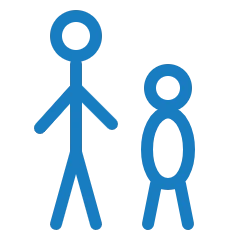
Por esto pierde peso más lento que todos los que le rodean
La pérdida de peso no sigue el mismo ritmo para todos. Este video explica cómo el músculo, el movimiento diario, el sueño, las hormonas, la genética y otras diferencias biológicas pueden afectar su progreso, y por qué comparar sus resultados con los de otra persona puede desanimarle. También repasa pasos prácticos y opciones de tratamiento para hablar con su equipo médico.

Why People Lose Weight at Different Speeds and Amounts
Stop comparing your weight loss to your friend's. It is quietly destroying your results.
Everyone says weight loss is a simple math equation of calories in, calories out. Calculate the caloric deficit you are in, and you will know exactly how much you will lose. That is a lie, and it might be the most damaging lie in all of medicine. Two people can eat the identical deficit and get completely different results, and the person who does not understand this is the person who quits.
They do everything right for four months, watch someone else lose faster, decide they are broken, and give up right before the part that actually matters. Stay with me, because by the end you will understand exactly how your body loses weight, why it is different from anyone else's, and how to use that to your advantage instead of fighting it. This is how you stop guessing and start winning on your terms.
Let me tell you about two patients. I will call them Maria and her husband, David. Same house. Same kitchen. Same meals, cooked in the same pans, measured on the same scale. They started on the same day, held each other accountable, did everything together.
Three months in, David had lost nearly twice as much as Maria. Maria sat in my office in tears. Not because she had failed, but because she was convinced she had. She thought she was doing something wrong. She thought her body was broken. She was ready to quit.
She was doing nothing wrong. And what I told her that afternoon changed the way she saw her entire journey, because the real reason David was pulling ahead had almost nothing to do with willpower, and everything to do with how differently their two bodies were built to respond.
And later in this video, I am going to drop something that most people find genuinely hard to believe, a finding about why the person eating the exact same diet as you can lose weight on a completely different timeline, and it is not calories, and it is not effort. When I tell you what it actually is, you will never look at your own progress the same way again.
But here is the good news buried inside all of this: the factors that decide how fast you lose are not the same as the factors that decide whether you win. Speed is influenced by things you did not choose. Winning is decided by what you do next. And that distinction is everything.
The First Thing Nobody Tells You: Weight Loss Happens in Phases
So let us start with the part that is yours. The part you control. Because before we ever get to why David and Maria's bodies behaved so differently, there is something almost nobody explains, and it is the single biggest reason people quit too early. Weight loss is not a straight line. It never has been. But everybody expects it to be.
Here is what people picture in their head. They picture the scale going down a little every week, forever, in a nice smooth slope, like money coming out of an account. So when the scale does not do that, when it drops fast and then stalls, they panic. They think the diet stopped working. They think their body is broken. And that panic, that misreading of a completely normal process, is what ends more weight loss journeys than hunger ever will.
Let me tell you what is actually happening, because once you see it, you stop panicking.
Phase one is the whoosh. The first week or two, the weight comes off fast. Sometimes shockingly fast. Four, six, eight pounds.
And every single person thinks the same thing: this is amazing, it is working. Here is the part they do not want to hear. Most of that early drop is not fat. It is water and stored carbohydrate.
Your body holds onto a fuel called glycogen, and every gram of glycogen is bound to several grams of water. When you cut calories, you burn through that glycogen first, and all that water goes with it. It is real weight on the scale, but it is not the weight you are actually trying to lose. This is exactly why the person who loses eight pounds the first week and two pounds the second week thinks they failed.
They did not fail. They just ran out of water to lose.
Phase two is the real work. This is where your body settles into actual fat loss, and actual fat loss is slower. Steadier. Less dramatic. This is the phase where the number on the scale stops rewarding you every morning, and it is exactly the phase where most people lose their nerve. But this is the phase that changes your body. This is the phase that matters. And if you understand that the exciting part was mostly water and the boring part is the real fat, you will hold on through the boring part. That is the whole game.
Phase three is the plateau, and it is not what you think. Somewhere down the road, the scale just stops. For days. Sometimes weeks.
And people lose their minds. But here is what is happening underneath, and it is the reason the scale is such a liar. Your body is often still losing fat during a plateau. It is just holding water at the same time, so the number does not move.
You can be losing fat and gaining water in the exact same week, and the scale shows you nothing. Meanwhile the mirror changes, your clothes change, and the scale sits there frozen, lying to your face. The people who only trust the scale quit here. The people who understand the scale keep going.
And phase four is where your body fights back. This is the part I need you to respect, because it is real, and it is not your imagination. As you lose weight, your body actively tries to slow the loss down. Your metabolism adapts.
Your hunger hormones ramp up. Your body genuinely does not want to let this weight go, because from an evolutionary standpoint, it thinks you are starving, and it is trying to save your life. We are going to come back to this later, because this fight-back is one of the biggest reasons two people on the same diet end up in completely different places. But for now, just know it is coming, and it is normal, and it does not mean you are broken.
So that is the shape of the whole thing. Fast, then slow, then flat, then a fight. Not a slope. A staircase. And the single most important thing you can do is stop judging a staircase like it is supposed to be a slide.
The One Thing That Protects Everything: Protein
Now here is the first real lever you control, and it quietly decides how the entire staircase goes.
When you lose weight, you do not just lose fat. You also lose muscle. Every time. And that is a problem, because muscle is the engine that burns your calories all day long, even while you sleep. When you lose muscle, your metabolism slows down, and your body gets better at holding onto fat. It is the exact opposite of what you want. You can actually lose a lot of weight and end up with a slower metabolism and a softer body than when you started. Smaller, but worse off. That is the trap.
Protein is how you get out of the trap.
Protein is the one nutrient that tells your body: hold onto the muscle, burn the fat instead. When you eat enough protein while you are losing weight, a bigger share of what you lose comes from fat, and more of your muscle survives. Protein also does something almost nothing else does. It keeps you full. Gram for gram, it is the most satisfying thing you can eat, so you are fighting less hunger during exactly the phase where hunger is trying to make you quit.
And here is where this connects straight back to Maria and David, because this is one of the three things I told her in my office that day. When two people share a kitchen and eat the same meals, they are almost never eating the same protein relative to their body. David is bigger. He needs more, but he is also often served more, and he fills more of his plate with the meat while she fills more of hers with the sides.
Same table. Same food on the counter. Completely different protein hitting two very different bodies. And that difference alone starts to bend their two staircases in different directions, before we have even talked about the things neither of them chose.
That is the theme of this whole first half. The diet you think you are sharing is almost never actually the same diet. And protein is the very first place that quietly falls apart.
The Diet You Think You Are Sharing Is Not the Same Diet
Here is something that sounds impossible until you have watched it happen a thousand times. Two people can swear on their lives that they are eating the exact same thing, and be telling you the complete truth as they understand it, and still be eating two entirely different diets.
Not because anyone is lying. Because the stuff that actually moves the needle is invisible. It happens in the cracks. In the moments nobody counts. And once I show you where those cracks are, you are going to see them in your own day, and you are going to understand why the scale has been telling you a story you could not explain.
Let me take you through Maria and David's actual day, because this is where it gets uncomfortable.
The first crack is grazing. Maria did not eat more meals than David. She ate fewer, honestly. But Maria cooked.
And when you cook, you taste. A spoonful of the sauce to check the seasoning. A bite of the chicken to make sure it is done. The two forkfuls left on the kids' plates that she cleared before loading the dishwasher, because throwing away food feels wrong.
None of that is a meal. None of it registers in her memory as eating. If you asked her at the end of the day what she ate, she would not mention a single bite of it, because in her mind it did not happen. But her body counted every calorie.
It always does. David sat at the table and ate his portion and walked away. Maria fed everyone, cleaned up after everyone, and grazed her way through a few hundred calories she genuinely does not know she ate. Same kitchen.
Two different diets.
The second crack is what you drink. This one is brutal, because liquid calories are the ones your body is worst at noticing. When you drink your calories, they do almost nothing to fill you up. Your body does not register a large juice or a sweetened coffee or the wine at night the way it registers food on a plate.
It just takes the calories and asks for dinner anyway. So picture the two of them. David drinks water and black coffee out of habit. Maria has the oat milk latte in the morning that she thinks of as a coffee, not a meal, and the two glasses of wine at night that she thinks of as unwinding, not eating.
That is real fuel her body has to deal with, and none of it turned off her hunger for anything else. On paper they shared every meal. In reality, one of them was drinking a second dinner nobody wrote down.
The third crack is when you eat. This is the one almost nobody takes seriously, and the science is turning hard against that. Calories are not perfectly neutral to the clock. Your body handles the same food differently depending on the time of day, and it handles food best earlier, when you are awake and moving, and worst late at night, when your body is winding down and your insulin is not as responsive.
David ate his biggest meal at dinner and went to bed. Maria ate the same dinner, then had the real second act after the kids were down, standing at the counter at ten at night, the handful of this, the little something sweet, the part of the day that finally belonged to her. Same food, arguably. Very different timing.
And timing is everything. Now step back and look at what just happened. Nobody broke the diet. Nobody cheated. Nobody lacked willpower. Two good, disciplined people ate off the same menu, and one of them absorbed a few hundred extra calories a day through cracks that neither of them could see. Over three months, that is not a rounding error. That is the entire gap.
And this is the part I need you to really hear, because it is the whole point of this half of the video. When you compare yourself to someone else, you are not comparing your diet to their diet. You are comparing your visible diet to their visible diet, and the whole battle is being fought in the part you cannot see. The tasting. The sipping. The timing. The stuff that never makes it into the story you tell yourself at night.
So before you ever decide your body is broken, close the cracks first. Eat your protein sitting down, on a plate, like it counts, because it does. Stop drinking your calories, because your body will not credit you for them. And give your body a curfew, because ten at night is not when it does its best work. Do that for two weeks and watch how much of your so-called broken metabolism was actually just invisible.
But here is where I have to be honest with you, and this is the turn. Maria closed every one of those cracks. She did. She got ruthless about it. And she still lost slower than David.
Which means the cracks were real, and closing them mattered, and they still do not explain the whole gap. There is something else going on. Something bigger. Something neither of them chose, and neither of them could see, and it is sitting underneath everything we have talked about so far.
That is where we are headed. But not yet. Because before we get to the thing that was decided for them, there are two more levers that are still yours, and they are the two most people waste completely.
The Calories You Burn Without Trying
Alright. Two more levers that are still yours, and this next one might be the most misunderstood number in all of weight loss. Ask most people how they burn calories and they will say one word: exercise. The gym. The workout. The hour on the treadmill. And that hour matters, we will get to it. But the gym is not where most of your daily calorie burn actually lives. Not even close.
There is a hidden furnace running in your body all day long, and it has an ugly name that I promise is worth remembering. It is called NEAT. It stands for non-exercise activity thermogenesis, and all that means is every calorie you burn that is not sleeping, not eating, and not formal exercise. It is walking to the mailbox. Fidgeting. Standing instead of sitting. Taking the stairs. Pacing while you are on the phone. Carrying groceries. Bouncing your leg under the desk. The thousand tiny movements you never think about and never count.
Here is the part that will change how you see this. For most people, NEAT burns far more calories over a day than a single workout ever will. And here is the twist that ties this whole video together: NEAT is not fixed. Your body quietly turns it up and down, mostly without asking your permission.
This is one of the sneakiest ways your body fights back when you cut calories. When you start eating less, your body does not just sit there and take it. It starts to conserve. You unconsciously move less. You take the elevator without deciding to. You sit a little longer. You stop fidgeting. You feel a little more tired, a little more like staying on the couch, and you do not even notice it happening, because none of it is a decision. Your body is dialing down the furnace to protect you, and it does it so smoothly that you would swear nothing changed.
And this is exactly where two people on the same diet split apart again. One person cuts calories and their body barely touches the furnace, so they keep burning strong. Another person cuts the exact same calories and their body clamps down hard, drops their NEAT by hundreds of calories a day, and the loss crawls. Same plate. Same effort on paper. Two completely different amounts of energy actually leaving the body. Nobody sees it, because it is not on any label and it is not on any tracker. It is just the difference between a body that fights hard and a body that fights harder.
So what do you actually do about it? You make movement something your body cannot quietly switch off. You put steps on the board every single day, on purpose, so it is not left up to a furnace that wants to power down. You stand up. You take the walk after dinner. You make the movement deliberate, because the automatic movement is exactly the part your body is trying to steal back. You cannot fully control the furnace. But you can refuse to let it go dark.
Now the gym. Here is why formal exercise still earns its place, and it is not the reason most people think. The calories you burn during the actual workout are almost a bonus. The real prize is what lifting and resistance work do to your muscle, and remember what we said about muscle back at the beginning.
Muscle is the engine. Muscle is the thing that keeps your metabolism up while you lose. When you are dropping weight, your body is looking to shed muscle right alongside the fat, and every bit of muscle you lose turns the furnace down permanently. Resistance training is you standing in the doorway telling your body no, you do not get to burn the engine for fuel, you burn the fat instead.
That is the whole job. Not the sweat. Not the calorie counter on the machine. Protecting the engine.
Put those two together and you see why this lever is so powerful and so invisible at the same time. NEAT decides how much you burn just living your life, and your body is constantly trying to turn it down. Muscle decides how high your baseline burn sits, and your body is constantly trying to break it down. If you do nothing, your body wins both fights quietly, and you call it a plateau. If you move on purpose and protect your muscle on purpose, you take back the two biggest levers your body was trying to pull behind your back.
And here is the callback, because you knew it was coming. Maria and David. David has a body that carries more muscle to begin with, and when he started moving, his body did not fight him nearly as hard. Maria closed her food cracks, she added the walks, she did everything right, and her body still clamped down harder than his did. She was not doing less. Her body was simply defending itself more aggressively. Same house. Same effort. Two different opponents.
Which brings us right up to the edge of it. We have now gone through the food you can see, the food you cannot see, the movement you choose, and the movement your body steals back. Every one of those is a lever in your hands. And Maria pulled all of them.
She still lost slower than her husband.
So we are almost out of things she could control. There is one more lever that is still yours, and it is the one nearly everyone throws away without a second thought, and it might be the one costing you the most. Then, after that, I am going to tell you the thing that was never in either of their hands at all. The thing that was decided before either of them picked up a fork. That is the bomb I promised you. It is coming. But first, the lever you are almost certainly wasting tonight.
The Lever You Are Wasting Tonight
So let's talk about the lever nobody wants to hear about. Because when I tell a patient who is fighting for every pound that the problem might be happening while they sleep, I can see the look on their face. They came in ready to work harder. They wanted me to hand them a harder diet, a harder workout, something they could grind through. And instead I am telling them the thing costing them the most might be the four or five hours of sleep they are proud of surviving on.
Here is the truth that took me years to fully respect. You do not lose weight in the gym. You do not lose weight at the dinner table. You lose weight while you recover, and the deepest recovery your body does happens when you are asleep. Skip that, and you are trying to win a fight with one hand tied behind your back, except you tied it yourself and called it productivity.
Let me show you what actually happens in a body that does not sleep, because this is not soft advice. This is chemistry.
When you are short on sleep, two of your hunger hormones go haywire in exactly the wrong directions. The one that tells you you are hungry gets louder. The one that tells you you are full gets quieter. So you wake up after a bad night biologically hungrier than you were the day before, and more importantly, harder to satisfy. You can eat the same breakfast you always eat and your body just does not hear the full signal. That is not weakness at the counter at three in the afternoon. That is a hormone problem that started at midnight.
And it gets more specific than just being hungry. Sleep-deprived people do not crave broccoli. They crave sugar and fast carbs and the exact foods that light up the reward system, because a tired brain is hunting for quick energy and it knows where to find it. So the same person who has ironclad discipline on a rested day finds themselves standing in the pantry on a exhausted day genuinely baffled at their own hands. Nothing changed about their character. Everything changed about their chemistry.
Then there is what poor sleep does to the stress side of things. Short sleep drives up the stress hormone that tells your body to hold on to fat, especially around the middle, and to hold on to it hard. Your body reads exhaustion as a threat. And a body under threat does not let go of its fuel reserves. It clings. So you can do everything right during the day and still be sending your body a signal all night long that says now is not safe, do not release the fat. And it listens.
Now bring it back to two people on the same plan, because this is where it splits them apart one more time. One of them sleeps seven or eight solid hours and wakes up with their hunger hormones calm, their cravings quiet, their stress signal low. The other one sleeps five broken hours, wakes up hungrier, reaching for sugar, and carrying a stress signal that tells their body to hoard. Give those two people the identical diet and the identical workout, and they are not running the same race. One of them is recovering. The other one is just accumulating damage and calling it dedication.
And here is the part that stings, especially for the Marias of the world. Guess who sleeps worse. The person who is up late because it is the only quiet hour they get. The person waking up for the kids.
The person carrying the mental load of the whole household to bed with them and lying there running tomorrow's list at one in the morning. The person who has the least room in their life to protect their sleep is very often the same person fighting the hardest to lose weight and wondering why their body will not cooperate. It is not a coincidence. It is the lever, working against them, every single night.
So what do you do. You stop treating sleep like the thing you sacrifice to earn everything else. You protect it like it is part of the program, because it is the program. You give yourself a real bedtime the same way you give yourself a workout time. You get the screens out of your face before you lie down. You make the room dark and cool and boring. You treat that curfew we talked about earlier as protecting your sleep and your metabolism at the same time, because a stomach full of food at eleven at night wrecks both. None of this is glamorous. All of it works.
And now look at what we have done. We have gone all the way through the levers that are actually yours. What you eat and can see. What you eat and cannot see. When you eat. How much you move on purpose. How fiercely you protect your muscle. And now how well you recover. Every one of those, you can pull. Every one of those, Maria pulled. She got the food right, she got the timing right, she moved on purpose, she protected her muscle, and she fought for her sleep in a life that gave her almost no room to.
And she still lost slower than David. Which means we are finally out of levers she could reach. We have accounted for every choice, every habit, every ounce of effort, and there is still a gap left over that none of it explains. A stubborn, maddening gap that survived everything she did right.
That gap is not a mystery. It has an answer. And the answer is the thing I promised you at the very beginning, the thing that was decided for Maria and David before either of them ever picked up a fork. It is not willpower. It is not effort. It is not one more habit either of them could have fixed.
It is biology neither of them chose. And it is time I showed it to you.
The Thing Neither of Them Chose
So here it is. The thing I promised you at the very beginning. The reason Maria did everything right and still watched her husband pull ahead. Take a breath, because this is the part that changes how you see every diet you have ever been on.
Everything we have talked about so far, every lever, was something you could reach. Food you can see. Food you cannot. Timing. Movement. Muscle. Sleep. All yours. All fixable. And I meant every word of it, because those levers are where your power actually lives, and most people never pull them.
But underneath all of those levers is a floor. And you did not build the floor. You were handed it.
That floor is your biology, and it was set long before you ever thought about losing a pound. And I am going to spend the rest of this video showing it to you piece by piece, because once you see it, you stop reading a rigged race as a personal failure. But we start with the biggest piece. The one hiding in plain sight in almost every couple, every set of friends, every before-and-after comparison you have ever made. And it is the one nobody wants to say out loud.
Men and women do not burn energy the same way. And it is not close.
Start with the simplest, most ignored fact in this entire conversation. Men, on average, carry more muscle and less fat by nature. We already said muscle is the engine. So a man walks into a diet with a bigger engine idling faster, burning more energy every hour of the day doing absolutely nothing. He is losing weight in his sleep, in his chair, in the middle of a meeting, because the machine he was born with runs hotter around the clock. He did not earn that. He was issued it.
Now the other side. A woman's body, by design, holds onto fat more protectively, because her body is built to be able to carry and feed a child. That is not a flaw. That is a feature that has kept our species alive for as long as there have been humans.
But when she goes on the exact same diet as her husband, that same protective biology reads a calorie cut as a threat to a system it is desperate to defend, and it fights her harder. Her body is not broken. Her body is doing its oldest, deepest job. It just happens to be the exact opposite of what she is asking it to do at that moment.
So look at what actually happened at Maria and David's kitchen table. They sat down to the same food. The same portions. The same plan. And their bodies had opposite agendas. His was built to spend. Hers was built to protect. He had a bigger engine burning faster all day long. She had a body reading every skipped calorie as a reason to hold on tighter. Same plate. Two completely different missions. And they both walked into it thinking the only variable was effort.
This is why the spouse comparison is the cruelest one in all of weight loss. It feels like the fairest test in the world. Same house, same kitchen, same food, so surely the same rules. But it is the most rigged comparison there is, because the two people sitting across from each other are running two different machines that were built, from birth, to handle a diet in opposite ways. When Maria compared herself to David, she was not measuring her discipline. She was measuring her biology against his and calling the difference a character flaw.
But sex is only the first floor. Because even two women, or two men, standing at the exact same weight, can be built completely differently underneath in ways the scale will never show you. And that is where this goes next.
Two People, Same Scale, Different Machines
Picture two women. Same height. Same age. Both step on the scale and it reads the exact same number. To the world and a doctor's chart, they are identical. Same weight. Same category. Same everything.
They are not the same machine. They are not even close. Here is what the scale will never tell you. That number is just how hard gravity is pulling on the total of everything inside you. It does not know how much of you is muscle and how much is fat. And that difference is not a detail. It is the entire game.
Remember the engine. Muscle is the part of you that burns energy all day long just to exist, whether you move it or not. Fat mostly sits and stores. So take our two women at the identical weight.
If one of them carries more muscle underneath that number, her body is burning more energy every single hour of the day, asleep, awake, sitting still, doing nothing. And the other one, same weight on the scale, carrying more fat and less muscle, is running a slower furnace around the clock. Put them on the same diet and one of them is losing faster before she has changed a single thing, because her machine was idling hotter the whole time.
The scale said they were equal. The scale lied. This is why I beg my patients to stop worshipping that one number. The number on the scale is the least interesting thing about your body. What matters is what the number is made of.
Now go one layer deeper, because there is something else two people at the same weight can carry in completely different amounts. And this one does not just slow you down. It actively fights you.
Some people are what we call metabolically healthy, and some people, at the very same weight, are not. The difference is often a quiet thing happening with a hormone called insulin. Insulin is the signal that tells your body to store energy and lock it away. In some people that signal works cleanly.
In others, the body has stopped listening to it properly, so it compensates by pumping out more and more of it. And here is the cruel part. High insulin is like a hand holding the door of your fat cells shut. It tells your body to store and to hold, and it makes it harder to open those stores back up and burn them.
So two people, same weight, same diet, and one of them is trying to lose weight with that door held wide open, while the other is trying to pry it open against a body that is actively leaning against it. Same effort. One of them is fighting her own chemistry the entire way.
You cannot see insulin resistance in the mirror. You cannot feel it happening. But it is one of the biggest reasons two people who look similar and eat the same can end up in two completely different places, and it explains why some of my patients have to change what they eat, not just how much, before their body will let go of anything at all.
And now the last floor. The deepest one. The one that decides how the whole race even gets scored.
Your body has a weight it thinks it is supposed to be. Call it a set point. Somewhere in your brain there is a number your body is defending, and it defends it like your life depends on it, because for almost all of human history it did. When you lose weight and drop below what your body considers safe, your body does not throw a party.
It sounds an alarm. It turns down the furnace we talked about. It turns up the hunger. It quiets the signal that tells you that you are full.
It does everything in its power to drag you back up to the number it was guarding. That is not you being weak at week six. That is your body succeeding at a job you never asked it to do.
And here is why this matters when you are standing next to someone else. Two people are almost never defending the same number. One person's body might sit lower and let them go without much of a fight. The other person's body might be dug in, defending a higher number with everything it has, throwing hunger and fatigue and cravings at them at every single pound. You cannot weigh a set point. You cannot see it. But you feel it, every time the loss stalls for no reason and the hunger roars back louder than the food you just ate should allow.
So stack it all up. Two people at the same weight on the scale. One might have more muscle burning hotter all day. One might have a body listening to insulin cleanly while the other fights a door held shut. One might have a body that lets go easily while the other defends its number to the last pound. None of that is visible. None of that is effort. And all of it was in place before either of them touched a plate.
This is the machinery underneath the number. And there is still one more layer beneath even this. Because we have not yet talked about the instructions the whole machine was built from. The code you were running before you were born, and the trillions of tiny tenants living in your gut who get a vote in all of it. That is next, and that is the one almost nobody has ever explained to you.
The Code and the Colony
We have gone down through the floors together. Sex. Muscle. Insulin. The number your body defends. And every one of them was already in place before you started. But there are two layers underneath even those. Two layers so deep that most people go their entire lives never knowing they are there, blaming themselves for a race that was scored before the starting gun. This is the part I promised you. So stay with me, because once you see these two things, you will never look at a diet the same way again.
The first one is the code you were born with.
Every single thing about the machine we have been describing came with an instruction manual. How big your engine runs. How loudly your body screams for food and how quietly it whispers that you are full. Where you store fat and how stubbornly you hold it.
How hard your body defends its number. None of that was random. A lot of it was written into you before you took your first breath, handed down from people you may have never met. Some people are simply built with an instruction manual that says hold on tight.
Others got one that says let go easily. Two people can follow the exact same plan with the exact same discipline and get different results, because they are running different code underneath the same effort. This is why weight runs in families in a way that has nothing to do with the recipes at the dinner table. It is not just what the family eats.
It is the manual the family passes down.
Now, that does not mean your code is your destiny. It is not. Think of it as the hand you were dealt, not the way you play it. Two people dealt a hard hand can play it brilliantly or throw it away, and the playing is still yours. But you have to at least know what hand you are holding, because until you do, you keep judging yourself against someone who was dealt aces and calling yourself a loser for not winning as fast.
And then there is the second layer. The one that still surprises people who have studied this for years. And this, right here, is the bomb I told you about at the very beginning. You are not eating for one.
Inside your gut, right now, there are trillions of living organisms. Bacteria. An entire colony of them, so many that they nearly outnumber the cells in your own body. This is not science fiction. This is you, right now, as you watch this. And that colony is not just along for the ride. It helps decide how much energy your body actually pulls out of the food you eat.
Let that land for a second. Two people can eat the exact same meal, the exact same plate, down to the gram. And one person's gut colony wrings more energy out of that food than the other's does. Same food going in.
Different amount of energy coming out. The calorie number printed on the package was never the truth. The truth is what your own personal colony decides to hand you. And here is the part that keeps me up at night as a surgeon.
That colony can be different in two people who live in the same house, sleep in the same bed, and eat off the same menu. Which means the husband and the wife, the two friends, the two sisters, are not even truly eating the same diet, because the factory that processes the food is different inside each of them.
So now go all the way back to Maria and David at that kitchen table. Same food. Same portions. Same effort.
And look at everything we now know was sitting invisibly between them. His bigger engine. Her protective biology. Whatever was happening with their insulin.
The different numbers their bodies were defending. The different code they were each born running. And even different colonies inside them, pulling different amounts of energy out of the very same meal. They thought there was one variable at that table.
Effort. There were at least six, and Maria could see none of them. So when she came up short, she did the only thing the world had ever taught her to do. She blamed herself.
She was never losing to David. She was losing to a comparison that never should have been made. And that is the whole lie, laid bare. Not that effort does not matter. It matters enormously. But effort was never the only thing on the table, and pretending it was has made millions of people feel broken for being human. You are not broken. You were just never told what you were actually up against.
Which brings us to the only fair question left. If some of this floor really was set before you were born, then what do you do when you have pulled every lever you own and your biology is still leaning against the door with everything it has? Because that, finally, is where the most misunderstood tool in all of medicine comes in. And that is next.
When the Door Is Held Shut
So let's ask the honest question. The one this whole video has been walking toward. If part of that floor really was poured before you were born, and you have pulled every lever you actually own, the food you can see and the food you cannot, the timing, the movement, the muscle, the sleep, and your body is still leaning against that door with everything it has, then what?
Here is where most people get told the cruelest thing of all. Just try harder. As if more willpower could out-argue a body that is defending its number, pumping out insulin that holds the door shut, running a smaller engine, carrying a code that says hold on tight. You cannot out-discipline biology that is working the night shift against you. And I need you to hear that not as a reason to quit, but as permission to stop blaming yourself for losing a fight that was never fair.
Because there are tools built for exactly this. Tools that do not care how much willpower you have, because they work on the machinery itself.
Think about everything we said your body does to defend its number. It turns the hunger up. It turns fullness down. It holds the door of your fat cells shut. For years, all we could tell people was to endure that, to white-knuckle their way through a body screaming at them. The medications you have heard so much about, the GLP-1s, do something different. They turn the volume back down on that screaming. They quiet the hunger. They let fullness be heard again. They do not give you willpower. They lower the wall you were being asked to climb, so the effort you already had finally reaches the top.
And surgery. Surgery is the most misunderstood tool in all of medicine, because people think it is the easy way out. It is the opposite. It is what we reach for when someone's biology is fighting hardest, when the door is held shut tightest. It does not just make the stomach smaller. It changes the signals. It changes the hunger. It resets, for a lot of people, the very number their body has been so violently defending. It reaches down to that floor we talked about, the one you did not build, and for the first time it lets you move it.
That is not cheating. Cheating would be if the race were fair and you skipped a step. This race was never fair. These tools do not skip the work. They make the work finally count. And I will spend entire future videos on exactly how each one works, who they are for, and who they are not for, because they are not for everyone and they are not magic. But for the right person, they are the difference between fighting your body forever and finally fighting alongside it.
So now come back with me, one last time, to that kitchen table.
Maria, standing on the scale, watching her husband pull ahead, feeling like a failure in her own home. If she had known then what you know now, this entire video, she would not have been standing there asking what was wrong with her. She would have known there was nothing wrong with her at all. She was a woman running a woman's protective biology, defending her own number, carrying her own code, feeding her own colony, sitting next to a man whose machine was built to spend while hers was built to protect. Same table. Two different races. And only one of them was ever hers to run.
Here is what happened to Maria. Once she stopped measuring herself against David, once she stopped reading her biology as a character flaw and started working with it instead of hating it, everything changed. Not overnight. Her body still defended its number. But she pulled the levers that were actually hers, and when her biology kept leaning on that door, she used the tools built to help her move it. And she got there. Slower than David. Completely irrelevant that it was slower than David. Because here is the last thing I need you to carry out of this video.
Weight loss is not a race, and even if it were, the person next to you is not running your course. Speed is not the prize. Finishing is. The tortoise did not beat the hare because he was faster. He won because he never mistook someone else's pace for his own scoreboard, and he never stopped.
So stop comparing your weight loss to your friend's. Stop comparing it to your husband's, your sister's, the stranger's on the internet who lost it in half the time. They were never running your race. They were never running your body. You now know exactly which levers are yours, and you now know what was decided before you ever picked up a fork. Go pull the ones that are yours, ask for the tools when your biology digs in, and stop scoring your worth against a race that was never fair to begin with.
You are not slow. You are not broken. You were just never told the truth. Now you know it.
I'm Doctor de la Cruz Munoz. I'll see you in the next video where we’ll talk more about metabolic health. Real science. Real surgery. Real results.