Three Techniques to Laparoscopically Improve Restriction After Failed Gastric Bypass
Victor Marks, Nestor de la Cruz-Muñoz
- Weight regain after gastric bypass is a recognized challenge. This study describes three minimally invasive techniques to restore the stomach's restrictive effect without requiring a full redo surgery.
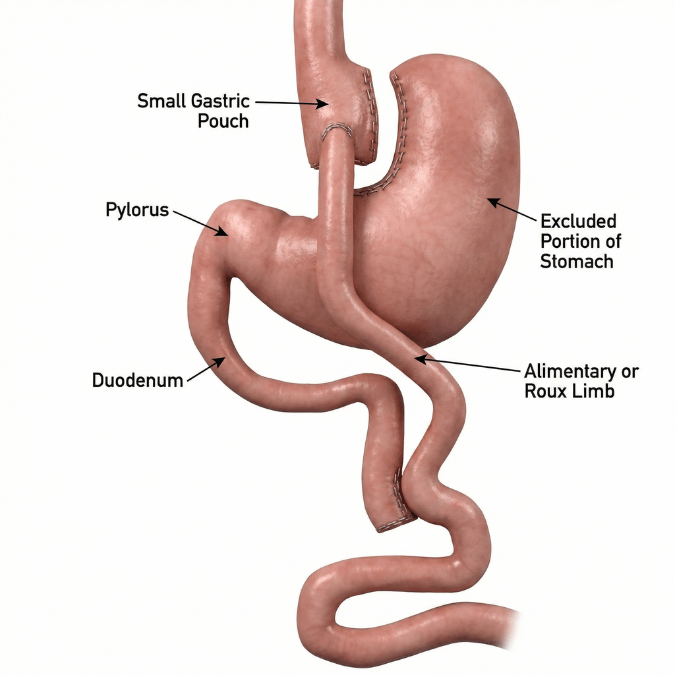
- Weight regain typically happens when the small stomach pouch stretches over time, or when the connection between the pouch and the intestine widens. Each technique targets a specific cause, so the approach can be tailored to each patient's anatomy.
- Revisional bariatric surgery is one of the most technically demanding areas of the specialty because the surgeon must work around scar tissue and altered anatomy from the original procedure.
- This work was presented as an oral video at the ASMBS 28th Annual Meeting in Orlando, Florida, the premier national bariatric surgery conference.
- Patients experiencing weight regain after gastric bypass have more options than ever, including both surgical revision techniques and newer GLP-1 receptor agonist medications.
- For patients who have regained weight after a previous gastric bypass, this publication demonstrates specific expertise in developing and publishing revision techniques for addressing this common challenge.
This study published in Surgery for Obesity and Related Diseases describes three laparoscopic techniques for improving gastric restriction in patients who have experienced weight regain or insufficient weight loss after Roux-en-Y gastric bypass. Weight regain is often attributed to dilation of the gastric pouch, enlargement of the gastrojejunal anastomosis, or both. The three techniques described offer minimally invasive approaches to restore restriction without requiring a full surgical revision. Each technique targets a specific anatomic cause of failed restriction. This publication reflects expertise in revisional bariatric surgery, one of the most technically demanding areas of the specialty. The techniques were also presented as an oral video presentation at the ASMBS 28th Annual Meeting in Orlando, Florida (June 2011).
Why This Work Was Needed
Most patients do very well after gastric bypass, but some regain weight over the years. A common anatomic cause is stretching of the small stomach pouch, widening of the connection between the pouch and the intestine (the gastrojejunal anastomosis), or both. These changes let patients eat larger portions with less fullness. Surgeons needed practical, minimally invasive ways to restore restriction without a complete redo of the bypass.
What Was Presented
This video publication in Surgery for Obesity and Related Diseases, also presented as an oral video at the 2011 ASMBS Annual Meeting, demonstrates three laparoscopic techniques, each designed to address a specific anatomic cause of lost restriction after bypass.
What This Means for Patients
Weight regain after a bypass is common and treatable. The first step is finding the cause, which may be anatomic, behavioral or hormonal. Options today range from endoscopic TORe to laparoscopic gastric bypass pouch reduction, gastric bypass revision for weight regain and gastric bypass distalization. Read about weight regain after gastric bypass and our complete guide to revisional surgery.
Clinical Pearls
- Pouch dilation and anastomotic enlargement are key anatomic causes of weight regain after bypass.
- Targeted laparoscopic techniques can restore restriction without a complete revision.
- Matching the technique to the anatomy is essential.
Strengths and Limitations
Video publications teach technique; they do not compare outcomes. Endoscopic options such as TORe have since become a first-line approach for many patients with an enlarged connection.
Expert Commentary
Revisional bariatric surgery is a large part of my practice, and patients with weight regain after bypass deserve a tailored solution, not a one-size-fits-all operation. This video showed surgeons how to fix the specific problem we find, whether it is the pouch, the connection or both.
— Dr. Nestor de la Cruz-Muñoz
Marks V, de la Cruz-Muñoz N. Three Techniques to Laparoscopically Improve Restriction After Failed Gastric Bypass. Surgery for Obesity and Related Diseases. 2011;7(5):659-660. doi:10.1016/j.soard.2011.05.008. PMID: 21719355.