

Loose Skin After Weight Loss: What’s Normal and What Helps

Quick Answer
Watch Related Video
Article
INTRODUCTION
Loose skin is one of the most common concerns patients have before bariatric surgery — and one of the least understood.
Patients often ask me:
- “Will I have loose skin?”
- “How much loose skin is normal?”
- “Can I prevent it?”
- “Does it get better over time?”
- “Do I need plastic surgery?”
The truth is this:
Loose skin is a normal, expected part of major weight loss — and it does NOT mean you did anything wrong.
It is a sign of success, not failure.
It is a sign that your body is healing and transforming.
And there are many ways to improve it.
Let’s break down the science, the expectations, and the solutions.
1. Why Loose Skin Happens — The Biology Explained
Your skin is a living organ made of:
- Collagen
- Elastin
- Water
- Connective tissue
- Fat
- Blood vessels
When you gain weight, your skin stretches to accommodate increased fat volume.
When you lose weight — especially rapidly — the skin doesn’t always shrink at the same pace.
Why?
Because the skin’s elasticity depends on:
- Age
- Genetics
- Duration of obesity
- Degree of weight gain
- Degree of weight loss
- Hydration
- Nutrition
- Smoking history
- Sun exposure
- Hormones
Loose skin is not a sign of “bad weight loss.”
It is a sign of biology catching up.
2. Subcutaneous Fat vs. Skin — What You’re Actually Seeing
Many patients think they have “loose skin” when they actually have:
Residual subcutaneous fat
This is the soft, squishy fat under the skin.
Loose skin
This is thin, wrinkled, deflated tissue.
A combination of both
This is the most common scenario.
Understanding the difference helps set realistic expectations.
3. Areas Most Likely to Have Loose Skin
Loose skin tends to appear in areas where fat was stored the longest:
- Abdomen
- Arms
- Thighs
- Chest
- Back
- Neck
These areas have the most stretched collagen and elastin.
4. What Improves Loose Skin Naturally (and What Doesn’t)
What improves loose skin:
1. Time
Skin continues tightening for 12–24 months after weight loss.
2. Hydration
Wellhydrated skin is more elastic.
3. Protein intake
Collagen is made from amino acids.
4. Strength training
Building muscle fills out the space under the skin and improves appearance.
5. Stable weight
Skin tightens better when weight is stable, not fluctuating.
6. Age
Younger patients have more elastic skin.
What does NOT significantly improve loose skin:
- Creams
- Lotions
- Wraps
- Massages
- Overthecounter collagen supplements
- “Firming” products
These may improve skin quality, but not skin quantity.
5. Strength Training: The Most Underrated Tool for Loose Skin
Strength training is the single most effective nonsurgical strategy for improving loose skin.
Why it works:
- Builds muscle under the skin
- Improves body composition
- Reduces the “deflated” look
- Improves posture
- Enhances overall shape
- Increases metabolism
Patients who lift weights consistently often look dramatically different — even at the same weight.
6. Nutrition That Supports Skin Health
Protein
Aim for 60–100g/day to support collagen production.
Vitamin C
Essential for collagen synthesis.
Healthy fats
Support skin hydration and elasticity.
Hydration
Skin is 64% water — dehydration worsens loose skin.
Avoid smoking
Nicotine destroys collagen and elastin.
7. When Loose Skin Becomes a Medical Issue
Loose skin is not just cosmetic.
For some patients, it causes:
- Rashes
- Skin breakdown
- Fungal infections
- Odor
- Difficulty exercising
- Difficulty with clothing
- Hygiene challenges
In these cases, skin removal surgery is not cosmetic — it is reconstructive.
8. When Plastic Surgery Is the Right Option
Plastic surgery is appropriate when:
- Weight is stable for 6–12 months
- You are at or near your goal weight
- Loose skin affects quality of life
- You have realistic expectations
Common procedures include:
- Panniculectomy
- Abdominoplasty
- Arm lift
- Thigh lift
- Breast lift
- Back lift
- Lower body lift
These procedures remove excess skin and reshape the body.
9. What Plastic Surgery Can and Cannot Do
Plastic surgery CAN:
- Remove excess skin
- Improve comfort
- Improve hygiene
- Improve mobility
- Improve confidence
- Improve clothing fit
Plastic surgery CANNOT:
- Replace strength training
- Replace nutrition
- Prevent future weight changes
- Guarantee perfection
It is a powerful tool — but part of a larger journey.
10. The Most Important Message: Loose Skin Is a Sign of Success
Loose skin means:
- You lost weight
- You improved your health
- You changed your life
- You reduced your risk of disease
- You did something incredibly difficult
Loose skin is not a flaw.
It is a badge of victory.
And whether you choose to embrace it, improve it naturally, or remove it surgically — you have options, and none of them diminish your success.
CONCLUSION
Loose skin is a normal, expected part of major weight loss.
It is influenced by biology, not effort.
And it can be improved — through:
- Time
- Strength training
- Nutrition
- Hydration
- Body composition changes
- Plastic surgery (when appropriate)
The goal is not perfection.
The goal is health, confidence, and longterm success.
Loose skin is part of the journey — not the definition of it.
Obesity By The Numbers
Medical Topics Covered
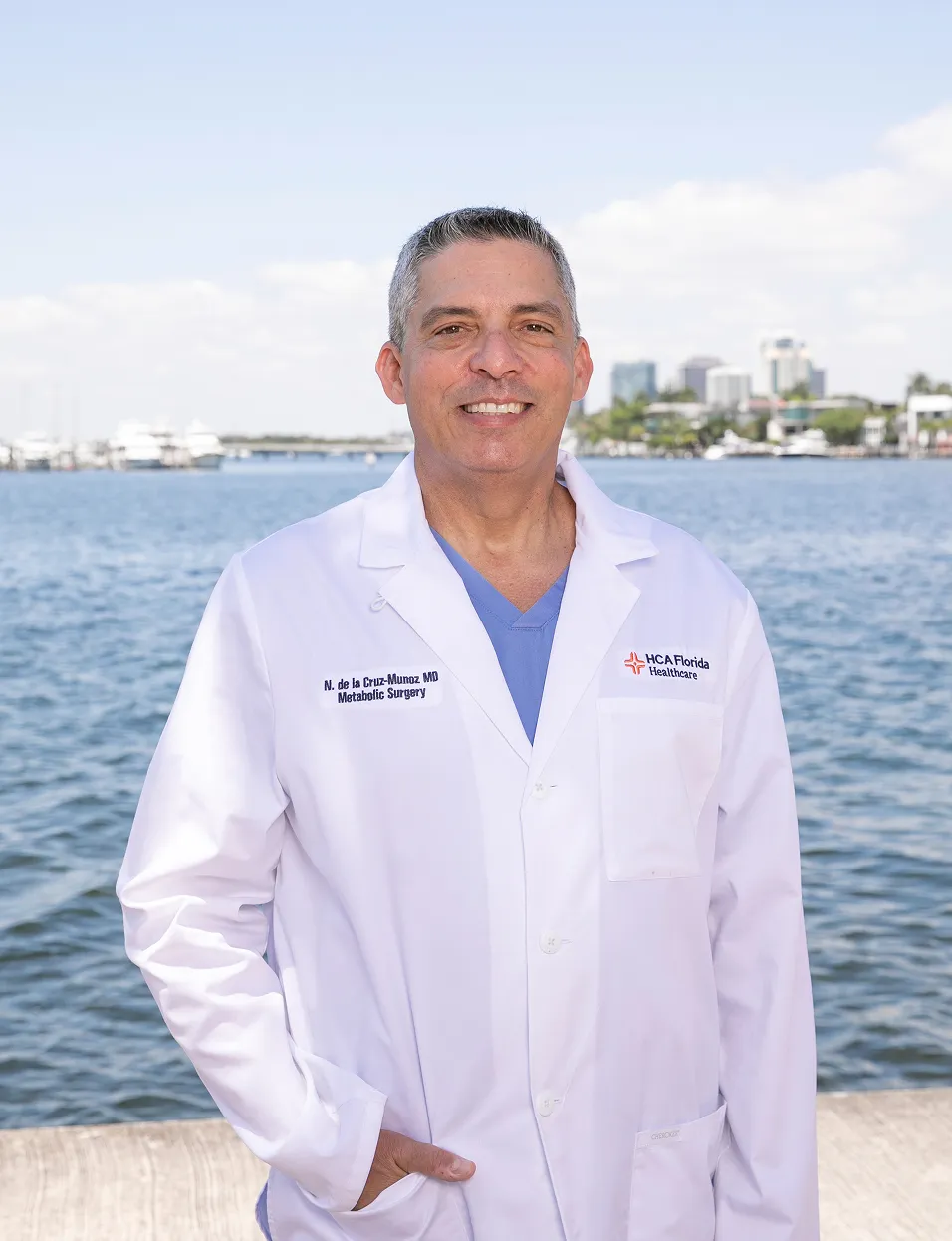

Dr. de la Cruz‑Muñoz specializes in advanced minimally invasive and robotic surgery, metabolic disease management, and comprehensive long‑term patient care. His work integrates clinical expertise, academic leadership, and a commitment to evidence‑based medicine. He has trained surgeons across the country, contributed to national guidelines, and is widely regarded for his outcomes, innovation, and patient‑centered approach.
Patients choose Dr. de la Cruz‑Muñoz for his combination of surgical excellence, metabolic expertise, and lifelong dedication to improving patient health through compassionate, high‑quality care.
Procedures We Offer






Conditions

FAQ
People Also Ask
Obesity is recognized as a chronic metabolic disease influenced by genetics, hormones, environment, and biological factors — not simply lifestyle choices.
The body has built-in mechanisms that defend weight, including hunger hormones and metabolic adaptations that make long-term weight loss challenging.
Yes. Genetics can significantly influence body weight regulation, appetite, metabolism, and an individual's susceptibility to obesity.
GLP-1 medications help regulate appetite, slow stomach emptying, improve satiety, and support sustainable weight management.
Yes. Obesity is associated with conditions such as Type 2 diabetes, hypertension, sleep apnea, fatty liver disease, and cardiovascular disease.
Dieting alone often cannot overcome the biological adaptations that increase hunger and decrease energy expenditure after weight loss.
Medical evaluation may be appropriate when excess weight affects health, quality of life, or contributes to obesity-related medical conditions.
Yes. Bariatric surgery addresses biological and metabolic factors involved in obesity and can lead to significant long-term health improvements.