Gallbladder Surgery Without Visible Scars: How the Supermodel Lap Chole™ Works

Quick Answer
Watch Related Video
When patients learn they need their gallbladder out, the first questions are almost always about safety and recovery. But often the next question, asked a little more quietly, is: "Where will the scars be?" For people who wear swimsuits, crop tops or fitted clothing, who perform or model, or who simply do not want reminders of surgery on their upper abdomen, it is a fair question. Standard laparoscopic gallbladder surgery leaves small scars, but several of them sit in very visible places.
Early in my career I began asking whether the ports used for laparoscopic surgery had to go where they traditionally go, or whether they could be placed where scars would be hidden, without changing the operation itself. That question became the Supermodel Lap Chole™ and Supermodel Robotic Chole™, my trademarked hidden-incision approach to gallbladder removal. Here is how it works, who it suits, when a standard approach is the safer choice, and what recovery looks like.
Why Standard Gallbladder Surgery Leaves Visible Scars
A laparoscopic cholecystectomy is performed through small openings, called ports, that allow a camera and slender instruments into the abdomen. In the traditional layout, the ports cluster near the gallbladder because that is the shortest route to it: usually one at the belly button, one just under the breastbone, and one or two beneath the right ribs. The incisions are small, but those on the upper abdomen are in some of the most visible areas of the torso, and they can show with a bikini, a two-piece outfit or a bare chest.
Understanding the Biology Behind the Condition
The gallbladder is a small, pear-shaped pouch tucked under the liver on the right side of the upper abdomen. The liver makes bile continuously, and the gallbladder stores and concentrates it, squeezing it into the intestine after meals to help digest fat. When the balance of cholesterol, bile salts and other components in bile shifts, crystals can form and grow into gallstones.
Many gallstones never cause trouble. Problems start when a stone blocks the gallbladder's outlet. A temporary blockage causes the episodes of upper abdominal pain known as biliary colic, or gallbladder attacks. A persistent blockage can leave the gallbladder swollen, inflamed and sometimes infected, a condition called acute cholecystitis. Because the gallbladder itself is where stones form, removing it is the definitive treatment for symptomatic gallstones and gallbladder disease. Bile then flows directly from the liver into the intestine, and most people digest normally.
How the Supermodel Lap Chole™ Works
The key idea is simple: it is the same gallbladder removal operation, with the incisions placed differently.
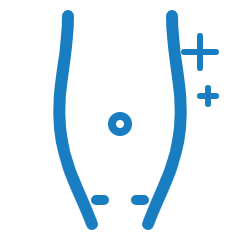
- The belly button holds the largest incision. Tucked inside the navel, it settles into the skin fold as it heals and becomes very hard to spot. The camera goes in here, and the gallbladder comes out through the same opening at the end.
- The pubic hairline holds the other two. These two small openings sit low enough that underwear or a bathing suit covers them, and the working instruments pass through them on their way up to the gallbladder.
The result is an upper abdomen with no incisions at all, despite the fact that the organ being removed lies just beneath the right ribs. I can perform the operation with conventional laparoscopic instruments, which is the Supermodel Lap Chole™, or with the surgical robot, which is the Supermodel Robotic Chole™. The robot's wristed instruments and magnified three-dimensional view can be an advantage when the instruments are entering from farther away.
This technique grew out of research I published early in my career on what we called alternative port site selection, or APSS. That paper described placing laparoscopic ports in discreet locations such as the bikini line to improve the cosmetic result, and noted that, while working from these sites can be more technically demanding, carefully selected patients can benefit (de la Cruz-Muñoz & Koniaris, Journal of Gastrointestinal Surgery, 2010). I have offered this approach to select patients for about 20 years.
Patients often ask whether this is the same as single-incision surgery. It is not. Because the two instruments come in through their own separate openings, they meet at the gallbladder from different directions, which gives me the same kind of control I have in conventional multi-port laparoscopy. You can read more on the Supermodel Lap Chole™ and Supermodel Robotic Chole™ procedure page.
Safety Comes First: Nothing Changes Inside
Moving the incisions does not change the steps of the operation inside the abdomen. The most important safety step in any cholecystectomy is achieving the "critical view of safety," a standard described by Strasberg and colleagues in which the surgeon confirms that only two structures, the cystic duct and the cystic artery, lead into the gallbladder before dividing either one (Strasberg et al., Journal of the American College of Surgeons, 1995). This step protects the main bile duct, and a multi-society guideline on safe cholecystectomy endorses it along with other practices to prevent bile duct injury, including imaging of the bile ducts during surgery when the anatomy is uncertain (Brunt et al., Annals of Surgery, 2020).
Every one of those steps is followed in the Supermodel approach. And I make a promise to every patient before surgery: if at any point inflammation, scar tissue or unexpected anatomy makes the hidden-incision plan less safe, I will place an additional standard port or switch techniques. I would always rather leave one small, visible scar than compromise the operation.
Who Is a Good Candidate?
The hidden-incision approach is best suited to people facing a planned (elective) gallbladder operation for whom the appearance afterward really matters. Common reasons for that planned surgery include:
- Recurrent gallbladder attacks from gallstones
- Biliary dyskinesia, a gallbladder that empties poorly and causes typical pain
- Gallbladder polyps that need removal
- Gallstone pancreatitis, once the pancreas has fully settled down
Body shape also matters. Since the instruments have to travel from the lower abdomen all the way to the upper right side, people whose proportions let the instruments reach comfortably tend to be the best candidates. I review imaging, history and body proportions at the consultation and tell each patient honestly whether the approach fits.
When Standard Ports Are the Safer Choice
There are situations in which I recommend a standard or modified port placement instead, because safety and a straightforward operation take priority over scar location:
- Severe acute cholecystitis, or any gallbladder that is badly inflamed, thickened or scarred. International guidelines grade the severity of acute cholecystitis and tailor the timing and approach to it (Okamoto et al., Journal of Hepatobiliary-Pancreatic Sciences, 2018). A badly inflamed gallbladder calls for the most direct and familiar access.
- Bile duct stones that need to be explored and removed during the same operation.
- Extensive prior upper abdominal surgery, with adhesions that make the anatomy harder to see and handle.
- Body proportions, such as a long torso, where the distance from the pubic area to the gallbladder is simply too great.
- Pregnancy.
- Emergencies or any situation in which the patient is unwell enough that a standard, efficient approach is clearly best.
Many patients with these issues can still be considered for the hidden-incision approach later, once the acute problem has resolved, but that is a case-by-case decision. If you are still deciding whether your gallbladder needs to come out at all, my article Do I Need My Gallbladder Removed? A Surgeon's Decision Framework walks through that question step by step.
What Recovery Is Like
Recovery follows the same general course as standard laparoscopic gallbladder surgery:
- The day of surgery: Most patients go home within hours and are encouraged to walk the same day.
- The first several days: Expect some tenderness around the navel and the lower incisions, usually controlled with over-the-counter pain medication. Many people with desk jobs return to work within about a week.
- The first two weeks: Skip heavy lifting and hard straining so the belly-button incision, where the muscle layer is closed, can heal well.
- Grooming: Hold off on shaving or waxing near the lower incisions until the skin there has completely closed and healed.
- Eating: Most people return to a normal diet quickly. A minority notice looser stools at first, which usually improves over weeks to months; smaller, lower-fat meals help in the meantime.
- Scar care: Scars keep softening and lightening for many months. Keeping sun off the navel area while it matures helps it blend in.
Contact the office promptly for fever, worsening abdominal pain, yellowing of the skin or eyes, persistent vomiting, or redness and drainage from an incision.
Frequently Asked Questions
Is this a different operation from a standard gallbladder removal?
No. Inside the abdomen, every step and every safety check is identical. What differs is only where the small openings are made.
Will I have any visible scars?
The goal is that once healed, the belly-button scar sits within the natural fold and the two small pubic scars are hidden by hair, underwear or a bathing suit. If an extra conventional port is needed for safety, that one small scar may be visible.
Is it the same as single-incision gallbladder surgery?
No. Single-incision surgery passes all of the instruments through one opening at the navel. The Supermodel approach uses separate small openings in hidden places, so the instruments work from different angles, as in standard multi-port laparoscopy.
Can it be done robotically?
Yes. The Supermodel Robotic Chole™ follows the identical incision layout using the surgical robot. The choice between laparoscopic and robotic depends on your anatomy and my judgment about which will give the safest operation.
Does insurance cover it?
When a gallbladder is causing symptoms, removing it is generally considered medically necessary care, and hiding the incisions does not alter why the surgery is being done. Each plan has its own rules, so my office can check your benefits before surgery.
Does it take longer?
Working from more distant ports can add some time to the operation. That is one reason the approach is reserved for well-selected, planned cases.
Next Steps
If you have been told you need your gallbladder removed and the location of your scars matters to you, ask about the hidden-incision approach. With over 25 years of experience and over 15,000 minimally invasive procedures, I will review your imaging and your goals and give you a straightforward answer about whether the approach fits you, or whether a standard approach is the safer path in your case. To learn more about gallbladder surgery in Miami, or to schedule a consultation, call my office at 305-692-0392.
Further Information
The gallbladder stores and concentrates bile made by the liver and releases it after meals. When bile chemistry becomes unbalanced, crystals form and grow into gallstones. A stone that briefly blocks the gallbladder outlet causes gallbladder attacks, and one that stays lodged can cause inflammation and infection. Because stones form in the gallbladder itself, removing it is the definitive treatment, and bile then flows directly from the liver to the intestine.
Medical Topics Covered

Dr. de la Cruz‑Muñoz specializes in advanced minimally invasive and robotic surgery, metabolic disease management, and comprehensive long‑term patient care. His work integrates clinical expertise, academic leadership, and a commitment to evidence‑based medicine. He has trained surgeons across the country, contributed to national guidelines, and is widely regarded for his outcomes, innovation, and patient‑centered approach.
Patients choose Dr. de la Cruz‑Muñoz for his combination of surgical excellence, metabolic expertise, and lifelong dedication to improving patient health through compassionate, high‑quality care.
Procedures We Offer


Conditions

FAQ
For selected patients, yes. With Supermodel Lap Chole™ or Supermodel Robotic Chole™, the largest incision is placed inside the belly button and two small incisions are placed low in the pubic hairline. Once healed, nothing is visible on the upper abdomen. The operation inside is the same as a standard laparoscopic cholecystectomy. Whether you are a candidate depends on your anatomy, how inflamed the gallbladder is, and your prior surgeries. Call 305-692-0392 to ask.
The internal operation and its safety steps are the same, including the critical view of safety that protects the bile duct. The main differences are a somewhat longer operating time and the possibility of adding a conventional port if inflammation or anatomy calls for it, because safety always comes before cosmetics. Unlike single-incision surgery, Supermodel Lap Chole™ keeps multiple ports and avoids the larger navel opening that has been linked to higher hernia rates.
Single-incision surgery puts all instruments through one larger opening at the navel. That limits instrument angles and has been associated in randomized-trial meta-analyses with more incisional hernias. Supermodel Lap Chole™ uses three small, separated incisions (one inside the belly button and two in the pubic hairline), so the surgeon keeps normal two-handed triangulation while every scar stays hidden. It grew out of Dr. de la Cruz-Muñoz's 2010 publication on Alternative Port Site Selection (APSS).
Most patients go home the same day or the morning after laparoscopic cholecystectomy and return to their baseline within one to two weeks (Kim & Donahue, JAMA, 2018; Sell & Gee, Journal of Medical Insight, 2022). Light daily activities can usually resume within a few days, and desk-type work is often possible within about 7–10 days, while heavy lifting and strenuous activity should be avoided for about 4–6 weeks to allow the port sites to heal (Sell & Gee, Journal of Medical Insight, 2022; van Vliet et al., Surgical Endoscopy, 2016). Mild pain around the incisions and at the shoulder (from the gas used during surgery) is common for a few days and is well controlled with prescribed medication (Kim & Donahue, JAMA, 2018). The minimally invasive approach is what makes this fast recovery possible — compared with open surgery, it means less pain, a shorter hospital stay, and a quicker return to normal life (Baron et al., New England Journal of Medicine, 2015).
Laparoscopic cholecystectomy is one of the most common and safest abdominal operations, and serious complications are rare (Kim & Donahue, JAMA, 2018). Pooled data from 30 years of experience show low rates of bleeding (about 0.8%), wound infection (about 1.3%), bile leak (about 0.4–1.9%), retained bile duct stones (about 0.5–5%), and bowel injury (about 0.15%) (Pucher et al., Surgical Endoscopy, 2018; Patel & Jepsen, American Family Physician, 2024). The most serious complication is bile duct injury, which occurs in roughly 0.4–0.6% of cases and is why an experienced surgeon's commitment to the "critical view of safety" — and a willingness to convert to an open operation when anatomy is unclear — is so important (Migliore et al., Surgical Endoscopy, 2018; Baron et al., New England Journal of Medicine, 2015). Risk is higher in patients with acute cholecystitis, older age, or prior gallbladder inflammation (Donkervoort et al., Surgical Endoscopy, 2016). After surgery, worsening pain, fever, chills, nausea, or jaundice (yellowing of the skin or eyes) should prompt immediate medical attention (Kim & Donahue, JAMA, 2018).
You can live a completely normal life without a gallbladder, and there are no permanent dietary restrictions after laparoscopic cholecystectomy (Sell & Gee, Journal of Medical Insight, 2022). The gallbladder only stores and concentrates bile; after it is removed, the liver continues to make all the bile needed for digestion, which simply flows directly into the intestine (Kim & Donahue, JAMA, 2018). Most people begin with liquids and advance to a regular diet within about 24 hours of surgery (Sell & Gee, Journal of Medical Insight, 2022). Some patients notice loose stools or diarrhea in the first weeks to months, which usually improves on its own; a minority develop more persistent post-cholecystectomy diarrhea (about 13% in one review), which is caused by excess bile acid and can be effectively treated with a medication such as cholestyramine (Kim & Donahue, JAMA, 2018; Patel & Jepsen, American Family Physician, 2024).
People Also Ask
Obesity is recognized as a chronic disease by major medical organizations, including the American Medical Association. It is influenced by genetics, hormones, brain signaling, environment, sleep, stress and medications — not simply willpower. Like other chronic diseases, it often requires long-term treatment, which may include nutrition, activity, behavioral support, medications and surgery. Lifestyle matters, but biology largely determines how the body responds.
The body has powerful systems that defend its weight. When you lose weight, hunger hormones rise, fullness hormones drop, the brain becomes more focused on food and metabolism slows — a process called metabolic adaptation. Genetics, sleep, stress, medications and the modern food environment add to the challenge. These are biological forces, not character flaws, which is why medical treatment is often needed.
Genetics play a major role. Studies of twins and adopted children suggest that roughly 40–70% of the variation in body weight is inherited, influencing appetite, fullness, metabolism and where fat is stored. Many genes each contribute a small effect, and a few rare single-gene forms cause severe early obesity. Genes interact with environment, sleep, stress and medications, so a family history raises risk but does not determine destiny.
GLP-1 medications mimic a natural gut hormone released after eating. They act on the brain to reduce hunger and increase fullness, slow stomach emptying so meals last longer, quiet "food noise," and improve insulin release and blood sugar. Tirzepatide also acts on a second hormone, GIP. In clinical trials, these medications produced average weight loss of about 15–20% (Wilding et al., New England Journal of Medicine, 2021; Jastreboff et al., New England Journal of Medicine, 2022).
Yes. Obesity is associated with more than 200 health conditions, including type 2 diabetes, high blood pressure, high cholesterol, heart disease, stroke, sleep apnea, fatty liver disease, reflux, osteoarthritis, infertility and PCOS, depression and at least 13 types of cancer. Losing weight — through medical treatment or bariatric surgery — improves or resolves many of these conditions.
Dieting alone usually cannot overcome the body's biological defenses against weight loss. As weight falls, hunger hormones rise, fullness hormones fall and metabolism slows — changes that can last for years. Most people regain the majority of diet-related weight loss within several years. That is not a failure of willpower, and it is why treatments that address appetite biology, such as GLP-1 medications and bariatric surgery, are more effective for many people with obesity.
Consider medical evaluation when excess weight affects your health, mobility or quality of life, or when you have related conditions such as prediabetes, diabetes, high blood pressure, sleep apnea, fatty liver or joint pain. Guidelines support medications for adults with a BMI of 30 or higher, or 27 or higher with a weight-related condition, and surgery for a BMI of 35 or higher, or 30 or higher with metabolic disease. Early treatment can help prevent complications.
Yes. Bariatric surgery treats the biological drivers of obesity, changing hunger and fullness hormones, insulin sensitivity and the weight the body defends. It is the most effective and durable treatment for severe obesity, producing large, sustained weight loss and improving or resolving diabetes, high blood pressure, sleep apnea and fatty liver. Long-term studies show it also reduces the risk of heart disease, cancer and early death.