

The Hormonal Reset After Bariatric Surgery: How Ghrelin, GLP1, Leptin, and Insulin Change After Gastric Sleeve, Gastric Bypass, and Duodenal Switch

Quick Answer
Watch Related Video
Article
Most people believe bariatric surgery works because the stomach becomes smaller.
But the real reason gastric sleeve, gastric bypass, and duodenal switch are so effective is because they create a rapid hormonal reset that changes hunger, fullness, cravings, metabolism, and blood sugar regulation.
These hormonal changes begin within hours to days after surgery — long before weight loss occurs.
If you’ve ever wondered why bariatric surgery works when dieting didn’t, this is the science behind it.
Ghrelin After Bariatric Surgery: Why Hunger Finally Quiet Down
Ghrelin is the body’s primary hunger hormone.
It’s produced in the gastric fundus — the part of the stomach removed during sleeve gastrectomy and bypassed during gastric bypass.
In obesity, ghrelin behaves like a stuck hunger alarm:
- elevated baseline levels
- weak suppression after meals
- constant hunger signals
After surgery, ghrelin levels drop 40–60 percent within days.
This is one of the earliest and most powerful hormonal changes after bariatric surgery.
Lower ghrelin means less hunger, less food noise, fewer cravings, and a quieter appetite.
Patients often describe this as the first time in their lives that hunger feels manageable.
GLP1 After Bariatric Surgery: The Fullness Hormone That Changes Everything
GLP1 is the hormone behind medications like Ozempic, Wegovy, and Mounjaro — but bariatric surgery increases GLP1 naturally.
GLP1 increases fullness, slows digestion, reduces hunger, stabilizes blood sugar, and decreases cravings.
After surgery:
- gastric bypass increases GLP1 by 3–5 times
- sleeve gastrectomy increases GLP1 by 2–3 times
This happens because food reaches the lower intestine faster, stimulating Lcells to release GLP1.
Patients feel full sooner, stay full longer, and experience fewer cravings.
Blood sugar stabilizes.
Diabetes often improves within 24–72 hours.
This is the hormonal foundation of longterm weight loss success.
Leptin Resistance and Obesity: How Bariatric Surgery Restores the Fullness Signal
Leptin is produced by fat cells and tells the brain, “We have enough energy.”
But in obesity, leptin signaling becomes distorted — a condition known as leptin resistance.
This leads to:
- constant hunger
- weak fullness
- cravings
- nighttime eating
- difficulty maintaining weight loss
After bariatric surgery, leptin sensitivity improves as inflammation decreases and fat mass drops.
The brain finally receives accurate fullness signals.
Patients begin to feel satisfied with normal portions — not because they’re restricting, but because the signal is finally working.
Insulin Resistance and Diabetes: Why Bariatric Surgery Improves Blood Sugar in Days
Insulin controls blood sugar and fat storage.
In obesity, insulin resistance is common — the body needs more insulin to do the same job.
High insulin levels make weight loss extremely difficult.
After bariatric surgery, insulin sensitivity improves within 24–72 hours, even before weight loss.
This happens because surgery restores the incretin effect — the body’s natural ability to release insulin in response to food.
Fasting insulin drops.
Blood sugar stabilizes.
Cravings decrease.
Energy improves.
Diabetes often goes into remission.
This is one of the most powerful metabolic effects of bariatric surgery.
The Gut–Brain Axis: How Bariatric Surgery Resets Hunger and Fullness Signals
The gut and brain communicate through hormones, nerves, and nutrient sensors — especially the vagus nerve.
Before surgery, this communication system is disrupted:
- delayed fullness signals
- exaggerated hunger signals
- inconsistent nutrient sensing
After surgery, the gut–brain axis resets:
- vagal signaling improves
- stretch receptors activate sooner
- satiety hormones send stronger signals
- the brain receives clearer, faster information
Patients feel full faster and stay full longer — without forcing themselves.
Bile Acids, Microbiome, and Gut Remodeling: The Hidden Metabolic Boost After Bariatric Surgery
This is one of the most overlooked but important aspects of metabolic surgery.
Bile acids increase two to four times after surgery.
They activate receptors (FXR, TGR5) that improve insulin sensitivity, increase energy expenditure, and stimulate GLP1 release.
The microbiome also shifts toward a healthier balance:
- more Bacteroidetes
- fewer Firmicutes
- more shortchain fatty acids
- less inflammation
The gut lining remodels itself as well.
The cells that produce GLP1 and PYY increase in number and responsiveness.
These changes support longterm weight loss, metabolic health, and diabetes remission.
Dopamine, Food Noise, and Cravings: The Brain Finally Calms Down
Hunger isn’t just hormonal — it’s neurological.
Before surgery, the brain’s reward system is hypersensitive to highcalorie foods.
This creates strong cravings, emotional eating, constant food thoughts, and difficulty resisting cues.
After bariatric surgery, brain scans show:
- increased dopamine receptor availability
- reduced reward response to highcalorie foods
- decreased foodcue reactivity
Patients describe this as “food noise disappearing.”
This isn’t willpower — it’s neurobiology.
The Takeaway: Bariatric Surgery Treats the Biology, Not the Behavior
If you’ve struggled with hunger, cravings, or weight regain, it wasn’t because you lacked discipline.
It was because your hormones, your gut, your brain, and your metabolism were working against you.
After bariatric surgery:
- ghrelin decreases
- GLP1 increases
- leptin sensitivity improves
- insulin resistance decreases
- the gut–brain axis resets
- the microbiome shifts
- dopamine pathways recalibrate
This is why bariatric surgery works longterm.
It treats the biology of obesity — not the behavior.
Learn More
Explore more articles in our Bariatric Science Series, or schedule a consultation to understand how these hormonal changes apply to your journey.
Real science. Real surgery. Real results.
Obesity By The Numbers
Medical Topics Covered
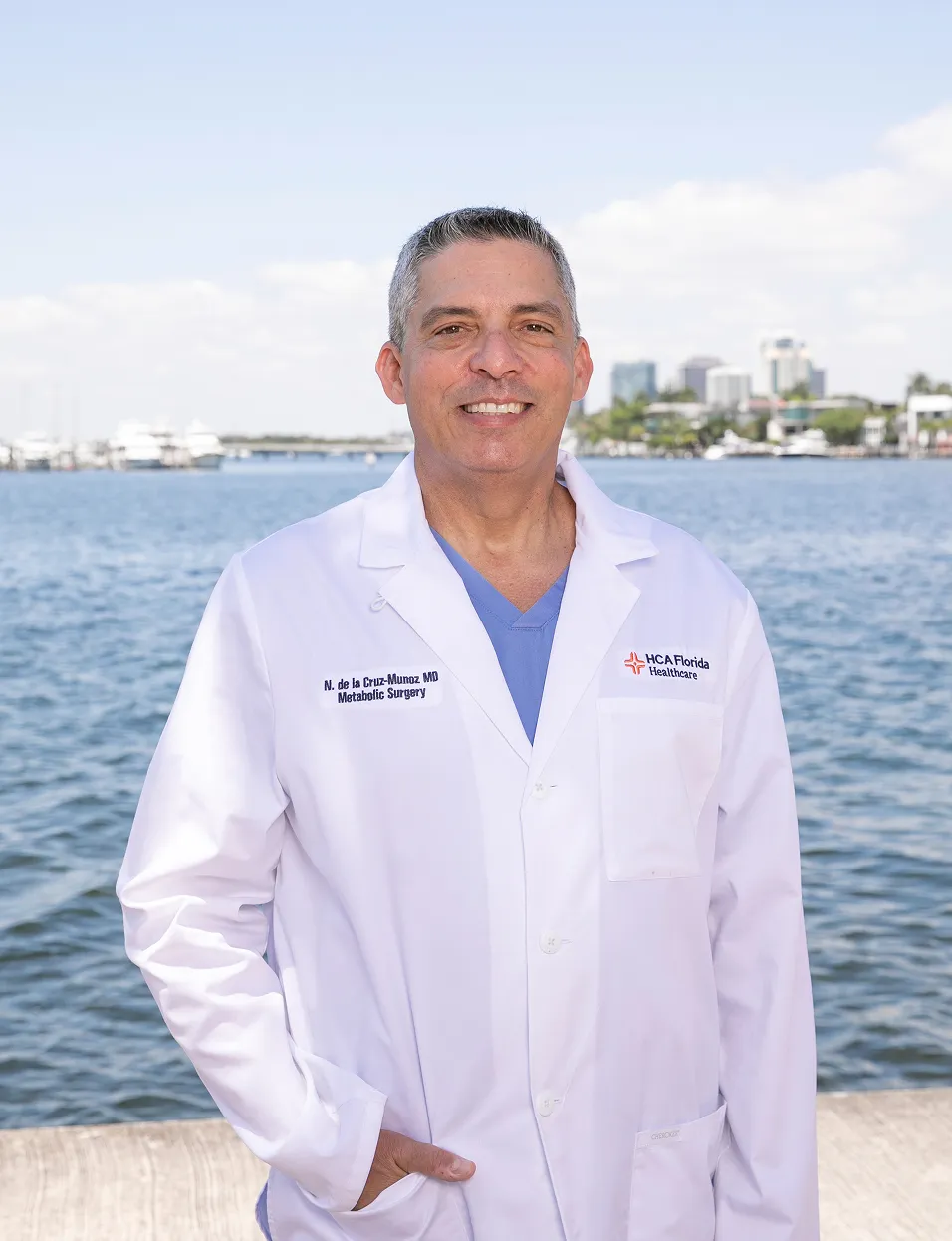

Dr. de la Cruz‑Muñoz specializes in advanced minimally invasive and robotic surgery, metabolic disease management, and comprehensive long‑term patient care. His work integrates clinical expertise, academic leadership, and a commitment to evidence‑based medicine. He has trained surgeons across the country, contributed to national guidelines, and is widely regarded for his outcomes, innovation, and patient‑centered approach.
Patients choose Dr. de la Cruz‑Muñoz for his combination of surgical excellence, metabolic expertise, and lifelong dedication to improving patient health through compassionate, high‑quality care.
Procedures We Offer
Conditions

FAQ
People Also Ask
Obesity is recognized as a chronic metabolic disease influenced by genetics, hormones, environment, and biological factors — not simply lifestyle choices.
The body has built-in mechanisms that defend weight, including hunger hormones and metabolic adaptations that make long-term weight loss challenging.
Yes. Genetics can significantly influence body weight regulation, appetite, metabolism, and an individual's susceptibility to obesity.
GLP-1 medications help regulate appetite, slow stomach emptying, improve satiety, and support sustainable weight management.
Yes. Obesity is associated with conditions such as Type 2 diabetes, hypertension, sleep apnea, fatty liver disease, and cardiovascular disease.
Dieting alone often cannot overcome the biological adaptations that increase hunger and decrease energy expenditure after weight loss.
Medical evaluation may be appropriate when excess weight affects health, quality of life, or contributes to obesity-related medical conditions.
Yes. Bariatric surgery addresses biological and metabolic factors involved in obesity and can lead to significant long-term health improvements.